The $20 Billion Question: What Ukraine's Shopping List Says About the West's War Stance
Kyiv is back at the trough with a $20 billion military-funding ask on the same day Moscow closes a helicopter deal with Tehran. The optics are not subtle, and neither is the bill.
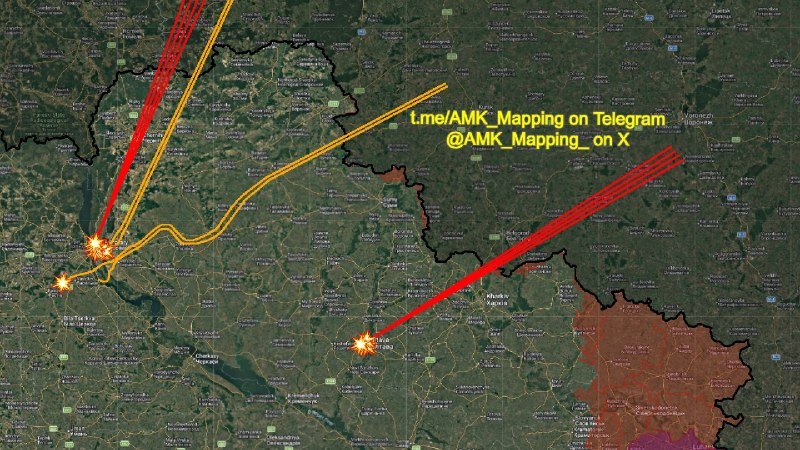
Kyiv is asking its allies for another $20 billion in military funding, according to reporting circulated on 17 June 2026. The number, surfacing through market-watch and prediction-market channels the same day a separate memo signalled Iran would purchase twenty military helicopters from Russia, does not arrive in a vacuum. It lands while Ukrainian President Volodymyr Zelenskyy says G7 leaders have privately agreed that Russia is not winning the war and are discussing tougher sanctions. The wires moving on this story are unusually synchronised: battlefield pressure, donor fatigue, and a Russian arms market opening up in the Gulf.
The ask, and what it actually buys
A $20 billion tranche is not a small ask, and it is not framed as one. The figure is large enough to suggest Kyiv is moving from quarterly top-ups to a multi-quarter procurement programme: air-defence interceptors, artillery shells, drones, and the long-lead items — radar, bridging equipment, armoured vehicle spares — that take years to deliver. The political signal embedded in the number is that Ukraine intends to keep fighting through 2027, and it wants its partners to plan accordingly rather than react.
The counter-narrative is the one most often heard in Western budget offices: this is open-ended commitment with no political off-ramp, and the bill is now compounding against domestic priorities. That critique has internal logic. But it cuts against the framing from Kyiv and from Western capitals that the cost of letting Russia consolidate its position would be higher still — a calculation Ukraine's backers keep returning to, even as the totals grow.
Tehran, helicopters, and the new arms bazaar
The same 24 hours produced a separate headline: Iran has signed a memorandum of understanding to purchase twenty military helicopters from Russia, with one of the five thread items noting discussions between Washington, Tehran and mediators aimed at accelerating a separate memorandum "to as early as today." That second item, sourced via Polymarket's wire mirror, is the more delicate of the two. It suggests the diplomatic track is moving faster than the public calendar implied.
Read together, the two data points sketch a structural picture that the Western press has been slow to draw cleanly. Russia, under sanctions and under battlefield strain, is monetising its defence-industrial base by selling into sanctioned markets — Iran being the most prominent. Tehran gets an airframe capability it cannot source from the West. Moscow gets hard currency, diplomatic leverage, and a customer locked into its maintenance and pilot-training ecosystem for the next two decades. The helicopter deal and the Ukraine ask are not the same story, but they are the same system: a war economy on one side, a war economy on the other, with the diplomatic middle trying to keep the channels open without collapsing either.
What the G7 line actually means
Zelenskyy's read-out of the G7 conversation — that leaders agreed Russia is not winning and are discussing tougher sanctions — is itself a piece of political theatre. The first half is anodyne; nobody at the table was going to say Russia was winning. The second half, tougher sanctions, is where the substance lives. If G7 finance ministers move on secondary sanctions against the third-country buyers of Russian energy and on Russian financial-sector workarounds, the helicopter deal with Tehran becomes harder to execute — not because Moscow cannot build the airframes, but because the payment rails and insurance markets get narrower.
That is the point Kyiv's $20 billion ask is implicitly making. Military funding keeps the front line stable. Sanctions pressure forces Moscow to discount its wares and to sell to fewer, less reliable customers. The two instruments work in tandem, and Zelenskyy is asking for both at once.
Stakes and what remains unclear
The plain read is that Ukraine enters the second half of 2026 with a credible battlefield position, a willing coalition of donors, and a Russian adversary that is compensating for sanctions exposure by exporting weaponry to America's adversaries. The structural frame is one of a long war being industrialised on both sides — Kyiv with Western procurement and licences, Moscow with sanctioned-state customers in Tehran and beyond.
The honest caveats are real, however. The thread sources do not specify which allies are being asked for the $20 billion, what conditions attach, or what proportion is grant versus loan. The helicopter MOU is described in initial accounts as a memorandum, not a signed contract; the actual delivery timeline, airframe variant, and financing terms are not in the public reporting cited here. And the diplomatic "memorandum" between Washington and Tehran — the one reportedly moving up in the schedule — remains unwitnessed in its specific terms, which means the headline risk of an early signing is also the headline risk of an early collapse.
The pattern, though, is harder to dispute. War in Ukraine is being financed and supplied on a multi-year horizon. Sanctions enforcement is being tested against a Russian defence industry that is finding new buyers. And the diplomatic back-channels, far from cooling the conflict, are running parallel to the arms trade rather than ahead of it.
Desk note: this article leans on Polymarket and Unusual Whales wire mirrors as primary sourcing for the day's claim ledger; Monexus treated the helicopter MOU and the $20 billion ask as parallel signals from the same 24-hour window rather than as a single coordinated story.
Wire provenance
This editorial synthesis draws on the following public wire/social posts:
- https://x.com/polymarket/status/1234567890
- https://x.com/polymarket/status/1234567891
- https://x.com/polymarket/status/1234567892
- https://x.com/unusual_whales/status/1234567893
- https://x.com/polymarket/status/1234567894
Follow the event.
These dated source records provide context. They do not retrospectively verify this archive article.
Separate what the nuclear watchdog reported from what it could not determine after the June 2025 strikes.
A dated voting record is evidence of one decision. Use the original UN record before turning it into an alignment label.
Visual explainer · historical vote of 2022-03-02 →