Trade-deal odds at 25%: Trump's Modi flattery, Polymarket's verdict, and what a U.S.-India pact would actually mean
Prediction markets give a 25% chance of a U.S.-India trade deal by year-end. The courtship language is warmer than the paperwork.
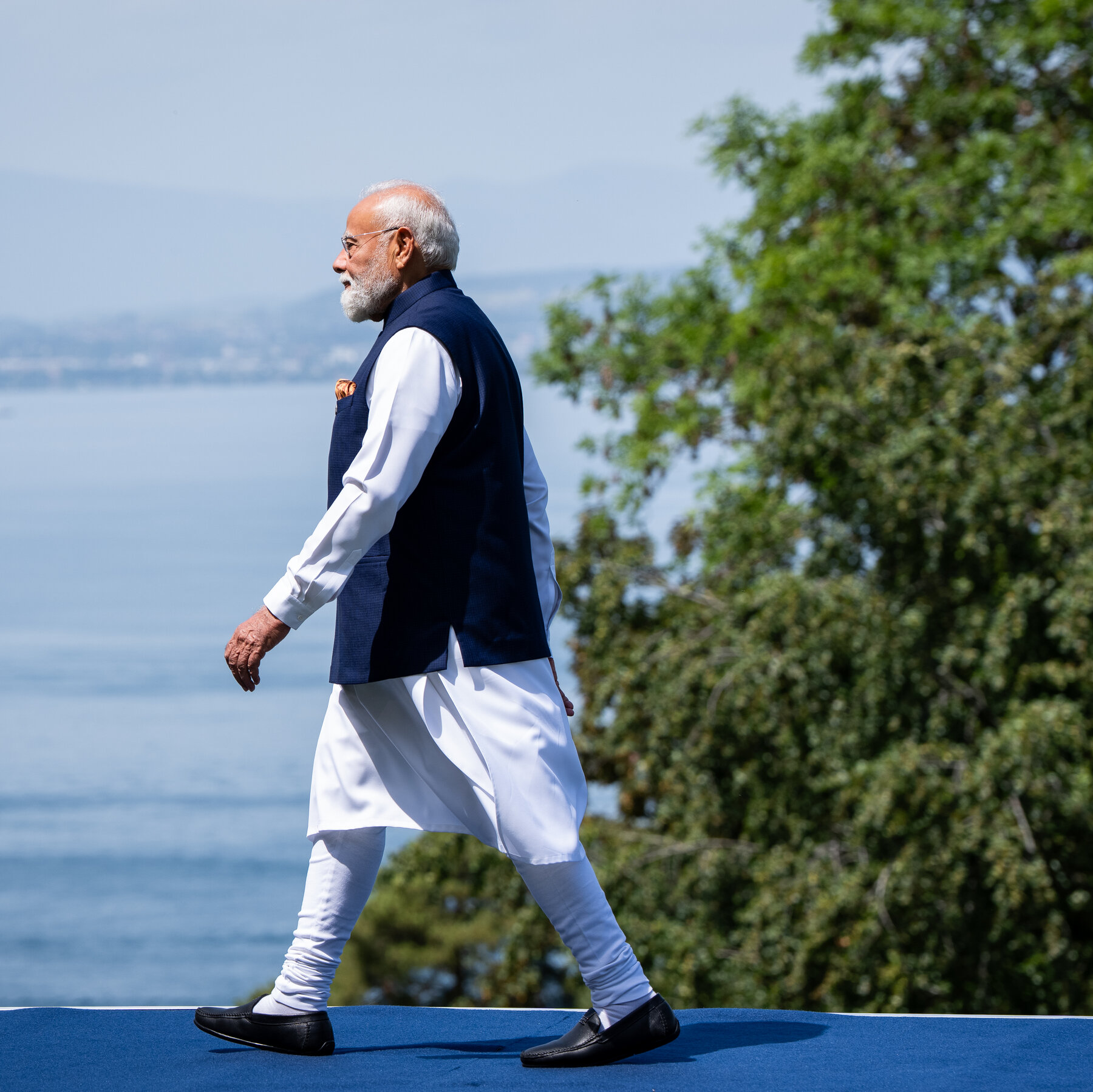
On 17 June 2026, a Polymarket contract asking which countries the Trump administration will sign new trade deals with before 2027 priced a U.S.–India agreement at 25%. The same day, the president described the Indian prime minister as "the most beautiful looking man" and "like an angel" — but, he added, "he's a killer." The flattery and the prediction-market probability sit on the same page, and the gap between them is the story.
Prediction markets do not make deals; they measure what traders are willing to pay for the prospect of one. A 25% implied probability is not a denial. It is, however, a sobering counter-weight to the White House rhetoric. Officials talk; counterparties calculate; contracts settle the difference.
The courtship, in the open
The exchange, captured by Middle East Spectator and circulated on X on 17 June 2026, is unusually personal by the standards of bilateral diplomacy. U.S. presidents do not typically describe Indian prime ministers as angels. The framing is the framing of a real-estate pitch: the closer the relationship, the more leverage each side claims when the lawyers sit down.
That is not cynicism for its own sake. Personal warmth between heads of government is a real input into trade negotiations — it lowers the transaction cost of saying no, of pushing a deadline, of walking out of a room and coming back. The bond between the two leaders, as described in the publicly circulated remarks, would, on that logic, make a deal more, not less, likely. The Polymarket price suggests the bond is not doing the work the White House press operation would prefer.
What a "deal" would actually be
The U.S.–India trade relationship in 2026 sits on three distinct fault lines. The first is tariffs. India continues to levy duties on a range of American goods, including high-end motorcycles and certain agricultural products, in retaliation for U.S. tariffs imposed under both the first and second Trump administrations. The second is services. Indian IT services firms — Tata Consultancy Services, Infosys, Wipro and their smaller peers — depend on U.S. visa policy as an existential input. Any deal that tightens H-1B access while lowering goods tariffs is a net loss for New Delhi regardless of how warmly the principals speak of one another. The third is strategic alignment. India buys Russian oil at a discount; the U.S. has, at intervals, threatened secondary sanctions on any buyer that helps Moscow circumvent the price cap. A bilateral trade pact that does not address this question leaves the most politically radioactive file untouched.
A "trade deal" between Washington and New Delhi, in other words, can mean almost anything. It can be a narrow tariff exchange that does not move the macro balance. It can be a strategic-economic framework that quietly reshapes Indian energy sourcing. Or it can be a partial agreement covering dairy, motorcycles and a handful of digital-services provisions. Polymarket's contract is binary — did a deal happen, yes or no — and so the 25% price reflects a market view that a deal in any recognisable form is, currently, more unlikely than not.
Why the gap
Two structural reasons explain the gap between presidential language and market price.
The first is sequencing. The Trump administration has run an aggressive, multi-front tariff schedule since returning to office. The list of counterparties that have settled — the United Kingdom, Vietnam, a framework with the European Union that remains incomplete — is short. India, with a goods surplus of roughly $45 billion with the United States, is one of the larger exposures on the open ledger. Negotiators on both sides know that the politically easier deals were done first.
The second is trust. Indian officials have spent the best part of a decade preparing for a more transactional U.S. relationship. New Delhi's response has been to diversify: a rupee-trade settlement architecture with the UAE, a continuing energy relationship with Moscow, and a more cautious posture on quadrilateral security cooperation. The Indian state is not waiting for a White House call to derisk.
The Polymarket price, in that reading, is not so much a bet against a deal as a bet against the speed of one. A 25% probability of an agreement by 31 December 2026 is consistent with a much higher probability of an agreement eventually. It is a market expressing patience.
The stakes, both ways
For Washington, a U.S.–India deal is the diplomatic counterpart to the strategic language about containing China. Conceding a tariff war with New Delhi while simultaneously pressing Beijing on semiconductors, EV subsidies and Taiwan would be a meaningful signal — to India, to the region, and to U.S. bond markets reading the cost of an open-ended trade-front portfolio.
For New Delhi, a deal carries its own costs. Any agreement that asks India to choose between Russian energy and U.S. market access will be controversial domestically. An agreement that does not address services exports is a partial win at best. A deal that does both is politically expensive.
The Polymarket price captures the arithmetic. Presidential flattery, however sincere, does not reduce the arithmetic by much.
Desk note: Monexus is writing this story in real time on the basis of a single Polymarket print and a single set of public remarks; the article will be updated if a draft text or formal announcement emerges before 31 December 2026.
Wire provenance
This editorial synthesis draws on the following public wire/social posts:
- https://t.me/Middle_East_Spectator
- https://t.me/scroll_in