The Trade Deal India Isn't Signing, and the Jungle Cat That Doesn't Care
A Polymarket contract gives Washington and New Delhi a one-in-four shot at a 2026 trade deal. Meanwhile, a mapping study says India's jungle cats are doing rather well without anyone in Washington noticing.
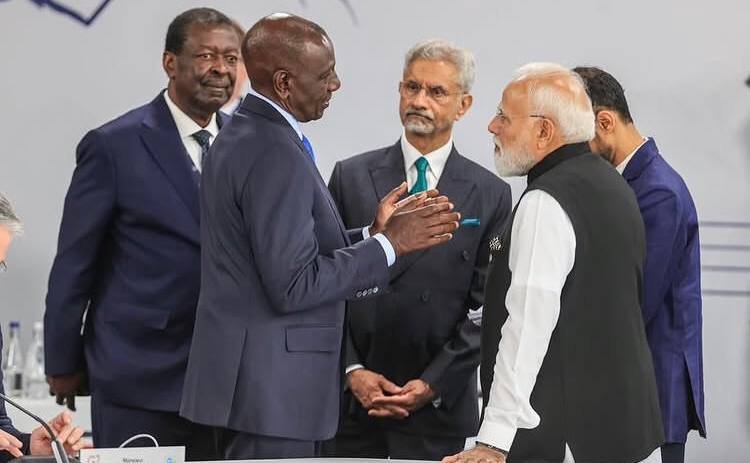
On 17 June 2026, a Polymarket contract put the odds of a United States–India bilateral trade agreement landing before the end of the year at 25%. That is roughly the same probability one would assign to a fair coin plus a small, stubborn, geopolitical tail. It is also, almost certainly, the most accurate public number in circulation on a question both governments have spent the better part of two years refusing to answer plainly.
Strip the headline theatre away and two facts remain. Washington wants a deal it can present as a win on agricultural access and tariff lines. New Delhi wants the same document but with much less of the political theatre that has come to characterise the Trump-era negotiating template — flattery of Prime Minister Narendra Modi in public, pressure on dairy, generics, and digital-services rules in private. The Polymarket number is essentially a market-priced bet on which side blinks last.
The flattering is the friction
The same day, on the social platform X, Polymarket's account flagged that Donald Trump had publicly described Modi as "the most beautiful looking man," offered in the same breath as confirmation that the two sides were "nearing" a deal. The remark is best read as theatre, but it is not empty theatre. Personal flattery of foreign leaders has, in this U.S. administration's pattern, functioned as a soft opening bid — a signal that the harder asks (tariff cuts, market access, defence-purchase commitments) will follow. The Indian side has generally received the compliment while signalling, in the same press cycle, that dairy and pharmaceutical intellectual property remain non-negotiable.
That posture is consistent with how New Delhi has handled every bilateral negotiation since at least 2024. India's trade team treats personal rapport as separable from commercial substance. The 25% Polymarket number captures that gap precisely: the political temperature reads warm, the binding contract reads cool.
The structural reading
Coverage of the prospective deal has tended to fixate on personality — on whether the two leaders like each other, on whether one can beguile the other — because that frame is easier to write and easier to film. The more honest story is structural. India has, over the last decade, deliberately built out a network of trade arrangements — with the European Union, with the United Kingdom, with several Gulf and ASEAN partners — that reduce its dependence on any single bilateral channel with Washington. A no-deal outcome in 2026 is not, for New Delhi, a catastrophe. It is a manageable delay inside a portfolio approach.
The U.S. side, by contrast, has fewer such substitutes. Its own regional architecture in the Indo-Pacific is built, in large part, on the assumption that India is a willing anchor. A prolonged failure to close a deal would, over a 12-to-24-month horizon, push New Delhi further toward its own pivot — toward Brussels, toward Tokyo, toward the slower but steadier settlement architecture of the BRICS New Development Bank and the Asian Infrastructure Investment Bank. That is the asymmetry the Polymarket price is, in effect, trying to capture.
What the market is and isn't telling you
A 25% probability is not a forecast of failure. It is a forecast that traders — using real money, on a regulated event contract — believe the deal is more likely than not to slip past December. Polymarket's track record on geopolitics is mixed: it priced the 2024 U.S. election and several other binary events with a precision that embarrassed several wire services, and it has also been badly wrong on durable but politically mediated outcomes. The honest reading is that 25% reflects a market that sees the political runway as short and the substantive gaps as wide.
The other honest reading is that the sources are thin. The 25% figure is the only externally verifiable public number on this question; the surrounding commentary is dominated by speculation filtered through friendly leaks. There is no published text of a draft agreement, no shared understanding of the tariff line-items, and no confirmed ministerial meeting on the calendar. A market that prices a one-in-four deal in this information environment is, in effect, voting on vibes.
A jungle cat, briefly
The same news cycle carried a small, unrelated study: India's jungle cats, it turns out, are doing rather well in open, modified landscapes. The mapping work, summarised by Scroll.in, suggests the species — long treated as a habitat specialist of dense cover — is in fact thriving in farmland, scrub, and the edges of human settlement. It is, in the literal sense, a piece of good news about an animal that no one in Washington or New Delhi is going to make trade-policy concessions over.
And that is the point. The world keeps producing stories that do not require a U.S.–China framing, an alignment story, or a referendum on hegemonic transition. A small cat in a field in Rajasthan is, in the language of this publication, a reminder that most of the planet's daily news is local, ecological, and stubbornly indifferent to who wins the next bilateral negotiation. The trade deal is the story we are watching because it is the story that has been made loud. The jungle cat is the story we are missing because nobody has built a Polymarket contract for it.
This piece ran as a staff-writer column on the Asia desk. Monexus frames the U.S.–India negotiation as a portfolio problem for New Delhi rather than a personality contest, and reads the Polymarket price as a market verdict on political runway — not a verdict on whether a deal is substantively possible.