The 14-point MoU that wasn't: a US-Iran deal leaks, then unravels, in real time
A draft memorandum of understanding between Washington and Tehran circulated to White House reporters on Tuesday, only for Iran's own negotiators to publicly disown the text within minutes.
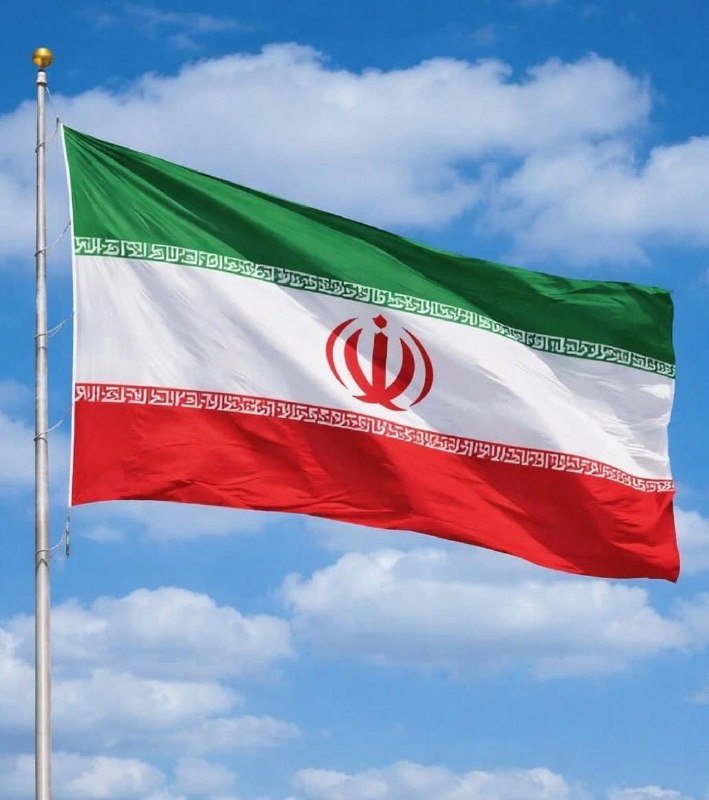
At 17:24 UTC on 17 June 2026, a channel with a track record of surfacing fast-moving conflict telemetry posted what it described as a "confirmed agreement" between the United States and the Islamic Republic of Iran: an immediate and permanent ceasefire in all theatres, including Lebanon, with commitments to halt the fighting. Eleven minutes later, the same platform carried a separate report, sourced to Bloomberg, publishing what it called the full text of a 14-point memorandum of understanding. By 17:35 UTC, a US official had reportedly handed White House journalists a draft of that same 14-point document — the first four points of which declared that the United States and Iran, "and their allies in the current war," would sign a binding MoU.
Within an hour, the Iranian negotiating team had publicly contradicted the text. According to Tasnim, a news agency affiliated with the Islamic Revolutionary Guard Corps, a source close to Iran's delegation said the version published by Bloomberg was not the document on the table in any negotiating room, contained multiple omissions, and misrepresented the parties' positions. The shape of the day — draft, leak, denial — is itself the news.
What the draft actually says
The text circulating from 17:33 UTC, distributed via channels that republish Western-wire and regional reporting, runs to fourteen numbered points. The first four, as relayed by Telegram channel Faytuks News from the Bloomberg publication, frame the document as a joint declaration: the United States, the Islamic Republic of Iran, and their respective regional partners binding themselves to the contents of the MoU. Subsequent points, also circulated in summary form, deal with the mechanics of a ceasefire — including its extension to Lebanon, a theatre where an active Israeli–Hezbollah front has been running for the better part of two years — and with the obligations each side is expected to assume once the ink is dry.
The structure is significant. The text is not a framework agreement, the kind of aspirational communique that usually closes a round of talks. It is drafted as a memorandum of understanding, a document with legal weight short of a treaty, and it is built to bind third parties — Iran, the United States, and the regional actors the document lumps together as "allies." That formulation is the first thing an Iranian negotiator would have a problem with. Iran's regional alignment runs through the so-called Axis of Resistance, a network of state and non-state actors that includes Hezbollah in Lebanon, the Houthi movement in Yemen, and a constellation of Iraqi militias, none of which negotiates as a single bloc and several of which do not take orders from Tehran in any operational sense. A document that treats them as a unitary signatory is, in effect, asking Iran to commit to behaviour by parties it cannot control.
The Iranian denial — and what it does and does not deny
Tasnim's reporting, picked up by Telegram channel World Fighter Witness and republished at 17:33 UTC, did not deny that talks are happening. It denied that the text circulating is the text the Iranian side has agreed to. The phrasing matters: an Iranian negotiator is not saying there is no deal, only that the document bearing the deal's name is not the document bearing the deal's terms.
That distinction is the kind of move regional delegations make when they want to preserve the option of a deal without owning the optics of a specific draft. It is also the kind of move that signals to domestic constituencies — Iran's hardline press, its parliament, the IRGC's own public-facing outlets — that the negotiators have not conceded what the headlines claim they have conceded. A leaked draft is a useful object for both sides: for the leaker, it sets a benchmark that becomes the political baseline of what a deal is "supposed" to look like; for the side that disowns it, it becomes a record of how far the other side was willing to push.
The Western press has, in this cycle, defaulted to publishing the text in its reported form. The Iranian side has, in the same cycle, defaulted to denying the text in its reported form. Neither move is innocent, and neither move is dispositive. Both moves, taken together, are the negotiation.
Why a 14-point structure is unusual
Most US–Iran diplomatic documents of the past two decades have been short. The 2015 Joint Comprehensive Plan of Action ran to roughly 150 pages but was negotiated as a single instrument, signed by Iran, the United States, the United Kingdom, France, Germany, Russia, and China, with the EU as coordinator. The structure of an MoU is normally a brief, signed at the political level, laying out the principles under which more detailed technical talks will proceed. A 14-point MoU, by contrast, is closer to a treaty than to a handshake. It is the kind of document you publish when you want it to do real work, not when you want it to be a placeholder.
That the first four points bind "allies" along with the principals is also the structure of a regional security architecture document — the kind of text Saudi Arabia, the UAE, and the United States have been quietly drafting around the defence relationship for several years, and the kind of text the Baghdad-brokered dialogue between Iran and Saudi Arabia pointed toward but never produced. If the text circulating is genuine, even in part, then the document on the table is not a nuclear deal. It is a regional architecture deal with a nuclear component bolted on.
That is exactly the kind of document Iran's regional partners would resist. Hezbollah's political leadership, currently operating under severe Israeli kinetic pressure in southern Lebanon, has no interest in signing anything that constrains its calculus. The Houthis, who have spent two years attacking Red Sea shipping in coordination with Iran's broader posture, are not a signatory party to anything. A deal that requires their consent is a deal that requires Iran to deliver something it cannot, in operational terms, deliver.
What the next seventy-two hours will tell
Three things are likely to happen before this news cycle closes. First, the Iranian foreign ministry will issue a more formal statement than Tasnim's source-led report, either confirming the existence of talks while narrowing their scope, or denying them outright if the political cost of being seen to negotiate becomes too high. Second, the Israeli government — which has been carrying the kinetic weight of the Lebanon front, and which has a first-order interest in any document that claims to bind Hezbollah — will demand to be consulted on text it has not seen. Third, the US Congress will begin asking, quietly, whether the executive branch intends to submit any resulting agreement for review under the terms of the Iran Nuclear Agreement Review Act, the 2015 statute that gives the legislature a window to weigh in on any deal that rolls back nuclear-related sanctions.
Each of these is, in its own way, a test of whether the 14-point text is the document the parties are actually signing or whether it is the document one party wanted the other party to be seen as signing. Until that test resolves, the working assumption should be that what is on the wire is closer to a press leak than a diplomatic instrument — and that the gap between the two is, this week, the most strategically important piece of real estate in the Middle East.
This publication has relied throughout on regional wire channels and Telegram reportage that are still moving; the ledgers above may shift in the next 24 hours as primary documents surface.
Wire provenance
This editorial synthesis draws on the following public wire/social posts:
- https://t.me/wfwitness
- https://t.me/wfwitness
- https://t.me/osintlive
- https://t.me/ClashReport
Follow the event.
These dated source records provide context. They do not retrospectively verify this archive article.
Separate what the nuclear watchdog reported from what it could not determine after the June 2025 strikes.