Tehran's leverage plays in the US draft: Lebanon's territorial integrity and the oil protocol
A draft US-Iran memorandum reportedly ties Lebanon's borders to Tehran's nuclear deal and opens space for Iranian crude exports — a quiet but consequential reshape of the region's bargaining geometry.
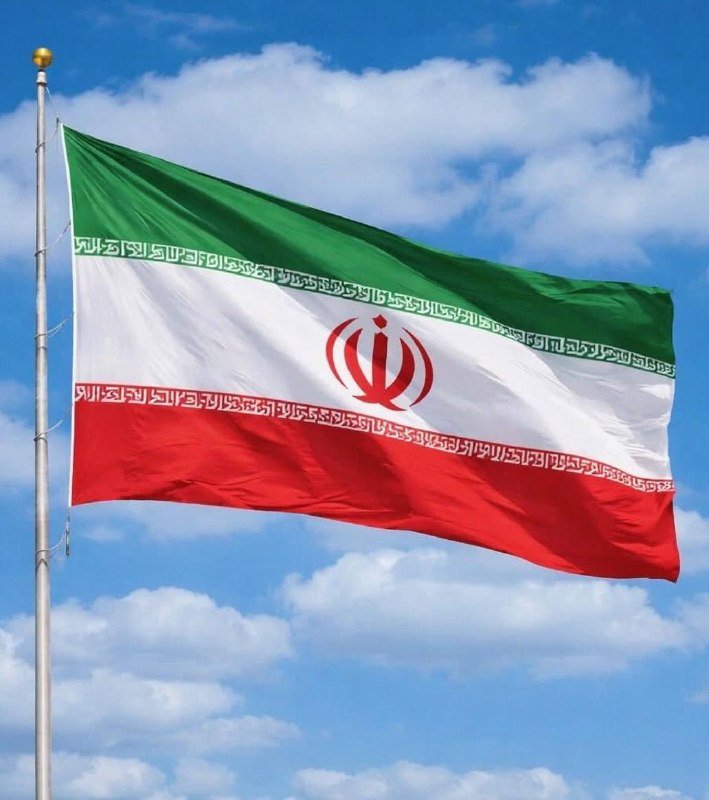
A draft US-Iran memorandum of understanding, reported on 17 June 2026, appears to entangle two previously separate files: the long-stalled nuclear diplomacy with Tehran and the territorial question of Lebanon after Israel's recent ground incursion. According to a wire summary circulated by Insider Paper on 17 June 2026 at 17:15 UTC, citing the Associated Press, the US draft contains provisions intended to ensure the "territorial integrity" of Lebanon in the wake of an Israeli invasion. Within minutes, the regional channel Clash Report added a second layer: Washington has assured Tehran that Iran will be permitted to sell its oil once a protocol agreement is signed. A third channel with links to Iran's military establishment asked, in effect, how Iran extracted the Lebanon concession from a US administration that has, until recently, framed its Middle East policy almost entirely through the prism of containment.
The plausible answer is leverage — and a particular kind of leverage at that. Tehran's bargaining position rests on the same assets it has monetised across the last decade of sanctions: a uranium stockpile, a network of non-aligned customers for its crude, and a portfolio of partner armed forces from the Levant to the Gulf of Aden. If the draft is what the wire says it is, those assets have been priced into a single instrument, and the price is written into the geography of a small Mediterranean state.
What the draft reportedly contains
The headline provision, as relayed via AP on 17 June 2026, is a US commitment to safeguard Lebanon's territorial integrity following the Israeli ground operation that began earlier this year. The text does not, on the face of it, pause that operation, nor does it return displaced Lebanese civilians to specific coordinates. What it does is bind Washington's signature to the political shape of the country that emerges from the fighting. In practical terms, that means any durable settlement — whether negotiated ceasefire, UN-brokered framework, or a bilateral US-brokered arrangement — will sit inside an envelope in which Lebanon's borders, including its southern frontier with Israel, are treated as non-negotiable.
That phrasing carries more weight than it might at first appear. Israeli officials have, in past phases of the conflict, raised the possibility of a buffer zone on Lebanese territory; Lebanese officials, including figures aligned with Hezbollah's political allies, have framed such a zone as a de facto annexation. By inserting "territorial integrity" language into a US-Iran file, Washington is, in effect, ruling one of those outcomes out of bounds before talks begin — or, more pointedly, before Tehran signs anything.
The second plank, reported by Clash Report on 17 June 2026 at 17:19 UTC, is the oil protocol. The framing — a US assurance that Iranian crude exports will be permitted once a protocol agreement is signed — sits awkwardly with the maximum-pressure architecture that has governed Iranian energy sales since 2018. The assurance is conditional and qualified; what it signals, however, is that the sanctions edifice is no longer the unmovable object it once was.
How Iran reportedly extracted the concession
The channel Iran_Military posed the question rhetorically on 17 June 2026 at 17:32 UTC: how did Tehran force the United States to put Lebanon into the same document as its nuclear file and its oil exports? Three mechanisms are plausible, and they reinforce one another.
First, denial. Iran's capacity to deny safe transit through the Strait of Hormuz, whether exercised directly or through partner forces, remains the single most credible chokepoint threat in the global energy system. Even a partial disruption of tanker traffic would push Brent crude into a price band incompatible with the inflation targets the US Federal Reserve has spent two years defending. A US-Iran protocol that quietly re-opens Iranian oil sales under a verifiable, monitored regime is, in that sense, a hedge against a much costlier disruption.
Second, proxy depth. Hezbollah's continued viability — and the Lebanese state's continued ability to absorb a postwar political settlement without collapsing — depends on Iranian matériel and political cover. A Lebanese state that collapses into factionalism, or that produces a southern political vacuum, is a worse outcome for Washington than a Lebanese state whose territorial integrity is guaranteed under a US seal.
Third, sequencing. By tying Lebanese territorial guarantees to a nuclear-and-oil package, Tehran reduces the probability that either the United States or Israel can address the Lebanon file on its own timetable. The file is now hostage — diplomatically — to a process Tehran has its hands on.
The counter-narrative: why the dominant framing may be incomplete
The Western wire framing treats the draft as a US-led achievement — evidence that the administration can simultaneously restrain an ally's operation and unlock Iran's oil, without conceding on enrichment limits. That framing holds up only if one assumes the administration has full visibility into every line of the Iranian draft and full control over its implementation. Neither assumption is watertight.
Iranian-aligned channels frame the same document as a victory of asymmetric bargaining — proof that sanctions pressure, in the long run, produces not isolation but the conditions for a more favourable deal. That framing holds up only if one assumes Tehran will honour the territorial-integrity provision in the same letter as Washington.
The honest read is that the document is a framework, not an enforcement mechanism. Its value lies in what it permits both sides to claim domestically: Washington can argue it has constrained Israeli action and capped Iran's nuclear programme; Tehran can argue it has secured a Lebanese guarantee and an export route. Whether the framework holds depends on variables — uranium stockpile verification, the pace of Israeli withdrawal, the price of Brent through the back half of 2026 — that no draft can fully constrain.
Stakes and what to watch
The most consequential near-term consequence is in the oil market. An Iranian export corridor, even a partial one, adds supply at a moment when Saudi Arabia and the UAE have shown little appetite for unilateral cuts. Brent's reaction over the next ten trading sessions will be a useful, if rough, measure of how much credible supply traders believe the protocol will actually unlock.
The second consequence is political, and it runs through Beirut. Lebanon's postwar cabinet formation, donor conference scheduling, and the question of reconstruction funding all sit downstream of whether the US seal on territorial integrity is honoured. If it is, Iran retains its most visible diplomatic win of the cycle. If it is not — if the Israeli operation continues past the points the draft implicitly rules out — Tehran will have demonstrated that US guarantees, on the Lebanese file specifically, carry less weight than its own regional assets. That is a conclusion neither side will reach quickly.
What remains genuinely uncertain, on the public reporting available on 17 June 2026, is the precise text of the draft. Wire summaries describe provisions; the document itself has not been published. Until it is, every analyst's claim about what Tehran won, what Washington conceded, and what Tel Aviv can or cannot do under the new envelope should be read as provisional.
Desk note: Monexus is reporting this as a wire-traceable framework story — the specific claims trace to three channel posts on 17 June 2026, with the AP-sourced Lebanon-territorial-integrity line carrying the heaviest weight. The bargaining geometry is the story; the document itself is still incoming.
Wire provenance
This editorial synthesis draws on the following public wire/social posts:
- https://t.me/insiderpaper
- https://t.me/ClashReport
- https://t.me/IRIran_Military
Follow the event.
These dated source records provide context. They do not retrospectively verify this archive article.
Separate what the nuclear watchdog reported from what it could not determine after the June 2025 strikes.