Kevin Warsh's Fed debut holds rates and points to a 2026 hike, putting markets on notice
In his first decision as chair, Kevin Warsh kept the federal funds rate on hold, but the median dot-plot now points to a quarter-point hike by year-end — a hawkish tilt that caught crypto and equities leaning the wrong way.
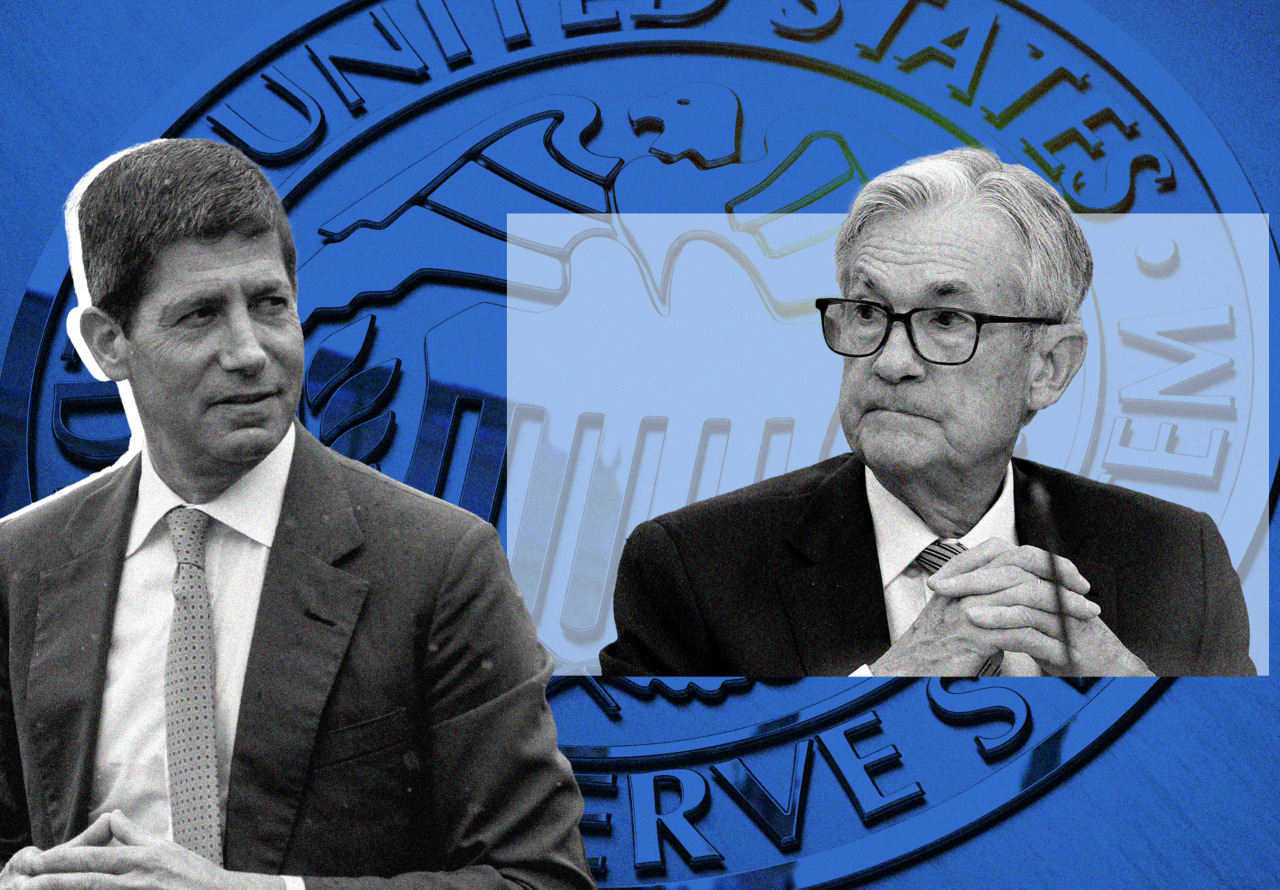
The Federal Open Market Committee held the federal funds rate steady on Wednesday, 17 June 2026, in the first rate decision of Kevin Warsh's tenure as chair — a debut that telegraphed less accommodation than the markets that had bid risk assets up into the meeting were braced for. Within hours, the median projection on the committee's dot-plot pointed to a federal funds rate of 3.8% by year-end, a quarter percentage point above the current target range, an outcome that traders parsed as a 2026 hike rather than the cuts they had been pricing in the week before. Bitcoin slipped, equities drifted lower into the press conference, and the dollar firmed — a textbook pattern when the world's most-watched central bank tightens into a rally. The episode offers the cleanest reading yet of how the Federal Reserve will communicate under its new leadership, and it puts the institution squarely in conflict with a White House that has spent the year demanding cheaper money.
Warsh is the figure at the centre of this shift. He inherits a committee that the median dot-plot suggests is now prepared to lean against price pressures with a hike, not a cut, by the end of 2026 — an unusually aggressive posture for a first meeting, and a sign that the institutional centre of gravity at the Fed has not moved in the direction markets had hoped. The press conference that followed, his first as chair, was the first real test of how he will narrate dissent inside the building to a public that has spent a year watching the institution's independence become a partisan football. The signals from the dot-plot, and from the silence of Warsh's own likely-abstaining vote, are themselves a kind of communication: a hawkish median with a chair who has not yet shown his own hand is a more durable signal than a hawkish median with a chair who has endorsed it.
A hawkish committee, a careful chair
The decision itself — to hold the target range for the federal funds rate unchanged — was the smaller of the two stories on 17 June 2026. The larger story was the projection: according to the median dot-plot, FOMC members see the policy rate ending 2026 at 3.8%, a quarter percentage point above where it sits today. That is not a forecast of a cut cycle. It is the explicit alternative. A market that had been pricing in two cuts by year-end, as the broader crypto and equity complex had been doing in the run-up to the meeting, was being told, in the institution's own numbers, to reprice.
That repricing began in real time. Bitcoin slipped as Warsh's debut "confronted an unexpectedly hawkish committee," in the framing of Telegram-wires tracking the spot move, and broader risk drifted lower into the press conference. The shape of the move matters. A first-meeting hawkish surprise from a new chair does two things at once: it tests the new chair's tolerance for market pushback, and it gives the committee a chance to discover what level of financial tightness the economy will absorb without breaking. Warsh, who made his career on the Federal Reserve Board in the 2000s and returned this year to lead it, is conducting that experiment in front of an audience that now treats every FOMC Wednesday as a referendum on dollar policy.
The likely-abstention note attached to the median projection — that Warsh himself probably did not file a dot consistent with that 3.8% figure — is more than a procedural detail. It marks the first visible distance between the chair and the median of the committee he now leads. That is, in institutional terms, a small piece of information with outsize significance: it tells markets that the chair reserves the right to dissent later, and that the path of least resistance inside the building still runs through a majority that wants policy tighter, not looser, by Christmas.
What the market had been pricing, and why it changed
Heading into the decision, traders had been building positions on the assumption that Warsh's first meeting would, at a minimum, deliver a softer tone — an acknowledgement that the disinflation that defined the back half of 2025 had bought the FOMC room to be patient, and perhaps to prepare markets for cuts later in the year. Telegram crypto desks captured that mood directly: "Markets drift lower as traders brace for Warsh's first Fed meeting," read one widely-circulated wire on the morning of 17 June, and "Federal Reserve chairman Kevin Warsh faces rate cut debate in first meeting" framed the question as if the answer were obvious.
The framing broke against the dot-plot. The committee's median did not soften. It hardened by a quarter point relative to where the funds rate sits today. A rate cut debate, in other words, was not what the committee was having internally. It was what the market wanted the committee to be having. Warsh's first press conference was therefore the first public moment in which a chair of the Federal Reserve had to explain, to an audience expecting accommodation, that the institution's centre of mass had moved the other way. The political economy of that exchange — a chair defending a hawkish median to a White House that wants cheaper money, to a market that wants cheaper money, to a crypto complex that wants cheaper money — is the new story of the Fed.
A dollar that tightens while everything else re-prices
A rate-hike signal from the Fed in mid-2026, with a chair who has not yet declared his own dot, lands inside a global financial architecture that has been quietly re-stitching itself for two years. The dollar's role as the dominant reserve and settlement currency gives the FOMC an outsize lever: when the Fed tightens by even a quarter-point, the price of that tightening is paid in emerging-market currencies, in cross-border funding costs, in the cost of dollar-denominated debt, and in the bid for the assets priced in the most liquid currency on earth. A committee that is willing to hike into a year in which the White House has been openly hostile to Fed independence is, in effect, asserting that institutional authority still sits on Constitution Avenue, not on Pennsylvania Avenue.
That assertion is the structural story of the 17 June decision. The crypto market's reaction — Bitcoin slipping, altcoin complexes like the Uniswap token moving on idiosyncratic catalysts while the broader market waits on the Fed — is a useful tell about how the dollar's plumbing now reaches directly into assets that, a decade ago, would have been thought to live outside the Fed's perimeter. The UNI-token surge in the same session, while Bitcoin slipped, is the cleanest illustration of the new regime: a market that no longer trades on a single risk-on/risk-off axis, but on a mesh of Fed-sensitive majors and idiosyncratic altcoin catalysts. The dollar is the binding agent of that mesh, and on 17 June it tightened.
For the Global South, a Fed that leans hawkish in mid-2026 lands as it usually does: harder. Cross-border funding is more expensive, the dollar bid is firmer, capital that might have flowed to emerging-market debt and equity is more likely to stay onshore. The structural complaint about dollar hegemony — that the world's payment system is hostage to a committee that answers to a domestic political mandate, not a global one — has a data point to point to. The case for non-dollar settlement architecture, and the political momentum behind it, gets quieter when the Fed is easing, and louder when the Fed is hiking. The 17 June median projection is, in that sense, a small gift to the multipolar-finance argument whether or not Warsh intended it.
What to watch before the next decision
The narrow question for the September meeting is whether Warsh files a dot of his own that aligns with the 3.8% median, or whether he continues to abstain. If he abstains again, the median will speak for the committee and the chair will have preserved optionality — a posture that markets will read as either deeply careful or deeply evasive, depending on the press conference. If he endorses the 3.8% path, the dot-plot becomes a contract, and the market's repricing on 17 June will look, in retrospect, like the first instalment of a longer tightening. If he dissents toward a lower rate, the committee fractures, the dollar weakens, and the political pressure from the White House becomes the dominant story.
The wider question is whether the Fed's institutional independence survives 2026. A chair who can hold rates and signal a hike against a president who has called publicly for cuts has, in one meeting, given the institution the kind of credibility it cannot buy with speeches. Whether that credibility lasts the year is a question the next three dot-plots will answer. On 17 June, at least, the dollar's referee appeared to keep his whistle.
What remains uncertain
The sources that fed the wires on 17 June do not, in every case, agree on what Warsh actually said in his first press conference. Telegram channels carried the headline that the Fed had held rates at "Warsh's first meeting in charge," and CoinDesk's market blog framed the press conference as the moment traders were waiting for, but neither outlet had published, as of 18:34 UTC on 17 June, a verbatim account of the chair's tone, his characterisation of the dot-plot, or whether he confirmed or deflected the read that a 2026 hike is now the base case. The likely-abstention note is the clearest piece of guidance this publication could verify; the substance of Warsh's first public remarks as chair is, for the moment, a story still being written.
Desk note: Where wire headlines read a soft-pedal from the new chair, the dot-plot told a harder story; this piece led with the dot-plot, because the median projection is the only verifiable signal in the public record as of 18:34 UTC on 17 June 2026.
Wire provenance
This editorial synthesis draws on the following public wire/social posts:
- https://x.com/i/broadcasts/1nKOLLjmrEWGR
- https://t.me/s/ClashReport
- https://t.me/s/CryptoBriefing
- https://t.me/s/CryptoBriefing
- https://t.me/s/CryptoBriefing
- https://t.me/s/CryptoBriefing