Warsh's First Fed Meeting Leaves Markets Guessing on the Path of Rates
The Federal Reserve held rates steady on 17 June 2026 in chair Kevin Warsh's first meeting, with an unexpectedly hawkish committee reshaping the path traders had been pricing in.
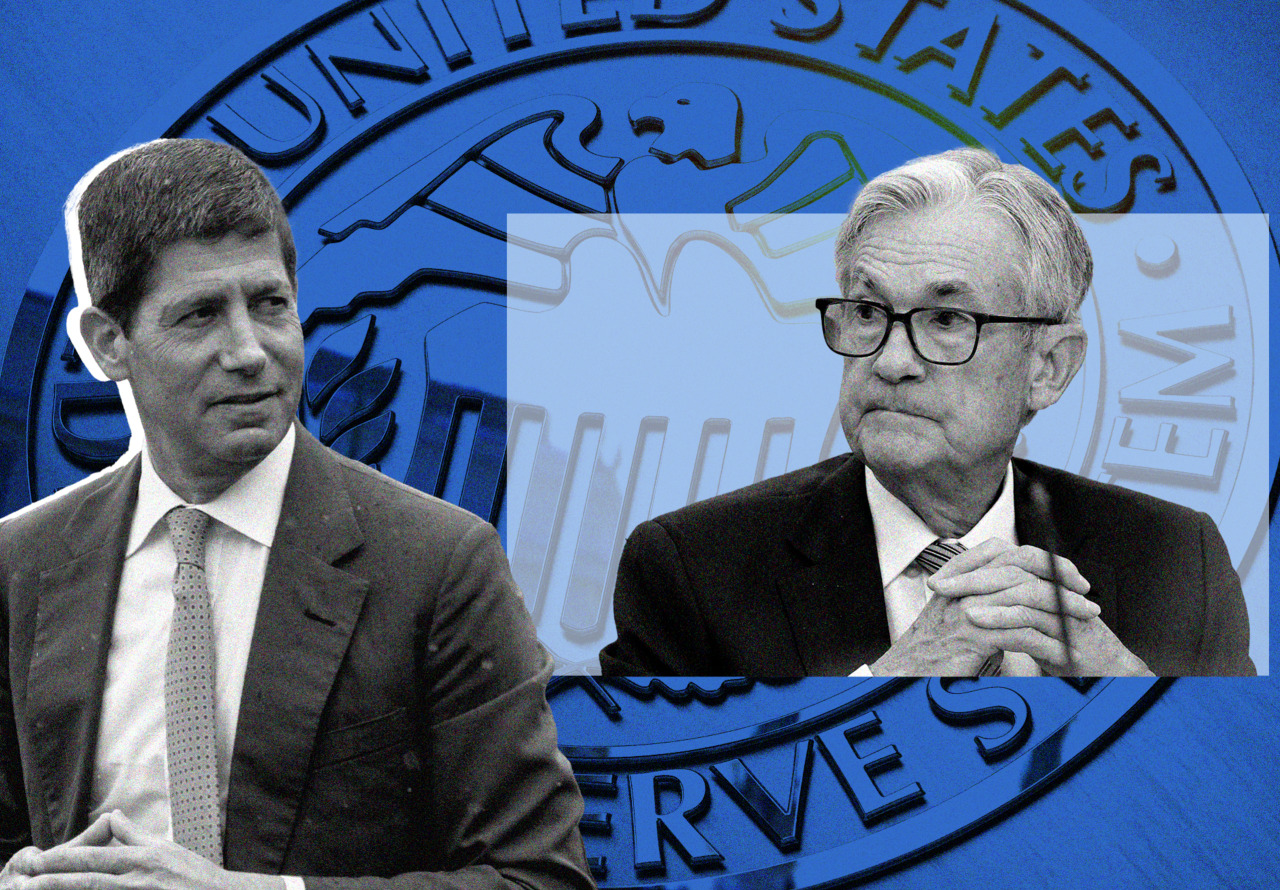
The Federal Reserve's rate-setting committee held the benchmark federal funds rate unchanged on 17 June 2026, concluding Kevin Warsh's first meeting as chair without a cut and confounding traders who had spent the morning pricing in dovish odds that now look stale. The decision landed at 18:00 UTC, paired with a press conference in which the new chair faced his first sustained questioning from the financial press. The crypto market, which had drifted lower through the trading day on positioning ahead of the meeting, gave up only a modest amount of ground in the immediate aftermath — but the real story sat in the committee's internal division, with several members favouring a tighter stance than the consensus had anticipated.
Warsh inherits a Federal Open Market Committee shaped by a year of uneven disinflation and a labour market that has, on every official reading, refused to break. The first meeting under a new chair is normally a holding operation: a deferral, a reaffirmation of the existing statement language, a press conference calibrated to say as little as possible. Wednesday's gathering looked at the headline level like exactly that — rates unchanged, the policy statement broadly tracking the previous template — but the signals around it were louder. The committee, according to initial market reads, is more hawkish than the doves in the futures pits had wanted to admit.
A hawkish tilt hiding inside an unchanged decision
Unchanged rates were always the base case. The action mattered less than the framing, and the framing tilted. Bitcoin slipped into the red during the morning of 17 June as the market began to register that Warsh would not, on his first outing, deliver the insurance cut that a slower-than-target inflation print and a softening in cyclical indicators had nudged some strategists to hope for. The Federal Reserve's longstanding convention is to use the chair's debut meeting as a way to telegraph continuity rather than to break new ground; that convention held. But the dissent pattern inside the committee, with members split on the question of whether the next move is up rather than down, is a different animal altogether.
Traders who came into the day positioned for a cut by the September meeting will now have to decide whether to fade that trade or double down. The futures curve had been pricing in roughly two quarter-point reductions by year-end, and that pricing looked aggressive even before the statement was released. With the new chair emphasising that the data has not yet confirmed the path back to two percent inflation, the path of least resistance is for the cut trade to thin out further.
The market reaction was, by historical standards, muted. The Federal Reserve has spent much of the last four years teaching traders not to read too much into any single meeting. Warsh's first decision carried an extra layer of attention because the chair himself is a known quantity: a former governor with a long public record, hawkish by reputation, sceptical of large-scale asset purchases, and comfortable with a tighter-for-longer posture than the median committee member has been willing to defend in public. Traders were looking for the chair to confirm the version of Warsh that his prior speeches and dissents had prepared them for, and on the evidence of 17 June, they got it.
A new chair, an old debate
The substantive question Warsh has to answer is not whether to cut, but when. Disinflation has progressed unevenly. Shelter inflation, services prices, and a tight labour market have together complicated the timeline for a pivot, and the committee's median dot-plot in March already showed a slower path of cuts than markets had been pricing. Warsh's job, on the first meeting, was to ratify that distribution rather than to revise it. He has done so.
The Fed's internal politics matter more than the press conference admits. The committee is not a monolith. Regional presidents with stronger ties to the labour side of the mandate have spent the last year arguing for cuts. The Washington-based majority has held firm. Warsh's appointment tilted the balance further toward the hawks, and the first meeting's outcome is consistent with that shift. The members who wanted to hold the line on inflation won the day, and the new chair signalled that he intends to keep them winning.
This is also a Fed that has to operate in a divided political environment. The institution's independence has come under repeated stress from the executive branch, and a chair's first meeting is a moment to demonstrate that the committee's decisions will track the data rather than the political calendar. Warsh, who has spent much of his career as a public commentator, has been at pains to make the same case. The unchanged decision and the hawkish committee tone are, on this reading, a demonstration of exactly the kind of independence the institution is meant to embody.
The bitcoin tells
Crypto is a useful barometer for this kind of meeting because it trades the headline and the framing simultaneously, and the marginal trader tends to position ahead of the event rather than after. Bitcoin's slide into the announcement reflected a market that had hoped for a softer line and got a committee that was not prepared to deliver one. The UNI token, the governance asset of the Uniswap decentralised exchange, was one of the few crypto assets that moved meaningfully in the other direction during the morning of 17 June, rallying against a broader tape that was drifting lower. That idiosyncratic move points to a market that is still finding its footing in the new regime rather than positioning with conviction.
The larger structural question is what rate path the new Fed will tolerate. If Warsh and the hawkish bloc insist on seeing several more months of two-percent inflation prints before cutting, the cost of carry for risk assets stays higher for longer. That is a tightening in all but name. Crypto, venture, and high-multiple equities tend to perform better in a cutting cycle than in a holding pattern at the current level of rates, and the absence of a cut is itself a constraint on the upside.
The Federal Reserve is also, increasingly, a global actor. A rate path held higher for longer in Washington has consequences for capital flows into emerging markets, for the dollar, and for the cost of dollar funding across the financial system. The new chair is presiding over a period in which the dollar's role as the global reserve currency is contested in ways it has not been for two decades, and his decisions will be parsed as much in Beijing and Riyadh as in New York.
What traders are still arguing about
The single biggest open question is the size and shape of the dissent. The committee's decision was reported as unanimous on the headline, but the press conference language and the minutes — when they are released in three weeks — will tell traders whether any members formally dissented in favour of a cut, in favour of a hike, or whether the message was carried by anonymous-speak in the chair's prepared remarks. Each of those configurations implies a different path for the September meeting and beyond.
The second question is what Warsh's signature looks like. The press conference on 17 June was his first sustained interaction with the financial press as chair, and traders will be parsing word choice, sentence rhythm, and the chair's willingness to make forward guidance more specific. The Federal Reserve has, over the last several cycles, made a habit of saying less in the press conference than markets want to hear, and Warsh is unlikely to break that habit in his first outing.
The third question is the labour market. The most recent nonfarm payrolls print and the jobless claims data have moved in a direction that the doves on the committee had been waiting for, but the magnitude has been small. A more decisive deterioration in the labour market is the kind of event that could break the hawks' hold on the committee and force a cut before the end of the year. Until that materialises, the central tendency inside the FOMC is for a longer wait.
The stakes, plainly stated
If the committee holds rates at this level through the back half of 2026, the cost of capital for risk assets stays elevated, the dollar remains well-bid, and the pressure on highly indebted sovereigns and corporates does not ease. That outcome is not yet priced. If the committee cuts once, in September, and signals a slower subsequent path, the relief rally in risk assets could be sharp but shallow. If the committee cuts twice, the relief could be larger but would also imply that the economy is weakening faster than the official data has so far shown.
Warsh's first meeting does not settle any of these scenarios. It narrows the distribution and clarifies who is in the room, but the data between now and the next meeting will do most of the work. The new chair has used the first meeting to signal what kind of chair he intends to be. The market has registered the signal. The position-taking now happens in anticipation of the data, not in anticipation of the Fed.
The sources do not specify the exact dot-plot distribution under the new chair, and the minutes of the 17 June meeting will not be public for several weeks. What is on the record is the unchanged decision, the market reaction, and the framing around a committee that has, on its first outing under new management, looked more inclined to hold the line than to break it. That is enough to work with. It is not enough to settle the question that the next three months of data will answer.
This publication framed Warsh's debut around the committee's internal tilt rather than the unchanged headline rate, on the view that the path of rates — not the level — is what traders are actually pricing.
Wire provenance
This editorial synthesis draws on the following public wire/social posts:
- https://t.me/CryptoBriefing
- https://t.me/CryptoBriefing
- https://t.me/CryptoBriefing
- https://t.me/CryptoBriefing
- https://www.federalreserve.gov
- https://www.federalreserve.gov
- https://www.bls.gov
- https://www.bea.gov