Adobe bets Creative Cloud on agentic workflows as Firefly moves from image factory to production line
On 18 June 2026 Adobe opened a public beta of agent-driven workflows across Creative Cloud, reframing its flagship suite from a toolbox of editing apps into an orchestration layer for media production.
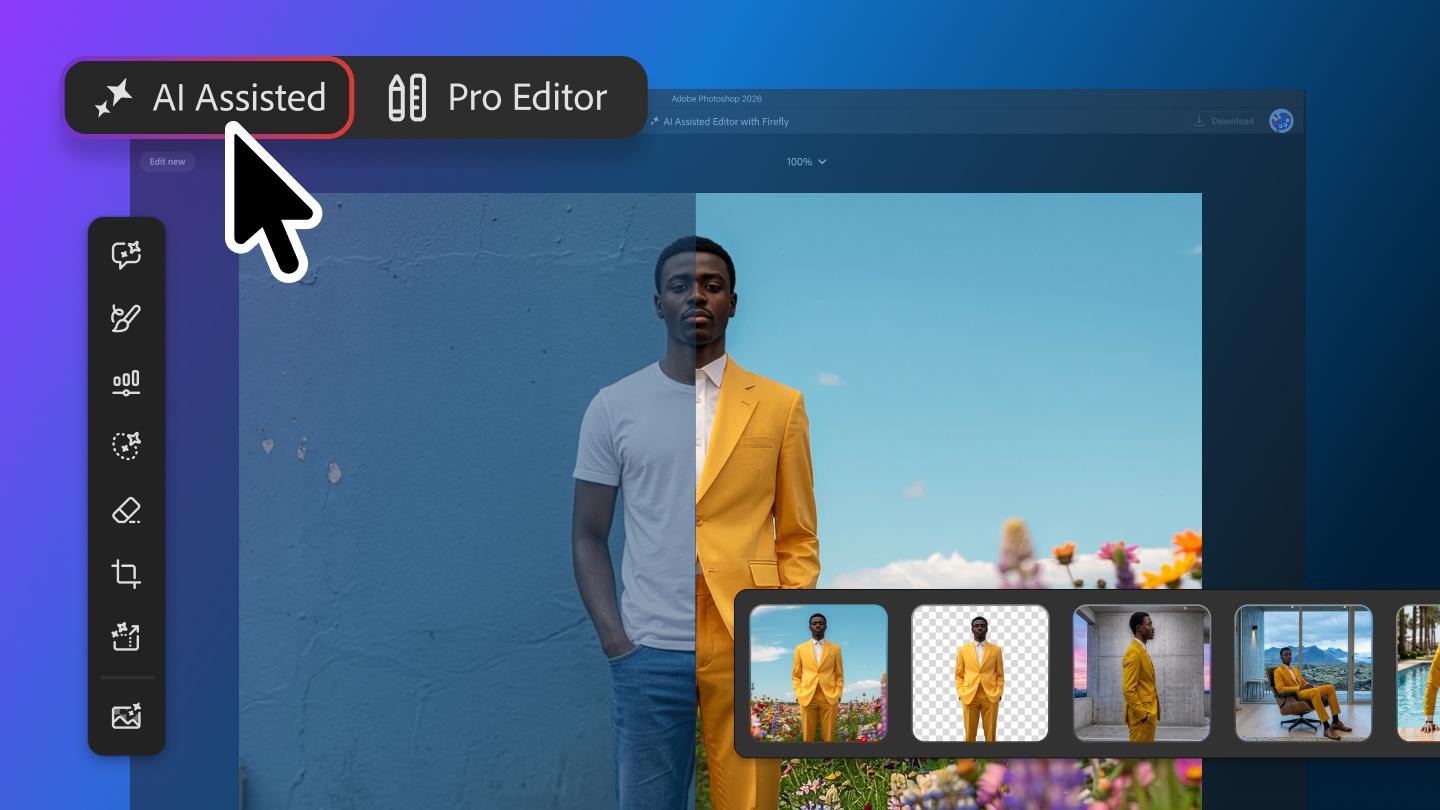
On 18 June 2026 Adobe opened a public beta of what the company is calling its "creative agent" inside the Creative Cloud suite, threading an agentic workflow layer through Premiere Pro, Photoshop and the upgraded Firefly AI Studio. The framing matters. Adobe is no longer positioning Firefly as a single-purpose image generator bolted onto Photoshop; the company is recasting its entire flagship product as a production-orchestration surface in which software agents plan, draft and revise media across applications. For a firm that built its empire on per-seat licensing for individual creative tools, the shift is consequential.
The strategic question is whether agentic workflows are best understood as the natural evolution of generative AI inside the creative software stack, or as a quieter admission that the standalone image-generation market has stopped being defensible. Both readings are well-supported. Adobe is moving at the same moment that foundation-model competition has flattened the visible quality gap between Firefly and rival image and video systems, and the company's own bet is that the durable value lives one layer up — in workflow, integration and brand-grade controls — rather than in raw model output.
What Adobe actually shipped
The public beta, available from 18 June 2026, surfaces a creative agent that sits across Creative Cloud applications and orchestrates tasks that previously had to be done manually between them, according to VentureBeat's write-up of the announcement. In Premiere Pro, the agent can sequence rough cuts from a brief, source existing project assets and assemble an initial edit. In Photoshop, the agent can run multi-step edits — masking, generative fill, compositing — from a higher-level instruction. The Firefly AI Studio upgrade is positioned as the central console: a place where brand owners, agencies and in-house teams can set style and policy guardrails that the agent then applies across every output.
That console is where Adobe's enterprise pitch sits. The Firefly AI Studio is being marketed less as a toy and more as a governance surface, a way for a holding company or an agency network to specify what its agents may and may not do with licensed and proprietary assets. Read in that light, the launch is less a generative AI product release and more a control-plane release.
The structural pressure underneath
The agentic pitch is also a defensive one. Adobe's generative-AI proposition, Firefly, was first sold on the basis of being "commercially safe" — trained on licensed and Adobe Stock imagery, indemnified for enterprise use, distinct from the scraping-heavy approach of consumer-facing image generators. That pitch held for a year or so. It holds less convincingly in mid-2026 as competing models have absorbed the commercially-safe training argument through partnerships with stock libraries, and as enterprise customers have begun to ask sharper questions about indemnification that no vendor can fully answer.
The structural pressure on Adobe is therefore double-edged. On one side, the company needs to keep selling a per-seat, license-fee model to creative professionals while the marginal cost of generated media falls toward zero. On the other side, the customers most willing to pay enterprise rates are the ones most interested in governance, attribution and workflow integration — exactly what an agent-plus-studio stack is designed to deliver. Adobe's bet, plainly, is that the second group matters more than the first.
The counter-narrative
A more sceptical read holds that agentic workflows are an over-correction. Generative AI's early promise was that it would democratise production — put pro-grade tools in the hands of anyone with a brief. Wrapping those tools in an agent layer that itself requires prompt-engineering discipline, brand-kit maintenance and policy configuration is, on this view, a step back toward the consultancy-shaped moat Adobe already occupied. The risk is that the agent becomes a new gatekeeper: fast and useful for the firms that can afford to tune it, opaque and brittle for everyone else.
There is also an open question about how far enterprise customers actually want their production software to act on their behalf. Vendor literature tends to glide past the failure modes of agents that confidently produce the wrong cut, the wrong aspect ratio or the wrong tone, and Adobe's indemnification will not cover a marketing campaign that lands badly because an agent misread a brief. The company will have to show, over the beta period, that the agent can be trusted with something closer to unsupervised execution than to a glorified macro.
The wider pattern
The launch is part of a broader repositioning of creative software around orchestration rather than authoring. The companies that have made the most aggressive moves in 2026 — including the major platform vendors — are all pushing the same thesis: that the model layer is becoming commoditised, and that durable margin will accrue to whoever owns the workflow between the model and the finished asset. Adobe's distinctive move is to put the orchestration layer inside the same subscription that already covers Photoshop and Premiere, rather than spinning it out as a separate enterprise product. That is a bet on its installed base, and on the assumption that creative teams will accept an agent they did not specifically request, provided it ships in the apps they already use.
The next six months will be informative. If the public beta produces evidence that enterprise customers are reconfiguring their production pipelines around Adobe's agent — licensing more seats, building brand kits inside Firefly AI Studio, routing work that previously sat in third-party tools back into Creative Cloud — the company's reframe will look prescient. If the agent is treated as a clever toy that gets switched off after the launch cycle, Adobe will find itself in the more uncomfortable position of having conceded the orchestration layer to a platform vendor with a much larger surface area and a much lower price point.
What remains genuinely uncertain is whether agents inside creative software are best understood as a productivity tool, a governance tool, or a new kind of vendor lock-in. The product announcement does not distinguish between those framings, and the public beta will produce evidence on all three at once.
This article builds on VentureBeat's reporting on Adobe's Creative Cloud and Firefly AI Studio announcements. Monexus treats the launch as a structural repositioning of the suite — from a per-seat toolbox of editing apps to a subscription-wide orchestration layer — rather than as a routine model upgrade.