Bafana Bafana's Group F lifeline: a point in Atlanta that rewrites the elimination script
South Africa salvages a draw with Czech Republic at Mercedes-Benz Stadium after a first half that should have buried them, keeping Group F alive going into the second matchday.
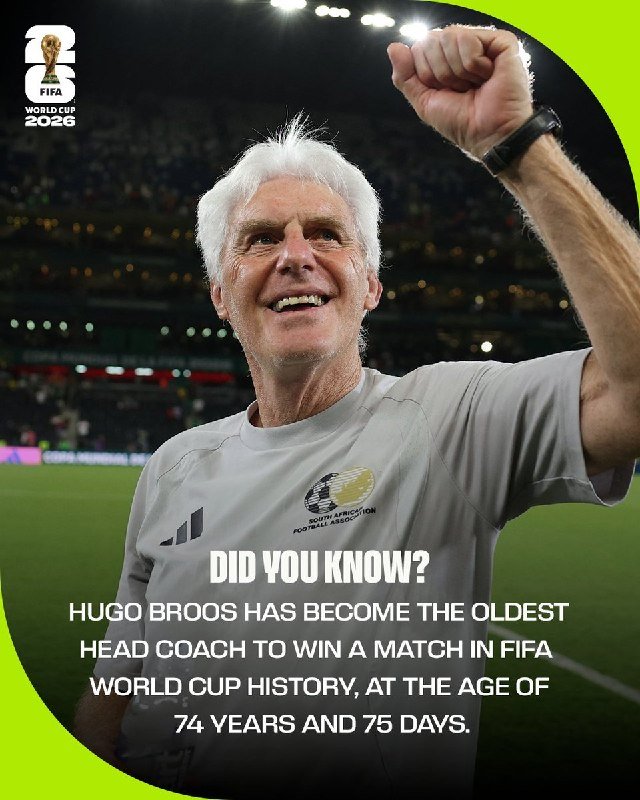
South Africa left Atlanta on the evening of 18 June 2026 with what the tournament's early standings had not given them a right to expect: a point. Bafana Bafana, written off after losing the opening matchday, recovered from a first half in which Czech Republic squandered the kind of chances that finish group-stage careers to draw the Group F fixture at Mercedes-Benz Stadium. The result keeps the South Africans alive in the competition and confirms that the section labelled "Group F" is no longer behaving like a procession.
The match, kicked off at 19:30 local time in Atlanta, was the day's clearest illustration of the World Cup's new arithmetic: a 48-team field, expanded group games, and a fixture list that punishes slow starters and rewards anyone still standing at the final whistle. South Africa arrived as the side with the least margin for error. They will leave Georgia with that margin reopened.
A first half that should have ended the contest
Czech Republic began the game as the side with the cleaner formbook and finished the first 45 minutes with a stat line that, on its own, ought to have settled the result. Sky Sports' live coverage recorded the Czechs "wasting big chances to take a 2-0 lead," a familiar opening paragraph for matches that turn into obituaries for the side that failed to convert. The pattern is well established: a team that creates and does not score against an inferior opponent, in a tournament format that compresses recovery time, tends to be punished. South Africa spent the interval absorbing pressure and asking their goalkeeper to do work that, on another night, he would not have been asked to do.
The Transfermarkt team-sheet dispatch for the fixture, circulated via the outlet's Telegram channel at 18:06 UTC, framed the match as a contest between "losers of the first week" — a brutal but accurate piece of bookkeeping. Both sides had lost their openers. Only one could reset the script in matchday two.
A second half that rewrote the script
South Africa did not merely survive the restart; they imposed themselves on it. France 24's match report, filed at 17:59 UTC and updated through the evening, summarised the second half bluntly: Bafana Bafana "fought back to earn a draw against Czech Republic." The phrasing is restrained, and that is the point. There was no miracle, no last-minute circus goal, no narrative-bending VAR intervention. There was a team that recognised the shape of the evening and decided to step into it.
The structural reading here is familiar to anyone who has watched African sides at recent World Cups. Group-stage elimination in the expanded format is rarely about talent gaps; it is about who manages the middle forty-five minutes. South Africa managed them. Czech Republic did not.
What the table now says
Group F was, on paper, the kind of section where one result could dictate everything downstream. A Czech win would have put the European side on four points and left Bafana Bafana staring at elimination with a goal difference deep in the red. A South African win would have resurrected a side that had been counted out. The draw, the outcome that the first half made unlikely, leaves the group in the most uncomfortable configuration for the favourites: a logjam, with three points splitting the top three if the late-window results fall in the obvious places.
That is the world South Africa wanted. It is not the world Czech Republic wanted. It is, crucially, a world in which a draw in Atlanta travels as far as a win in the expanded standings.
The stakes for matchday three
Both sides now have one result to forget and one result to build on. For South Africa, the away trip becomes a question of whether the second-half intensity survives a short turnaround. For Czech Republic, the question is sharper: a side that created enough to win by two and finished with a point will spend the next seventy-two hours asking how. The Transfermarkt team-sheet, by listing both starting XIs, made the tactical choices visible: the Czechs went into the game with the side expected to dominate possession; the South Africans went in with a side built to absorb and counter. The counter, when it eventually arrived, was enough.
The broader story is not South African or Czech. It is the World Cup itself. The 48-team format was designed, in part, to keep precisely these fixtures alive deep into the second matchday. A draw in Atlanta is a small data point in that experiment. It is also, for the side wearing the gold shirt, a reminder that the tournament has only just begun.
The Monexus desk framed this fixture through the South African recovery arc, with Czech Republic's first-half profligacy as the structural counterweight. Wire coverage from Sky Sports and France 24 supplied the live texture; the Transfermarkt Telegram channel supplied the team-sheet provenance.
Wire provenance
This editorial synthesis draws on the following public wire/social posts:
- https://t.me/s/Transfermarkt