Berri's conditional ceasefire line keeps the Lebanon–Israel truce alive on paper, not in practice
The Lebanese parliament speaker's 18 June statement keeps the U.S.-brokered arrangement formally intact — and exposes how little enforcement sits behind it.
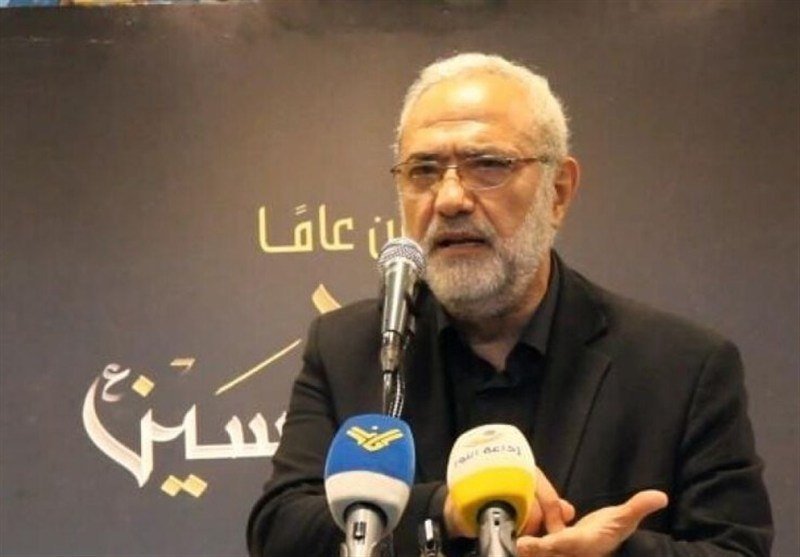
On 18 June 2026, the speaker of the Lebanese parliament publicly restated the obvious — and, in doing so, told both sides of the ceasefire how brittle their arrangement really is. Nabih Berri, the long-serving Amal movement leader and Hezbollah's principal political interlocutor, said in remarks carried by Al Jazeera Arabic and relayed through the channel's English-facing accounts that Hezbollah remains committed to the truce "as long as Israel fully and comprehensively adheres to it." The conditional formulation, issued from Beirut, is now the operative public line of the entire Lebanese political establishment on the U.S.-Iran memorandum of understanding that has nominally frozen the cross-border front.
That a cease-fire has to be re-announced by a parliamentary speaker, rather than enforced by the parties that signed it, is the story. Berri is not a peripheral figure in this arrangement. He is the channel through which Iranian-aligned diplomacy reaches Beirut's official institutions, and his words function as the public script for the Shia coalition's compliance posture. When he says Hezbollah is committed only on the condition of Israeli adherence, he is signalling — in deliberately legalistic language — that any new Israeli strike, incursion, or even ambiguous overflight can be treated as a material breach, with a Hezbollah response framed as defensive restoration of the truce rather than aggression against it.
The phrasing is not new, and that is precisely why it matters. Lebanese and regional outlets carried near-identical versions of the same statement across the evening of 18 June: Berri "confirms" commitment, "as long as Israel fully and comprehensively abides." Tasnim, the Iranian state news agency that has become a routine English-language relay for the axis-aligned position, framed the line as a confirmation of Hezbollah's good faith. Open-source-intelligence channels reading the Arabic wire stressed the conditional clause, noting that the U.S.–Iran memorandum is the operative reference document and that the Lebanese side is publicly tying its compliance to that text. The redundancy of the messaging — five near-simultaneous relays of the same sentence across Telegram channels in less than two hours — is itself a tell. It is the diplomatic register of a ceasefire that both sides want to keep talking about because neither side is sure it is holding.
The structural point is straightforward. A durable ceasefire is enforced by the parties that sign it, with third-party guarantors holding them to specific terms. What is being described here is something thinner: a verbal architecture in which Lebanese leaders confirm adherence, Israeli actions are held to a vague standard of "full and comprehensive" compliance, and the binding instrument is a memorandum whose text has not been made public. Each side retains the right to declare the other in breach on its own evidence. The conditional clause Berri has now made canonical is, in effect, a pre-registered notice of dispute — a way of saying that when, not if, the next incident occurs, Hezbollah's response will be retrospectively justified as a return to the original terms.
The counter-reading is that the conditional framing is itself a stabilisation device. Israeli security concerns along the northern border are real and well documented, and the current arrangement has held longer than several previous rounds. By making Lebanese commitment contingent on Israeli behaviour, Berri is also making it domestically defensible: if Israel provokes, he has not given Hezbollah a blank check; if Israel does not, he has put the burden of restraint on his own side in a way that the Lebanese Sunni and Druze opposition, the army, and external donors can live with. That is the reading under which the statement is diplomacy rather than threat.
The honest assessment is that the evidence does not yet let a reader choose between those readings. The sources available on 18 June are all variants of the same line from the same speaker, filtered through outlets with explicit alignments — Al Alam Arabic on the axis side, Tasnim as Iranian relay, open-source-intelligence channels paraphrasing Arabic wire, and aggregator accounts. None of them reports a specific new incident that would have triggered the statement. None of them carries an Israeli response to the conditional formulation. None of them publishes the text of the U.S.–Iran memorandum or enumerates what "full and comprehensive adherence" operationally means — overflights, ground operations, prisoner files, border demarcation. The wire that is missing is the Israeli one, and without it the statement is best read as a pressure instrument: cheap to issue, easy to repeat, and designed to be invoked when the next crisis arrives, whoever causes it.
The stakes, in plain terms: if the line holds, the northern front stays quiet and the broader U.S.-Iran track retains its most visible proof of concept. If the line is tested — by an Israeli strike in Lebanon, a Hezbollah rocket, a drone, or even a symbolic operation — both sides will reach for Berri's conditional clause as legal cover, and the ceasefire will be revealed for what it currently is: a verbal arrangement with teeth only as sharp as the next incident permits. The 18 June statement is best understood not as news of a deal, but as the public text that will be quoted by whichever side needs to act first.
Desk note: Monexus ran the Berri statement against the major wire services in English. The Israeli institutional response — IDF spokesperson, Prime Minister's Office, Foreign Ministry — has not been recorded in the available source set as of 19:54 UTC on 18 June. The piece is therefore deliberately held short of claiming an Israeli position; the conditional formulation is treated as a Lebanese public-script event, not as a bilateral diplomatic exchange.
Wire provenance
This editorial synthesis draws on the following public wire/social posts:
- https://t.me/tasnimnews_en/
- https://t.me/wfwitness/
- https://t.me/JahanTasnim/
- https://t.me/osintlive/
- https://t.me/alalalamarabic/