Bitcoin is bleeding. The story it tells is not about Bitcoin.
A 10-place slide down the global asset rankings, a sub-$63,000 print, and a $21 billion capital gap at the most ambitious mining-to-AI pivot on the books. The trade is no longer the trade.
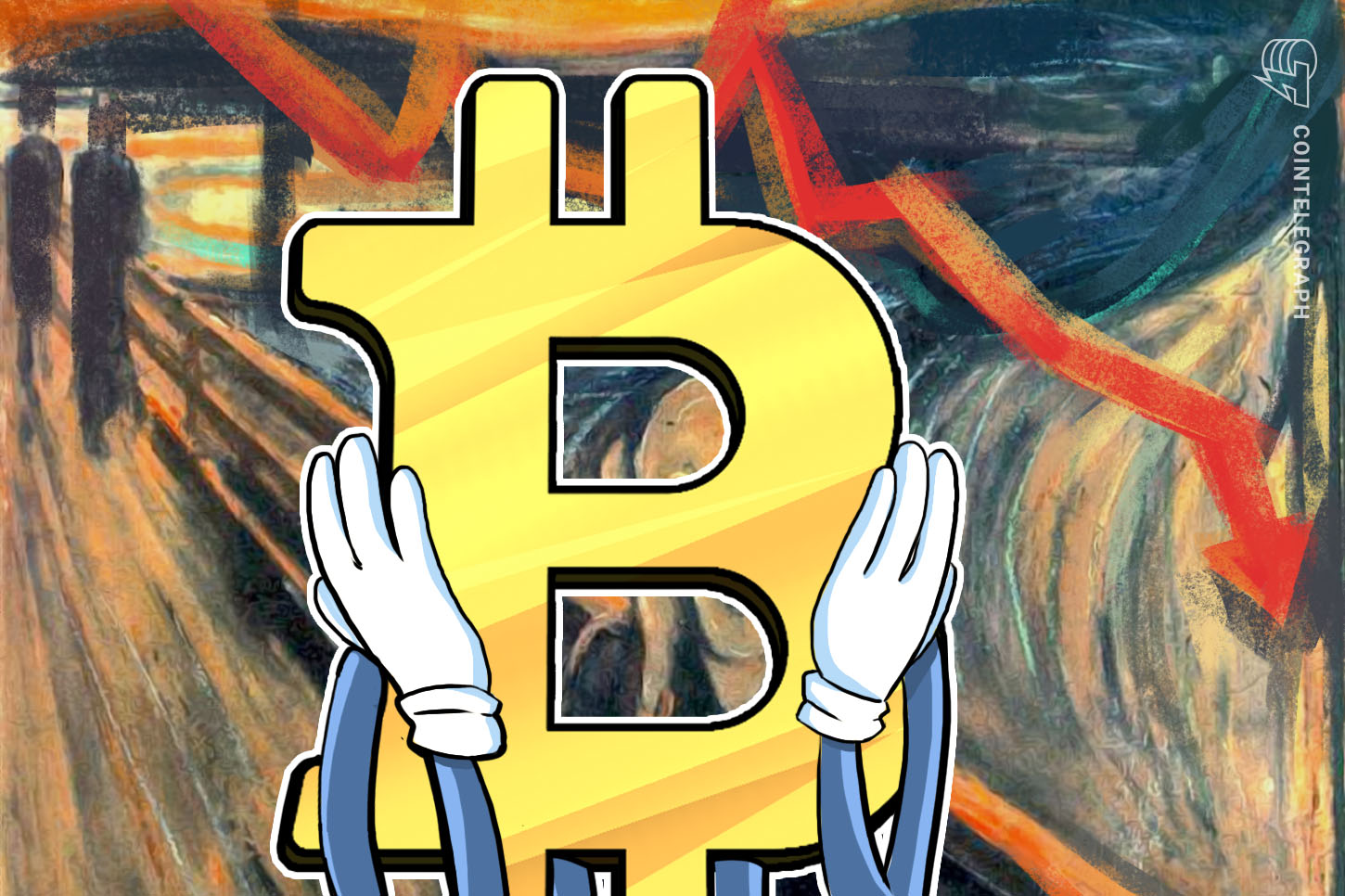
On 18 June 2026, Bitcoin traded below $63,000 — a level that would have looked quaintly bullish eighteen months ago and now reads as a warning light on the dashboard of an entire asset class. Cointelegraph reported the move in real time, framing it inside a familiar story: capital rotating out of crypto and into artificial intelligence. The framing is not wrong. It is just incomplete, and the part it leaves out is where the real story is.
The bear case has, for months, been that Bitcoin is being delisted — slowly, politely, by a market that has moved on. CoinDesk on the same morning pointed to the bond market as the more honest signal: rates are not co-operating with the bull thesis. Cointelegraph went further, projecting that Bitcoin's market-cap ranking will not recover its place inside the world's top five assets for five to ten years. That is not a trader's dip. That is a structural demotion.
The trade has changed
For most of the last cycle, the mental model was clean: Bitcoin is digital gold, the macro tailwinds are obvious, the halving tightens supply, and the rest is timing. That model is now visibly broken, and the cracks are appearing exactly where the most credible operators are supposed to be.
IREN, one of the largest publicly listed Bitcoin miners, faces a projected $21.1 billion funding gap to convert its mining footprint into AI data-center capacity, per Cointelegraph's reporting on 18 June. Read that number twice. It is not the size of an investment. It is the size of a small country's annual budget, demanded by an industry whose entire revenue base was supposed to come from selling blocks. The pivot to AI was sold as the natural next move for sites already wired for power and cooling. The math is more honest: it is a confession that the original business no longer pays for the capex required to compete with hyperscalers.
The AI bid is real — and that is the problem
None of this is to deny that AI is the most concentrated capital magnet in the market right now. The same day's coverage makes the case plainly: Bitcoin's correlation with technology stocks has decoupled, with capital flowing toward AI infrastructure, and a Polymarket-tracked print confirming the sub-$63,000 move. The AI bid is pulling the oxygen out of the room.
But the AI bid is not a Bitcoin-killer on its own. Bitcoin has weathered plenty of "this time it's different" narratives. The difference now is that the marginal buyer — the institution, the corporate treasurer, the diversified hedge fund — has somewhere genuinely better to put the money for the first time in the cycle. The bond market's signal on rates, flagged by CoinDesk, tightens the vice: the discount rate is not falling fast enough to underwrite a long-duration digital asset at a price the bulls need.
A narrative under siege
It is worth pausing on the culture around the price. On the same day, Cointelegraph catalogued the viral 4chan "crazy accurate" prediction that put Bitcoin at $145,000 by October — and then walked through why the post was almost certainly edited after the fact. The exercise was useful less as a prediction than as a portrait of a market that wants to believe. When a community is reverse-engineering 4chan threads for confirmation, the trade is no longer being driven by fundamentals. It is being driven by the need for the narrative to still be true.
This publication has argued before that markets run on story as much as on flow. The 4chan thread is the story eating itself.
The structural read
Set the pieces together. A top-five asset sliding ten places since mid-2025. A flagship pivot-to-AI play facing a capital gap measured in tens of billions. A bond market signalling that the cost of money will not bend in the bulls' favour. A speculative crowd reaching for unverified predictions to keep hope alive. Each of these on its own is a wobble. Together they describe an asset class being repriced by a market that has found a better home for the marginal dollar.
That does not make Bitcoin worthless. It makes Bitcoin ordinary — which, for an asset that sold itself on being anything but, is the harshest verdict the market can deliver.
What remains genuinely uncertain
The sources do not specify how much of IREN's $21.1 billion gap will be financed by equity versus debt, nor whether the pivot will close as AI capex normalises. They do not tell us whether the bond market's signal is a pause or a regime change. They do not — and cannot — tell us whether the 4chan prediction will prove a fortune or a footnote. Anyone who tells you they know is selling the same story the thread is selling.
What the sources do say, taken together, is that the Bitcoin trade has changed shape. The question for the next eighteen months is not whether the price recovers. It is whether the asset finds a new reason to be bought once the old one has run out.
Desk note: Where wire coverage framed this as a routine risk-off rotation, Monexus treated the 18 June print as a referendum on Bitcoin's structural standing — and on the credibility of the AI-pivot story being sold to investors by the miners themselves.
Wire provenance
This editorial synthesis draws on the following public wire/social posts:
- https://x.com/polymarket/status/