Canada edges Qatar in a Group B opener that says more about depth than destiny
A goalkeeping error handed Canada an early 1-0 lead over Qatar in their Group B clash — a result that recalibrates the knockout math more than it rewrites either side's tournament.
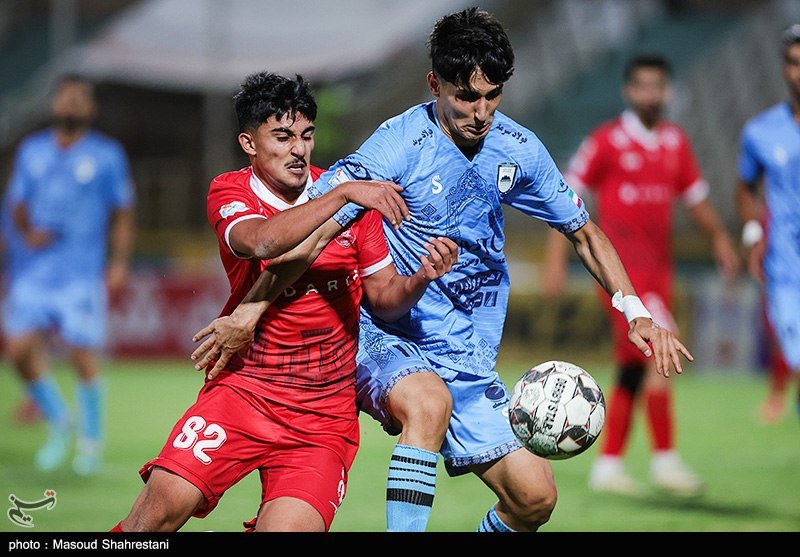
A loose touch from Qatar's goalkeeper, an incomplete save, and Canada had the goal that shapes Group B. The match was still in its opening exchanges at 22:25 UTC on 18 June 2026 when the breakthrough came — Canada 1, Qatar 0 — in a fixture both sides entered with a point already on the board. The early lead, per Fars News's match clip, was the product of a defensive misjudgment rather than a sweeping move, which is its own kind of information about where these two teams stand.
The result matters less for its aesthetic than for its arithmetic. Group B is a four-team bracket in which goal difference and head-to-head quietly do as much work as points. A 1-0 win in matchday two is the kind of result that turns a third matchday into a controlled experiment rather than a coin-flip, and a draw in matchday one — which is what both Canada and Qatar arrived carrying after their respective openers — leaves no room for a second stumble.
The shape of the game so far
Canada came into the match at 22:01 UTC on the back of a draw against Bosnia and Herzegovina, with Qatar arriving on the same footing after a shared-point opener of their own, according to TeleSUR English's live match thread. That symmetry — two teams with one point, neither yet distinguished by goal difference — is exactly the position in which an early concession is most expensive. The team that concedes first in such a fixture is the team that has to decide, in real time, whether to commit numbers forward and risk a second, or to sit on the ball and let the clock drain the tournament.
Canada's goal, as broadcast by Fars News, came from Qatar's goalkeeper: a mistake, then an incomplete save, then a tap-in the defence could not scramble clear of. The pattern is familiar from dozens of international fixtures — goalkeeping errors are not random, they correlate with backline pressure, with the angle of the cross, with the number of bodies committed into the box. Canada's press appears to have forced the situation; Qatar's keeper could not absorb it.
What this tells us about Qatar's ceiling
Qatar is the host of the 2022 tournament — a fact that still shapes how the squad is read internationally, sometimes more generously than the recent form deserves. The 2026 cycle is a different problem: there is no home crowd to lean on, no automatic allocation of offside calls going the other way, and the group is unforgiving. A goalkeeping error in the first half-hour of a must-not-lose fixture is the kind of tell that coaches file away.
The counter-read is real, and it is worth stating plainly. Qatar's domestic league has produced talent, the Aspire Academy pipeline is a serious infrastructure, and the squad is younger than the team that played in 2022. A 1-0 deficit at the hour mark is recoverable. But the margin for recovery in a four-team group, with two of the three opponents above you on technical pedigree, is narrow. Qatar cannot afford a second matchday mistake of the same kind.
What this tells us about Canada's depth
Canada's rise up the FIFA rankings over the last cycle is not a media artefact. The squad that took the lead in the 22nd minute of a World Cup group game has players who play at the top of the European club system, and a coach who has internalised the modern game. The 1-0 lead does not mean the match is won; it means Canada has converted pressure into a lead, which is precisely the conversion that smaller federations historically fail to make.
The honest counterpoint: one goal, off a keeper's error, is a thin thread. Canada still has to defend for sixty-odd minutes against a team that now has nothing to lose. The next forty-five minutes of this fixture will tell us more about Canada's ceiling than the goal itself did.
Stakes and the wider bracket
By 22:30 UTC, the live picture inside Group B is this: Canada has a lead, a point gap, and a goal-difference edge over Qatar. Both teams remain in the knockout conversation. Neither is safe. The match is the kind that gets replayed in highlight packages and forgotten in the bracket — unless, of course, it is the match on which the rest of the group turns.
What remains genuinely uncertain, on the evidence available now, is the full-time shape of the result. Fars News's clip captures the goal, not the rest of the ninety minutes. TeleSUR English's match thread confirms the lineups and the stakes. Beyond those two data points, the wire has not yet spoken, and the structural read of Canada's tournament will turn on what happens between the 23rd minute and the final whistle.
This publication framed the goal as a goalkeeping event with tactical context — the dominant wire line is treating it as a one-off error. Monexus finds the structural read on Qatar's defensive shape and Canada's conversion of pressure more useful framing for the rest of the group stage.
Wire provenance
This editorial synthesis draws on the following public wire/social posts:
- https://t.me/farsna