Cannavaro's Uzbekistan debut and Congo DR's first World Cup goal headline a tournament built on firsts
Fabio Cannavaro opens his World Cup managerial account with Uzbekistan, while Congo DR scores its first-ever World Cup goal — two of the tournament's quiet firsts that say more about its geography than its glamour.
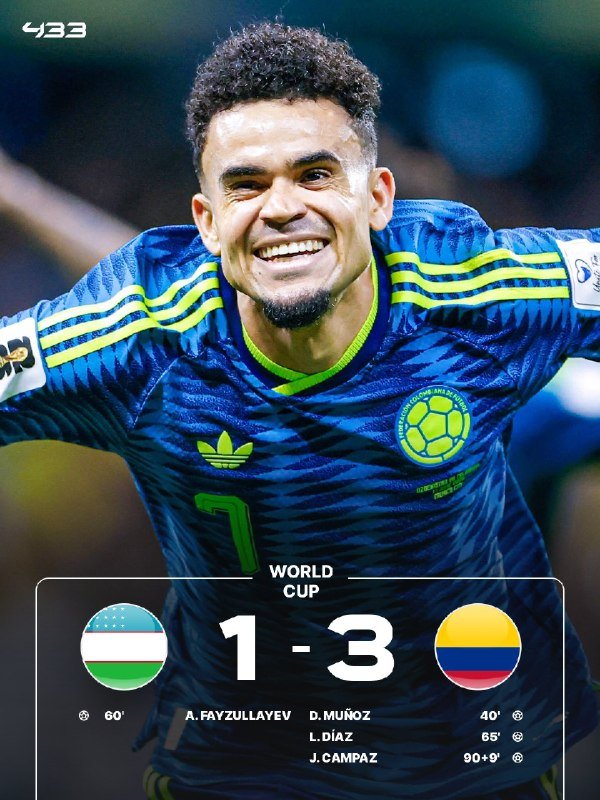
Fabio Cannavaro walked into a World Cup dugout for the first time on 18 June 2026, twenty years to the season after he lifted the trophy as Italy's captain. His Uzbekistan side, written off in most previews as group-stage filler, is the assignment. Across the day's other fixture, Congo DR recorded a first-ever FIFA World Cup goal — the kind of milestone that does not move transfer markets but quietly redraws the map of who the tournament belongs to.
The 2026 World Cup is the largest in the competition's history, expanded to 48 teams and staged across three host nations. The headline acts are the usual suspects, but the undercard is where this edition is doing its real work: a 2006 world champion managing a central Asian federation that did not exist as an independent country when he lifted the trophy, and a Congolese side breaking a scoring duck that has hung over the country since independence. Two matches, two firsts — and a tournament whose centre of gravity is moving.
Cannavaro's second life at the tournament
Cannavaro's appointment as Uzbekistan head coach, confirmed earlier this year, makes him one of the few players to have both captained a World Cup-winning side and managed at the same tournament. He inherits a federation that has invested heavily in infrastructure and academy football but has never advanced past the group stage. The Uzbekistan Football Association framed the hire as a statement of intent — a winning mentality imported wholesale, in the words of officials quoted in regional coverage at the time of his appointment.
The tactical questions are familiar to anyone who watched Cannavaro as a player: his teams defend in shape, concede little, and trust set-piece efficiency to settle tight matches. Whether that template travels to central Asian football, where physical profiles and pitch conditions differ markedly from the Serie A environments in which Cannavaro coached most recently, is the open variable. Uzbekistan's warm-up form offered little to settle the debate either way.
Congo DR's first goal — and what it signals
The Democratic Republic of Congo's first-ever World Cup goal, confirmed via FIFA's official channels on 17 June 2026 at 18:12 UTC, is a milestone worth pausing on. The country has appeared at the tournament before — most recently in qualifying campaigns in recent cycles — but had never registered on the scoresheet at the finals. The goal came in a match context that the wire feeds described in celebratory rather than analytical terms; FIFA's own social channel led with the emotion of the moment rather than the identity of the scorer or the minute.
For a country whose football federation has spent the best part of two decades rebuilding after years of administrative disruption, the goal is a credential. It does not, on its own, change the group-stage mathematics. But it does change the frame inside which African federations are talked about at this tournament: less as participants making up the numbers, more as sides capable of producing the kind of moment that drives broadcast clips and merchandise sales.
A tournament whose map is widening
Step back from the two headlines and the structural story is straightforward. The expanded 48-team format has, as its boosters promised, pulled in federations that the tournament's traditional broadcast markets had little reason to follow. Uzbekistan and the various Asian qualifiers now arrive with kit deals, sponsor activations, and domestic TV rights contracts that did not exist a decade ago. The economics are unglamorous but real — FIFA's distribution model for the expanded tournament skews more heavily toward participation payments to member federations than the old 32-team model did.
The counter-narrative is also familiar: expansion dilutes quality, lengthens the calendar, and rewards federations whose football infrastructure cannot honestly compete. That case has merit, and it is the line that most European coaching voices still take in private. But it understates how much of the modern World Cup product is sold on narrative — underdog runs, debut goals, manager reinventions — rather than on the quality of the closing matches. The expanded format produces more of the former without measurably damaging the latter.
What the next week settles
The two results matter less than the precedents they establish. Cannavaro's tenure will be judged over the group stage and, if Uzbekistan squeezes through, the first knockout round. A coaching debut against a ranked opponent offers limited room for error and a great deal of exposure. Congo DR's goal will be the kind of clip that lives on highlight reels for the rest of the tournament, but the on-pitch consequences depend on whether the side can convert the emotional lift into a result against its remaining group opponents.
The wider question — whether an expanded tournament genuinely broadens who the World Cup is for, or simply adds more acts to a show whose audience remains the same — will not be settled in June. But the data points are accumulating. A 2006 captain managing central Asia, a Congolese side scoring its first goal, a 48-team field that includes sides which would not have qualified under the old format — each is small on its own. Together they describe a tournament whose geography is no longer a subset of its history.
Desk note: Monexus framed this as a structural story about tournament geography rather than a match report. The wire feeds led with the result; the more durable signal is the first.
Wire provenance
This editorial synthesis draws on the following public wire/social posts:
- https://t.me/FIFAcom/
- https://t.me/FIFAcom/
- https://t.me/TheAthletic/