Cape Verde's World Cup Debut Reshapes a Nation's Visibility
A scoreless draw with Spain, a goalkeeper's tears, and a mother's visa: Cape Verde's first World Cup match is being absorbed as something larger than a sporting result.
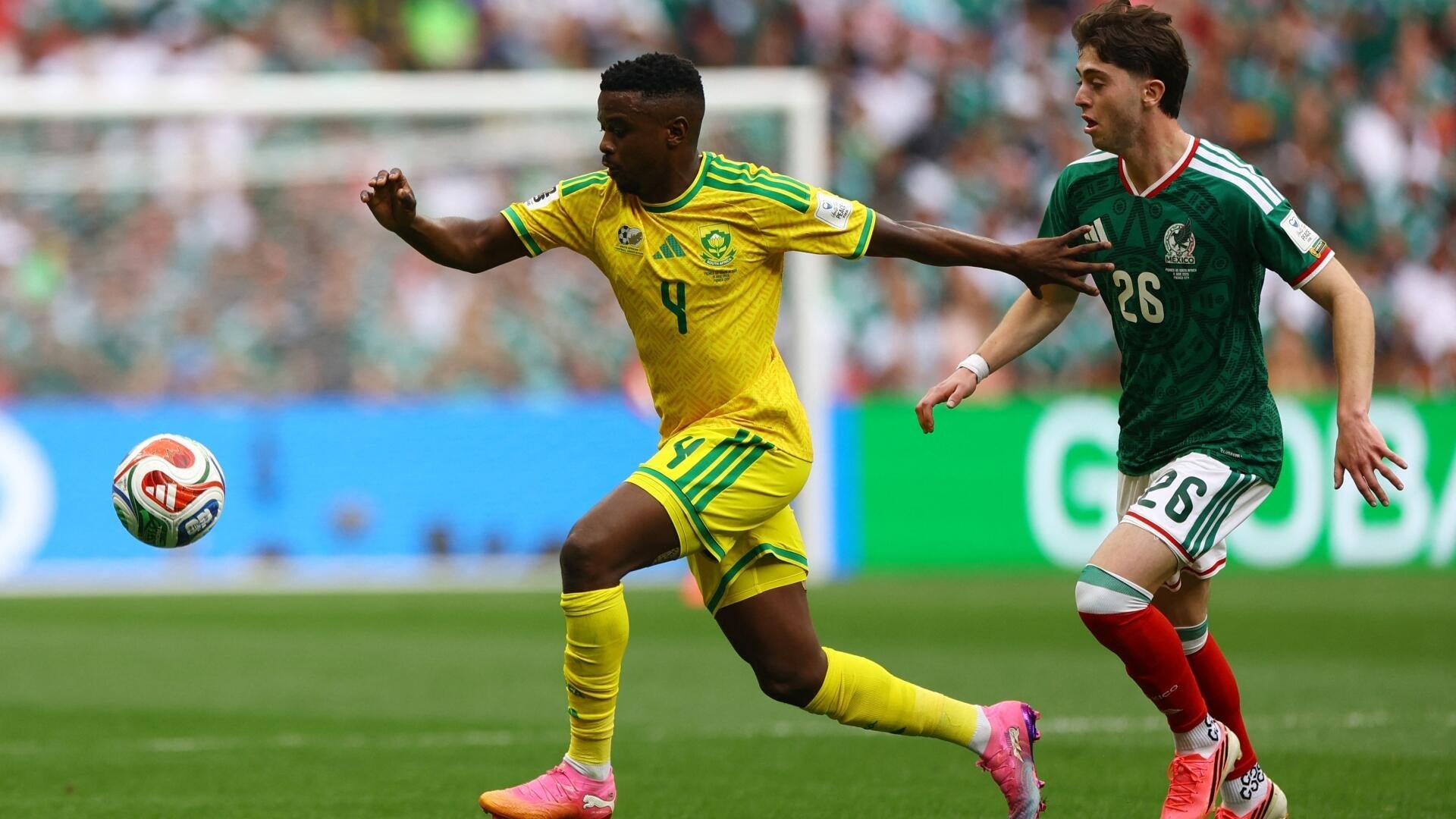
On 17 June 2026, the Cape Verde national football team left the pitch in a stadium in the United States having done something no team from the archipelago of roughly 600,000 people had done before: play a World Cup match. The result — a 0-0 draw against Spain, the reigning European champions and one of the pre-tournament favourites — registered less as an upset than as an announcement. The following morning, Reuters reported that the squad was still processing the volume of attention the performance had generated, with goalkeeper Vozinha emerging as the focal point of a global footballing audience unused to seeing Cape Verdean names on its screens.
Cape Verde's first World Cup appearance is, on the surface, a sporting event. It is also a small case study in how a country with limited broadcast reach and a thin diaspora sports-media footprint can, in a single afternoon, become briefly legible to a global audience — and how the human details attached to that visibility travel further than the scoreline.
The match, and what it produced
A 0-0 draw is not, in itself, the kind of result that rewires a tournament. Spain were expected to win; they did not. Cape Verde defended in depth, broke up Spain's possession rhythms, and produced enough on the counter to make the scoreline uncomfortable for the favourites. Reuters's 18 June 2026 report, drawing on the squad's own post-match comments, framed the story less around tactics and more around reception: the players, the report said, were still coming to terms with the volume of attention they had received since the final whistle, with Vozinha's performance drawing a disproportionate share of it.
That a goalkeeper would become the symbol of a debut is not unusual. What is unusual is the speed at which the Cabo Verdean narrative migrated from sporting wires into a wider media current. Vozinha is well known in Portuguese and West African football circles; he is less well known in the English-language press that drives the tournament's global commentary. The draw with Spain forced that gap closed in a single news cycle.
The mother's visa
The human detail that crystallised the story came on 17 June 2026, when BBC Sport reported that Vozinha's mother had been granted a visa to travel to the United States ahead of Cape Verde's next group-stage fixture against Uruguay. The detail — a mother crossing an ocean to watch her son keep goal against a former World Cup winner — is small in geopolitical terms. It is large in the way Cape Verde has chosen to tell its own story: the squad has leaned, deliberately, into the family-and-diaspora framing rather than the upset-and-tactics framing.
The choice matters. Cape Verde's sporting economy is thin; its footballing brand is built largely on emigrant communities in Portugal, the Netherlands, France, Italy, and the United States. A World Cup debut is, in commercial terms, an audition for those diaspora audiences as much as it is a competition. The visa story, with its emotional clarity, is a more shareable artefact than a tactical breakdown of a low block against Spain's press. The squad knows this.
A debut inside a lopsided tournament economy
The structural backdrop to Cape Verde's debut is the distribution of World Cup broadcast revenue, sponsorship inventory, and editorial attention across the 48-team field. The tournament's commercial architecture — negotiated in 2018 and adjusted since — disproportionately rewards federations with large domestic television markets and historic qualification records. Cape Verde qualifies under none of those headings. Its federation operates with a fraction of the budget of the Spanish federation, and its domestic league draws attendance figures an order of magnitude smaller.
A 0-0 draw with Spain does not rewrite that arithmetic. What it does is briefly invert the editorial weighting: for a 24-hour news cycle, a country that would normally appear in the margins of a global sports page appears at its centre. Whether that inversion translates into longer-term visibility — sponsorship deals, academy investment, broadcast carriage of the domestic league — is the open question. The sources do not specify any such deal. They do specify that the squad is aware of the attention and is choosing how to direct it.
Stakes and the Uruguay test
The immediate stakes are sporting. Cape Verde face Uruguay in the next group fixture, against a side whose tournament ambitions were dented by their own opening result. A point against Spain gives Cape Verde a platform; a result against Uruguay would put them into the kind of territory that smaller federations almost never occupy at a World Cup. The wider stakes are reputational. A debut that ends in the group stage is a story; a debut that produces a knockout-round place is a chapter in a national sporting history that will be told for a generation.
The evidence available to Monexus at the time of writing is limited to two source items: a BBC Sport report of 17 June 2026 on the mother's visa, and a Reuters wire of 18 June 2026 on the squad's response to attention. Both are consistent. Neither specifies viewing figures, broadcast deals, or federation revenue. The picture they paint is straightforward: a small federation, a competent defence, a goalkeeper whose tears will travel, and a country that has, for a few days, the world's attention without having to ask for it.