Carlson's empire line and the New York Times's 'loser' frame: parsing the spin war around the US–Iran deal
Three wires in three minutes framed the same deal very differently — Tucker Carlson as the end of an empire, the New York Times as a four-month defeat for Trump, Iranian outlets as vindication. The story is partly the agreement; more durably, it is the framing contest now driving it.
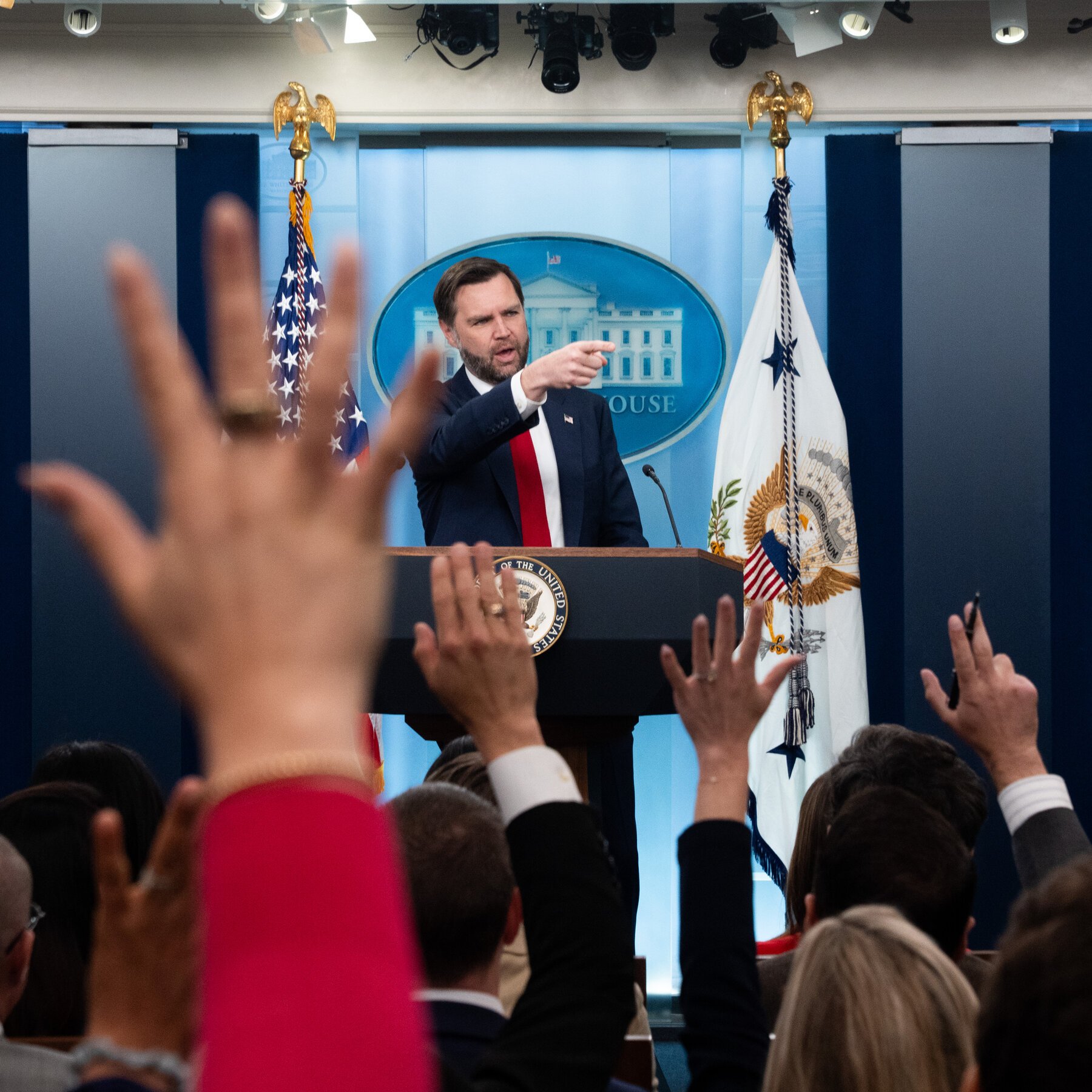
By 05:16 UTC on 18 June 2026, three Telegram channels — Mehr News and Tasnim in English, plus Fars News International — had run near-identical treatments of a freshly announced US–Iran agreement, each repackaging a different American voice. Tucker Carlson said the deal "ended the American empire." The New York Times, in a piece flagged by Fars, called Donald Trump "the loser of the four-month war with Iran" and said he had made a "terrible mistake by starting this war." Iran's state-aligned wires carried both frames at full volume, a reminder that in this corner of the Middle East the first round of any negotiation is fought in the commentariat.
The point of the agreement is contested; the point of the spin is not. Tehran has decided, for now, that the most useful American validators of the deal are an isolationist podcaster and a hostile editorial board — both of which happen to land blows on the same American president. The structural read is straightforward: the more domestic legitimacy the deal costs Trump, the longer it lasts, because a president cannot afford to be seen surrendering the same agreement twice.
What the Iranian wires actually carried
Mehr's English channel and Tasnim's English channel both published the Carlson quote in identical form within a 13-minute window — Mehr at 05:16 UTC, Tasnim at 05:03 UTC. The text, word-for-word, attributes to Carlson the claim that "the United States officially accepted that Iran is a decisive actor" and frames the deal as the formal end of US global primacy. Fars News International, in a third item timestamped 05:00 UTC, surfaced the New York Times characterisation and ran it under the headline "Trump lost the war with Iran."
The sequencing matters. Iranian state media does not treat a Carlson monologue or a hostile NYT editorial as opinion to be summarised; it treats them as evidence in a documentary case. The wires elevate them by translating, by re-headlining, and by proximity to official readouts. A reader inside Iran consuming these channels at 05:00 UTC would have seen, in the space of a coffee, two American voices independently arriving at the same conclusion: that Tehran won.
Why Tehran wants these particular Americans on the record
The choice of validators is not random. Carlson speaks to the part of the American right that has been arguing, for at least a decade, that the post-1945 security architecture is a debt instrument the United States can no longer service. The New York Times editorial page, when it is hostile to a sitting Republican president, speaks to the institutional centre. Carlson validates the deal from the populist anti-interventionist flank; the Times validates it from the establishment anti-Trump flank. The intersection of those two flanks is the only place in US politics where an Iran agreement is, simultaneously, realpolitik common sense and a moral rebuke of the incumbent.
For Iranian diplomacy, that is a more useful coalition than any praise from a chancery. A deal that the American right reads as retreat and the American centre reads as defeat is a deal that no future president — of either party — can quietly reopen without admitting either that the prior president was right or that the prior war was a mistake. Iranian state media is, in effect, building a bipartisan cage around the agreement out of American voices.
The structural frame, in plain language
What is unfolding is a familiar pattern from past US–Iran episodes, dressed in 2026 clothing. A negotiated settlement is announced; the relevant regional powers then compete to define what was actually conceded. The contest plays out in two arenas: in the substance of the deal itself, where verification regimes and sanctions-relief sequencing will determine the answer for years, and in the narrative arena, where the answer is determined in the first 72 hours by whoever can credibly claim a win.
The structural read is that the dollar's centrality in the original sanctions architecture gave Washington enormous leverage but, over the past four months, also made any reversal politically expensive. A president who begins a war and ends it with the same negotiating partner has to claim victory convincingly or accept humiliation. The New York Times framing — that Trump "lost" — is, in that sense, an attempt to foreclose the victory narrative before the White House can build it. Carlson's "empire" line is the populist-movement variant of the same foreclosure: the deal is framed not as a compromise but as a final concession.
The two frames are aligned in their effect even though their registers could not be further apart. One comes from a Manhattan newsroom; the other comes from a studio built for YouTube. Both deliver the same message to Tehran and to anyone watching the negotiation: this agreement cannot be re-litigated without political cost inside the United States.
Stakes and what remains genuinely uncertain
The first-order stakes are concrete. If the agreement holds, Iran regains sanctioned revenue flows and a partial restoration of foreign-currency access; the United States avoids a longer war it was not visibly winning, and the Gulf states absorb the regional adjustment. If the agreement collapses — most plausibly on a verification dispute or a sanctions-snapback vote in Congress — the four-month war resumes from a worse starting position for both sides, because neither will be able to claim the other walked away unilaterally.
What remains genuinely uncertain is the substance beneath the spin. The Iranian wires do not disclose the deal's text, its verification architecture, or its sanctions-relief schedule. The Carlson quote is a comment, not a clause. The New York Times framing is a verdict, not a description. Readers should treat the next 72 hours as a definitional phase, in which the most-quoted voices will be opinion hosts and editorial boards, not the negotiators themselves. That is not unusual for US–Iran diplomacy; it is, however, the phase in which the most consequential framings get locked in and become the vocabulary every later story is written in.
One nuance is worth holding: Iranian state media is itself a participant, not a bystander, in this framing contest. The fact that Mehr, Tasnim, and Fars all carried these American voices within minutes of each other is itself a piece of news — evidence of a coordinated decision to seed a particular interpretation of the deal before the White House can establish a competing one. The deal itself is one story. The contest to define it is, for now, the more visible one.
Desk note: Monexus runs the Iranian state-media wires and the American opinion quotes side by side rather than treating either as a stand-alone factual basis; the structural argument — that the spin war is being used to lock in the agreement's domestic legitimacy on both sides — is editorial inference from the timestamped rollout, not a claim sourced to any single outlet.
Wire provenance
This editorial synthesis draws on the following public wire/social posts:
- https://t.me/mehrnews/
- https://t.me/tasnimnews_en/
- https://t.me/FarsNewsInt/
Follow the event.
These dated source records provide context. They do not retrospectively verify this archive article.
Separate what the nuclear watchdog reported from what it could not determine after the June 2025 strikes.