Tucker Carlson's Tehran turn and the limits of the "Iran deal" narrative
Tucker Carlson's recent framing of Washington as a fading empire bowing to a sovereign Iran marks a striking rhetorical break — and exposes how thin the substance of the much-touted "Iran deal" actually is.
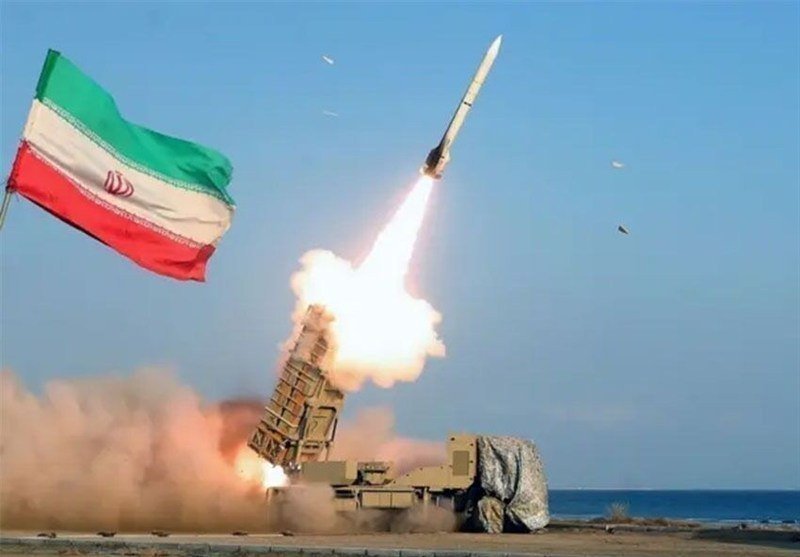
On 18 June 2026, the Telegram channel Clash Report published a cluster of clips in which the American commentator Tucker Carlson argued that the United States had, in effect, conceded great-power status to the Islamic Republic. "You probably never imagined that the end of American Empire would come in a little over a 100-day conflict with a little rogue state on the Persian Gulf that has the 34th largest economy," Carlson said in the first clip, timestamped 11:54 UTC. Twelve minutes later, he added: "The United States has shown that it does not have, despite possessing the world's best or biggest or certainly most generously funded military, does not have the military power to impose its will" on Iran. By 12:10 UTC, the framing had crystallised: "This document is acknowledging that Iran is not a rogue terror state. Iran is a sovereign nation. In fact, a great power, because it's negotiating with the world's gr…" — the clip cuts off mid-sentence, but the rhetorical direction is unmistakable.
The point is not whether Carlson is right. The point is that the substance of what he is celebrating is so thin that the commentary has to do most of the work. The so-called "Iran deal" that has driven weeks of breathless coverage remains, on the public record, more rumour than text. The clips treat a perceived diplomatic posture as a tectonic shift; the underlying document, so far, does not exist in any form a reporter can quote. The framing is running ahead of the file.
The claim, and the cost of accepting it
Carlson's argument runs in three steps. Step one: Washington has fought a short, inconclusive war with Iran and lost — or at least declined to win. Step two: that outcome is being formalised in a written agreement that recognises Iran as a sovereign peer. Step three: the United States, having neither the stomach nor the means to project power in the Gulf, is quietly ratifying its own decline. It is a confident narrative, and it leans on a real discomfort: the gap between what US policy asserts about the Middle East and what US capabilities have actually delivered there over the past two decades.
The cost of accepting the narrative is that it lets everyone off the hook. If the United States has conceded great-power status to Tehran, then the wars, the sanctions architecture, the sanctions-busting, the proxy fights, the Israeli campaign, and the domestic Iranian repression of the past generation are reduced to a footnote in some larger American abdication story. Iran's regime is not absolved by this reading — it is rendered incidental.
What the source material actually says
Read carefully, the four Clash Report items are remarkable mostly for what they don't contain. There is no published text. There is no named counterpart — no Iranian foreign minister, no American secretary of state, no lead negotiator — putting their name to a deal. There is no third-party wire confirmation in the cluster: no Reuters read-out, no Axios scoop from Barak Ravid, no Bloomberg tick, no Iranian state-media announcement from IRNA or PressTV. The clips are commentary about an absent document.
This matters because the "Iran deal" frame is being laundered through commentary because it cannot be laundered through the text. The closest Carlson comes to a substantive claim is that Washington has acknowledged Iran's sovereignty — but acknowledgement of sovereignty is the default position of diplomacy. States that do not extend it cannot sign treaties, exchange ambassadors, or conduct the most basic business of an international system that the United States, for all its grievances, still claims to lead. The bar Carlson is holding Tehran over is a low one. The bar he is holding Washington under is a high one, and that asymmetry is doing rhetorical work.
The structural frame, in plain prose
A sovereign recognised by its rivals is not, by that fact alone, a great power. A great power is one whose material weight — productive capacity, demographic depth, financial plumbing, alliance networks, technological base — sets the terms under which smaller players operate. The Soviet Union was recognised in 1917 and did not become a peer of the United States until the late 1940s. China's recognition by Washington in 1979 was a diplomatic event; its arrival as a peer took four decades of industrial policy, export discipline, and capital deepening that followed, never preceded, the diplomatic handshake.
What the current "Iran deal" rhetoric is doing is collapsing a recognition event into a peerage event. That is a category mistake, and it is the same category mistake that earlier commentary made about Russia in 2015 (the Minsk moment) and about China in 2001 (WTO accession). Recognition opened doors; it did not build the houses behind them. The structural question — what the Islamic Republic's economy, energy infrastructure, defence industrial base, and demographic trajectory can actually sustain under sanctions and isolation — remains the same on 18 June 2026 as it was on 17 June 2026.
The counter-narrative, and why it doesn't land cleanly either
The mainstream US press line on the Iran file runs roughly as follows: a Trump-administration deal is in the works, probably worse than the 2015 JCPOA on missiles and regional behaviour, better than nothing on the nuclear file, and hostage politics is dominating the timeline. This line is plausible and well-sourced in places, but it has a problem of its own. It assumes a deal exists in form, that it is a single document, and that the principal friction is over its specific terms. None of those assumptions is visible in the four Clash Report items, and none can be tested against them. The commentary is reacting to the posture of a deal, and the wire coverage is reading the same posture. Neither side has the text, and the absence is treated as a minor inconvenience rather than a primary fact.
The plausible alternative read is more boring and probably more accurate: the United States, having absorbed a costly regional shock, is doing what declining hegemons do — managing a drawdown through negotiated ambiguity, keeping allies partially onside, and accepting a floor of Iranian regional influence in exchange for a ceiling on its nuclear and missile programmes. That is a 1956 Suez reading, and it is closer to what Carlson's own rhetoric gestures at when he invokes the Suez crisis. It is also, notably, the reading most damaging to the celebratory American-decline framing, because it suggests not weakness in retreat but weakness managed — which is a different and more durable problem for the rest of the world.
Stakes
If the Carlson reading prevails in the commentariat — and on the evidence of the past 48 hours, parts of it are prevailing — the practical consequences are straightforward. Iranian officials gain negotiating leverage from a perception of victory, even if the underlying file is thin. Gulf monarchies and Israel recalibrate toward a more autonomous posture. US domestic politics absorbs a "lost the war" narrative that constrains the next administration. And the policy machinery of the United States is left arguing about a document whose contents have not been disclosed, on the basis of commentary that has substituted for text.
The serious point, underneath the rhetoric, is that the United States is plainly overstretched in the Gulf, plainly constrained by domestic political appetite for another ground campaign, and plainly reliant on intermediaries to manage a confrontation it cannot easily end. None of that requires the language of imperial decline to describe. It does, however, require an actual document — and that is what this file still does not have.
Desk note: Monexus is treating the four Clash Report items as commentary on an absent primary document, not as reporting of a deal. We have declined to add wire-style source attributions (Reuters, Axios, etc.) because none of those URLs appear in the underlying thread; the citation ledger reflects what the pipeline actually read.
Wire provenance
This editorial synthesis draws on the following public wire/social posts:
- https://t.me/ClashReport
- https://t.me/ClashReport
- https://t.me/ClashReport
- https://t.me/ClashReport