Ethereum Foundation's quiet shake-up deepens as a second co-director walks
The departure of Hsiao-Wei Wang follows months of personnel turnover at the Ethereum Foundation, sharpening an old question about who actually steers the world's second-largest blockchain.
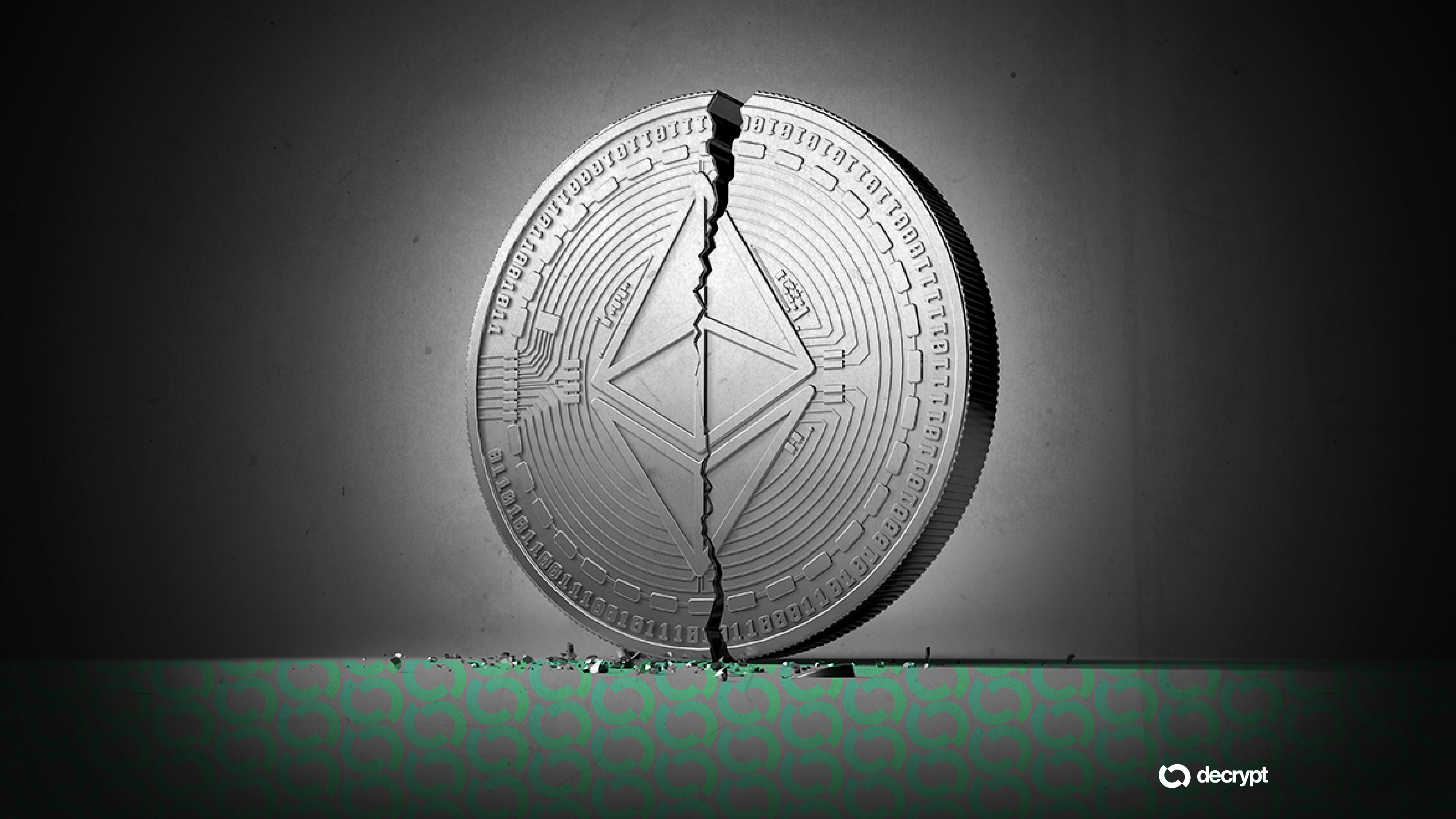
Hsiao-Wei Wang, co-executive director of the Ethereum Foundation, has left the organisation, according to reporting on 18 June 2026 — the latest in a sequence of senior exits that is reshaping the public face of the world's most heavily used smart-contract network. Decrypt and Cointelegraph both carried the news within hours of one another, and CryptoBriefing flagged it on Telegram at 15:47 UTC.
The pattern is now hard to miss. Three of the Foundation's most visible figures have moved on in less than a year, and each departure has arrived with unusually little ceremony. That matters because the Ethereum Foundation is, in practice, the closest thing the network has to a coordinating body: it funds research, shepherds protocol upgrades, and acts as the protocol's voice in rooms where regulators and core developers meet. When that body turns over, the protocol feels it — even if the chain itself keeps ticking.
A Foundation in motion
Wang's exit was framed by the two wire outlets that covered it as the continuation of a wider leadership shuffle. Decrypt's headline — "Ethereum Foundation Exodus Continues" — sets the tone, and Cointelegraph's follow-up connects the move to ongoing arguments about governance and decentralisation. CryptoBriefing's short note on Telegram kept the wording tighter: a step-down, a title change to co-executive director on the way out.
The precise timing matters more than the title. A Foundation that loses institutional memory during a period of intense technical change — the rollout of further scaling upgrades, the slow migration of activity toward layer-2 rollups, the unresolved question of how the protocol is funded long-term — is a Foundation whose signalling changes. New voices will set the agenda; new coalitions within the developer base will gain weight. Whoever replaces Wang will inherit not a job but a position in a quiet, ongoing negotiation about Ethereum's next decade.
What the departure actually signals
Ethereum is, in theory, a leaderless network. No company ships a quarterly product; no CEO answers an earnings call. In practice, the protocol relies on a small group of full-time researchers, organisers and grantmakers — most of them concentrated at the Foundation or at firms closely tied to it. That concentration is the thing critics have been complaining about for years. When the same handful of people set roadmaps, fund research and speak for the protocol at conferences, "decentralisation" starts to look less like an architectural property and more like a brand asset.
A leadership turnover of this kind cuts both ways. For critics, it is evidence that the Foundation has been carrying too much weight for too long — that Ethereum's headline values and its actual operating structure have drifted apart, and that a small in-group has been quietly steering one of the largest open-source projects on Earth. For supporters, it is a healthy rotation: the Foundation has been around long enough to face a normal generational handover, and the network's day-to-day operations continue without interruption. The truth, as usual, sits between those poles — but the pace of departures is now fast enough that the "normal handover" reading is becoming harder to defend.
The structural frame
The bigger pattern here is not specific to Ethereum. Across the major smart-contract networks, the same awkward question keeps surfacing: who actually runs this thing, and to whom are they accountable? Bitcoin has its core developers and its mining-and-now-staking pools. Solana has a foundation and a closely connected venture ecosystem. Ethereum, by design, tried to split the difference — protocol, foundation, ecosystem of independent teams — and has done more than any of its peers to make that split legible. But legibility is not the same as distribution of power, and the current moment is exposing the gap.
This is also a story about the cultural economy of open-source governance. The people who built Ethereum in its first decade were, in many cases, the same people who staffed the conferences, wrote the standards documents, and shaped the regulatory talking points that Western policy-makers now quote back at the industry. Replacing them is not a procurement task; it is a succession problem in an institution that was never quite an institution. The Foundation can hire new executives, but it cannot hire a new history.
Stakes
For holders of ETH, the immediate stakes are modest: the chain continues to settle, validators continue to validate, and the developers shipping client software continue to ship. For the wider ecosystem, the stakes are more interesting. The Foundation's grantmaking budget influences which research directions get funded — formal verification, zero-knowledge proofs, restaking, account abstraction. A change in personnel is, over time, a change in what gets built. Investors who treat the protocol as a piece of infrastructure rather than a brand should care about this even if the price does not move on the day.
For regulators and policy-makers in Brussels, Washington and Singapore, the question is sharper. The Ethereum Foundation has, for several years, been Ethereum's most reliable interlocutor — the body that turns up when summoned and speaks in a language officials can parse. A revolving door at the top of that body makes the regulatory conversation harder, not easier. Officials do not want to negotiate with ghosts.
What we do not yet know
The reporting so far describes the departure and the pattern around it, but leaves several questions open. The Foundation has not, in the materials available, published a detailed transition plan; it is not clear who will take on Wang's portfolio of responsibilities in the short term, nor how the executive directorship will be restructured. The reasons given for the exit are personal, and there is no public accounting of the strategic disagreements, if any, that may have accompanied it. The sources do not specify whether further departures are imminent, and they disagree on framing only at the margins: Decrypt emphasises the human story, Cointelegraph the governance implications. Readers should treat the underlying politics as under-reported and the personnel facts as reasonably solid.
What can be said with confidence is this. A protocol that markets itself as the decentralised alternative to incumbent finance is, this week, being run through a familiar corporate drama — the high-profile exit, the search for a successor, the quiet reshuffling of who gets to speak for the brand. Ethereum will almost certainly emerge from this period still functional, still valuable, and still widely used. Whether it emerges with a governance story its critics can no longer lampoon is a different question, and one the next twelve months will answer.
This publication treats the Ethereum Foundation story as a governance story first and a markets story second. The wires have so far leaned on personnel framing; the harder question — what the Foundation is for in 2026 and beyond — has not yet been written up in a sustained way anywhere we could find.
Wire provenance
This editorial synthesis draws on the following public wire/social posts:
- https://t.me/CryptoBriefing