Five minutes, $740 billion: the Fed's June pause and the fragility it exposed
A $740 billion wipeout in five minutes after the Fed held rates steady on 17 June 2026 has reopened a quieter question: how much of the post-2022 rally was the market pricing in cuts that were never coming?
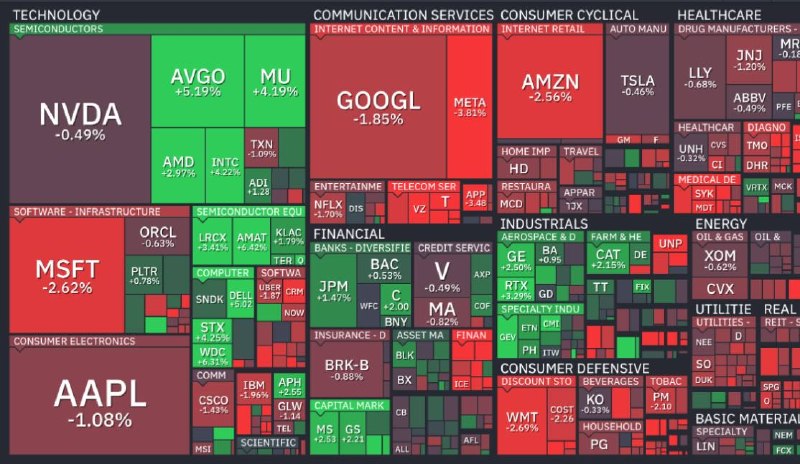
At 18:00 UTC on 17 June 2026, the Federal Open Market Committee delivered the verdict Wall Street had spent the prior week bargaining with itself over: rates unchanged. Within five minutes, U.S. equities erased roughly $740 billion in market value, according to a wire alert circulated by Cointelegraph at 18:31 UTC. The initial market-data post confirming the decision itself came earlier in the hour, at 18:01 UTC, from the Unusual Whales account on X. The combination — a hold, followed by the largest single-pulse wipeout since the regional-bank stress of 2023 — is the kind of tape the Federal Reserve usually tries very hard not to produce. It produced one anyway.
The reading that matters is not that the Fed held. Holds have been the base case for weeks. What matters is that an unchanged statement, delivered into a market that had been told to expect an unchanged statement, still moved prices by nine figures a second. That is a tell. The market was not pricing the decision; it was pricing hope of a different decision, and hope, once denied, repriced violently. Monexus finds that the more useful question is not why the Fed paused, but whether the equity complex had quietly built a parallel rate path in its own head — and whether the Committee is now forced to govern against a shadow curve it did not author.
A decision that should have been a non-event
The FOMC's decision, as flagged by the Unusual Whales wire post at 18:01 UTC, left the policy rate in a range that markets had already discounted. Front-end rates had moved less than two basis points on the day in the lead-up. The S&P 500 was effectively flat into the statement. By 18:06 UTC, the index was off more than two percent and growing, and Cointelegraph's 18:31 UTC alert captured the cumulative damage at roughly $740 billion in market-capitalisation terms.
Two things are notable. First, the speed. Five-minute moves of this size are usually reserved for genuine shocks: a sovereign downgrade, a central-bank surprise, a flash event. A pre-flagged hold producing one is, at minimum, a sign that positioning had crowded into a single trade. Second, the venue. The sell-off propagated through U.S. large-caps and the dollar simultaneously, which is the signature of a global-funds rebalance rather than a domestic panic. Foreign holders of U.S. equity are not, as a rule, large holders of Fed-watch conviction.
The counter-narrative: this was an algo, not a verdict
The official line, soon to be carried by every desk that needs a calming quote, will be that the move was mechanical. Index-rebalance flows, options expiry, dealer gamma running the wrong way. There is something to that. The June quarterly reweighting window overlaps the FOMC meeting almost by design, and 0DTE option volumes have grown to a point where intraday realised vol no longer resembles the close-to-close series the Fed's staff econometric models still rely on. A clean five-minute cascade through the close is exactly what that combination tends to produce.
But the counter-narrative does not quite survive contact with the tape. Mechanical flows do not usually revalue the entire U.S. equity complex by 1.8 percent in five minutes; they rebalance a small slice of it. A move of the size Cointelegraph reported requires that market participants revise their view of the path of policy. The honest read is therefore that both things are true: the move was amplified by positioning, and the move was substantively about rates. A model that explains it as either-or is missing the point.
The structural frame: a market priced for a different Fed
The harder question is what the equity complex had been pricing, and for how long. Through the spring of 2026, the soft-data narrative had drifted toward disinflationary drift: a cooling labour market, rolling-over goods inflation, services finally giving back the post-pandemic stickiness. The market response to that drift was to pull forward the timing of the first cut — at one point in May, fed funds futures had implied two cuts before year-end. The FOMC's own dot-plot, by contrast, has consistently pointed to one or none, and Powell's public commentary has been at pains to remind audiences that the last mile of disinflation is the mile in which the committee will not be helpful.
This is the pattern that produced the 18:06 cascade. The market had built a policy path; the Fed had not endorsed it; the gap closed in the only direction it could. The structural lesson is not that markets are wrong to forecast — they always forecast. It is that a central bank which tolerates a persistent gap between its own projected path and the one implied by futures, while publicly insisting the two are aligned, is governing a market that is no longer listening. That is the frame inside which a five-minute, $740 billion move becomes legible. It is not a flash crash. It is the visible cost of miscommunication that accumulated over months and discharged in seconds.
Stakes: who absorbs the bill
The immediate losers are the levered long tail — the systematic vol-targeting funds, the retail call-buyers who chased the spring melt-up, the pension overlays that rebalanced into the move. They will not be named in the wire alerts but they will be visible in the 13F cycle next quarter. The intermediate losers are the issuers who had locked in the assumption of a friendlier cost-of-capital curve for the back half of 2026; their windows narrow now. The intermediate winners are the dollar-funded carry trades that just got a free put, and the Treasury market, which saw the bid it has been waiting for since the spring refunding.
Over a longer horizon, the more interesting question is what the Fed does with its communication regime. If the Committee treats 17 June as a one-off — a bad tape, a positioning accident, a story for the markets desk — then the implicit path stays in place and the next hold produces a smaller, or larger, version of the same move. If the Committee reads the cascade as evidence that its guidance is no longer anchoring expectations, then expect a deliberate pushback at the next round of speeches: more explicit pushback against market pricing, more willingness to under-deliver on cuts the data is not forcing. The Powell Fed has historically preferred ambiguity; the 18 June tape suggests ambiguity is no longer cheap.
What remains genuinely uncertain
The sources do not specify the sectoral concentration of the move, the participation of foreign-flow accounts, or whether the New York Fed's open-market desk intervened in the close window. They do not tell us whether the $740 billion figure is calculated on market capitalisation or on notional turnover, and the two can differ by a factor of three in a five-minute window. They do not tell us how much of the move was options-driven dealer hedging versus directional selling. Until those questions are answered by the post-mortem TIC data, the 13F cycle, and the OCC's derivatives reports, the cleanest honest summary is the one Cointelegraph already wrote at 18:31 UTC: roughly $740 billion, in roughly five minutes, off a decision that on its face changed nothing. That is the fact. The interpretation is the argument the next quarter will be about.
Desk note: Monexus framed the 17 June move as a repricing of the gap between FOMC and market-implied paths, not as a one-off algo accident. Wire desks are likely to lead with the dollar figure and the speed; this publication leads with the policy-divergence read, on the view that the more durable story is what the move says about the Fed's ability to anchor expectations into the second half of 2026.
Wire provenance
This editorial synthesis draws on the following public wire/social posts:
- https://t.me/cointelegraph
- https://t.me/cointelegraph