G7 unity on Russia, Trump–Lula friction, and the limits of Western coordination
A single G7 summit produced two very different stories: harder language on Moscow, and an unusually sharp exchange between Donald Trump and Luiz Inácio Lula da Silva over Brazil's judiciary.
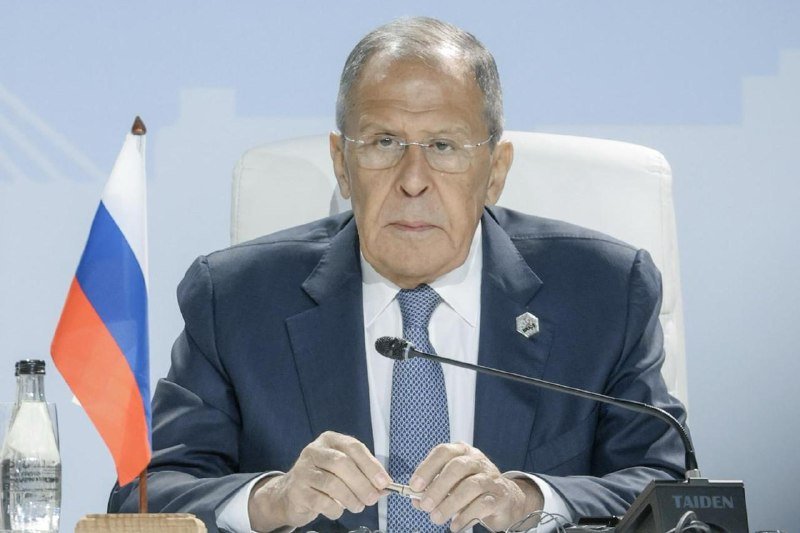
A G7 summit that opened on 17 June 2026 produced, by Wednesday morning UTC, two very different headlines. The first, carried by Press TV and by France 24's English service, was about hardening language toward Moscow: the group's leaders agreed to intensify economic pressure on Russia, with Brazilian President Luiz Inácio Lula da Silva — attending as a guest — telling reporters that he sensed "growing unity" on ratcheting up the cost of the war in Ukraine. The second, also filed by France 24, was a sharp personal exchange between Lula and US President Donald Trump over Brazil's judiciary and its October presidential election, an argument that laid bare how thin the G7's apparent unity actually is when the camera moves from Kyiv to the Western Hemisphere.
The pattern is familiar. A multilateral gathering produces a communique that papers over divergent interests, then the microphones catch a bilateral row that exposes the fault line. Read together, the two storylines tell a more honest story about the state of the Western-coordinated order than either does on its own.
What the G7 actually agreed
The substantive move was modest but pointed. According to France 24's reporting from the summit on 18 June 2026 (02:15 UTC), G7 leaders saw "growing unity on increasing pressure on Russia to end its war in Ukraine," and Lula — invited to the Canadian-hosted gathering as the sitting leader of Latin America's largest economy — said he had heard a tougher line from Washington than in previous months. Press TV's wire, timestamped 04:25 UTC the same day, framed the same moment in more dramatic terms: leaders "agreed to intensify economic pressure on Russia, sensing a shift" in Trump's tone.
Neither report specifies which sanctions instruments were added, what the enforcement timeline looks like, or which G7 members led which push. The reporting captures the political signal — a tougher line on Moscow — without describing the operational machinery behind it. That gap matters, because G7 sanctions announcements are routinely larger on the page than in the price of Russian crude.
The Trump–Lula rupture
The second storyline is the more revealing. France 24 reported at 02:13 UTC on 18 June 2026 that Lula "warned" Trump against interfering in Brazil's October presidential election after renewed US criticism of judicial actions there, with the wire service running a parallel story on the same exchange four minutes later under a nearly identical headline. The exchange, as captured in the French network's framing, goes beyond the routine G7 courtesy: a sitting Latin American head of state publicly warning a US president off domestic political interference, on the margins of a summit ostensibly about Ukraine, is a notable breach of protocol.
Brazil's position is internally coherent. Lula's government views US criticism of Brazilian judicial actions — particularly the recent proceedings involving former president Jair Bolsonaro — as a sovereign intrusion. Trump's position, as conveyed through France 24's summary, treats those same proceedings as a politicisation of the Brazilian courts that justifies outside comment. Both readings are defensible on the evidence available; neither side is operating in bad faith in the narrow sense. The dispute is about who has standing to judge a foreign judiciary, and the answer depends on where the speaker sits.
The structural picture
What the two storylines share is a deeper shift in how the Western-coordinated order is talking to itself. For most of the post-2014 period, the G7's Russia file and its Americas file ran on parallel tracks: a sanctions regime aimed at Moscow, and a quieter set of bilateral pressures on governments in Brasilia, Caracas, La Paz, and elsewhere that did not fit the liberal-democratic script. At this summit those tracks crossed. A Brazilian president who has been a target of US criticism is now the same person telling reporters that the G7 is more united on Russia — meaning Brasília is being asked to lend diplomatic cover to a hardening line on Moscow while absorbing public criticism of its own courts from the same gathering's host power.
That is the structural story: the cost of joining a sanctions coalition is no longer just compliance with the sanctions themselves. It is agreement to a broader political vocabulary in which some governments' internal arrangements are treated as legitimate subjects of comment and others' are not. The Global South read of this arrangement — and it is a read shared in Brasilia, New Delhi, Pretoria, and Jakarta in different registers — is that the vocabulary is applied selectively, and that the selection has less to do with the underlying democratic record than with alignment.
Stakes, and what remains genuinely uncertain
If the trajectory described in the wire reports continues, two things happen. First, the G7's Russia sanctions regime gains a wider diplomatic signature but loses precision, because it is now partly a vehicle for demonstrating cohesion among members who disagree about other things. Second, the G7's capacity to speak with one voice on issues outside its original remit — election interference, judicial independence, press freedom — shrinks, because members like Brazil have been given a visible reason to be wary of doing so.
The reporting is thin in two places that matter. It does not specify which new sanctions instruments, if any, were announced, only that pressure will "intensify"; and it does not record the full text of the Trump–Lula exchange, only the Brazilian side's public warning. The Western-wire framing tilts the second story toward Lula as the aggrieved party and the first story toward Russia as the target. The counter-read — that Trump is the one trying to break a sanctions logjam that European members have failed to break on their own, and that Lula's government has its own internal reasons to welcome the diplomatic attention — is plausible on the same evidence. The honest reading is that both dynamics are running at once, and the G7 summit captured the moment they collided.
This publication frames the G7 outcome as a sanctions announcement plus a sovereignty dispute, not as a clean unity story; the wire framing tends to split the two, which makes the underlying tension harder to see.
Wire provenance
This editorial synthesis draws on the following public wire/social posts:
- https://t.me/presstv/
- https://t.me/france24_en/
Follow the event.
These dated source records provide context. They do not retrospectively verify this archive article.
A dated voting record is evidence of one decision. Use the original UN record before turning it into an alignment label.
Visual explainer · historical vote of 2022-03-02 →