Gaza headlines the cable, the cameras look away: a news-supply problem
Israeli operations inside Gaza City are documented in real time by regional outlets. Western front pages tell a different story — and the gap is the news.
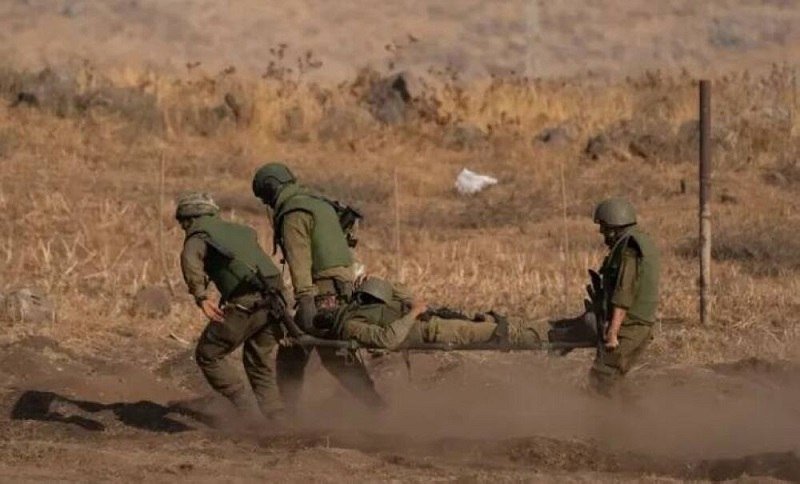
On the afternoon of 18 June 2026, regional newsrooms inside and adjacent to Gaza were filing rapid bulletins about Israeli armoured activity north of Gaza City. Al-Alam Arabic, the Iranian-funded Arabic-language outlet that beams into the region from Beirut, posted at 16:38 UTC that an "occupation march" had targeted the tunnel area north of the city. Earlier, at 15:56 UTC, the same channel reported bulldozing operations east of Salah al-Din Street near the Kuwait Roundabout, southeast of Gaza City. A second regional account, Gaza Alanpa, carried a short, emotional dispatch — "Oh world… this is #Gaza" — at 16:05 UTC. The cadence was familiar: rapid, granular, location-specific, sourced from a small pool of local stringers and camera operators who know the street grid by heart.
The wire's silence on any given afternoon in Gaza is itself the story. Western front pages have not stopped covering the war; they have shifted its centre of gravity. What reaches readers in London and New York is a heavily filtered version of events on the ground — one in which the names of neighbourhoods, the rhythm of raids and bulldozing operations, and the accounts of Palestinian civilians inside those neighbourhoods appear, when they appear at all, as brief interruptions between items about hostage diplomacy, ceasefire choreography, and the political fortunes of the government in Jerusalem. The footage and the bulletins are still there. The Western news cycle is not.
A supply problem, not an access problem
For most of the past two decades, the conventional explanation for Gaza's under-coverage has been physical access. Foreign journalists were shut out of the strip after October 2023, with a small Israeli-press pool operating under military escort. That framing is no longer adequate. The information supply has, if anything, intensified. Local outlets, regional broadcasters, and Telegram channels tied to outlets across the political spectrum are filing continuous dispatches from inside the strip, often within minutes of an event. Israeli-side reporting from the IDF Spokesperson's briefings, Hebrew outlets including Ynet, Haaretz, and the Jerusalem Post, and international wires that maintain Jerusalem bureaux continue to publish.
What is missing is not the raw material. It is the editorial pipeline that turns that material into items that clear the front page of a Western broadsheet or the top of a primetime newscast. The filtering happens upstream of the reader: in the commissioning decisions of bureau chiefs, in the rotation of correspondents, in the daily stand-up where editors weigh whether a raid on a tunnel shaft north of Gaza City is a "Gaza story" worth opening with or a "Middle East dot-dot-dot" worth a single paragraph.
Where the framing loads the story
Two structural pressures do most of the work. The first is diplomatic tempo. For long stretches of 2025 and 2026, the region's "big story" has been the slow, fitful shuttle diplomacy around a hostage-prisoner exchange and the architecture of a post-war administration for the strip. That story has institutional gravity — government spokespeople, named negotiators, scheduled press conferences, official communiqués. It generates copy that meets a Western newsroom's production model: on-the-record sources, attributable quotes, predictable cadences.
The second is the logic of the Western wire itself. Western newsrooms have, by long habit, treated the Israeli government's framing of military operations as the default frame, and treated Palestinian civilian harm as a fact to be confirmed against that default rather than reported alongside it. Coverage routinely defers to the language of official spokespeople; dissenting or regional analysis gets less column-inches, even when the underlying reporting is granular and contemporaneous. The result is a tonal imbalance that does not require anyone to act in bad faith. It simply reflects which desk has the budget, which bureau has the bylines, and which sources return calls on deadline.
What the regional outlets are actually showing
Read across an afternoon, the Al-Alam Arabic bulletins describe a pattern: armoured movement into the northern tunnel network, bulldozing operations along a major east-west axis, all within a tightly bounded geography. The channel's framing is openly sympathetic to the Palestinian side — it is, after all, an outlet of Iranian state broadcasting — and that framing has to be discounted accordingly. But the underlying events it reports, the street names, the time stamps, the kinds of military hardware described, are independently confirmable against the limited Israeli-press pool coverage that does exist and against the social-media evidence that researchers at outfits including Bellingcat and the Centre for Information Resilience have built the methodologies to verify.
The Gaza Alanpa item — three words plus a hashtag — is a different kind of artefact. It is not a bulletin. It is a piece of eyewitness expression, ungrammatical in English on purpose, the kind of message a stringer files when there is nothing else to say. It belongs to a longer genre of dispatch that has accumulated around Gaza since October 2023: short, raw, location-pinned posts that survive because they are filed in real time and because the algorithmic distribution of platforms such as Telegram and X does not require a foreign bureau to amplify them.
What is at stake
The longer the gap persists between the regional news supply and the Western news cycle, the more it corrodes the evidentiary basis on which Western publics form judgements about the war. A reader who only encounters Gaza through hostage diplomacy and the political fortunes of the Israeli government is not misinformed in any single item. They are, however, gradually removed from the granular reality on the ground — the bulldozers on Salah al-Din Street, the raids into the northern tunnel network, the three-word dispatches from stringers who know which block they are standing on.
Israeli security concerns are real and continuous, and they deserve sustained coverage. Hostage situations, rocket fire, and the targeting of diaspora Jewish communities are first-order facts. So is the daily toll on Palestinian civilians in the strip, documented in real time by regional outlets whose political colouring must be discounted but whose street-level reporting is independently verifiable. A press system that cannot carry both is not a neutral press system; it is one that has, by structural default, chosen a frame.
Desk note: Monexus framed this story on the news-supply gap itself rather than on the underlying military operations, because the operations are documented continuously by regional outlets and selectively by Western ones — and that asymmetry is, in our reading, the durable story.
Wire provenance
This editorial synthesis draws on the following public wire/social posts:
- https://t.me/alalamarabic
- https://t.me/alalamarabic
- https://t.me/gazaalanpa
Follow the event.
These dated source records provide context. They do not retrospectively verify this archive article.
Separate what the nuclear watchdog reported from what it could not determine after the June 2025 strikes.