A strike in central Gaza, a 'ceasefire' that doesn't hold
An Israeli drone strike on the Abu Hasna family home in al-Bureij killed a cameraman Israel calls a Hamas sniper. The wire carries the accusation, not the evidence. A Lebanese ceasefire lands the same evening; Gaza's tempo does not change.
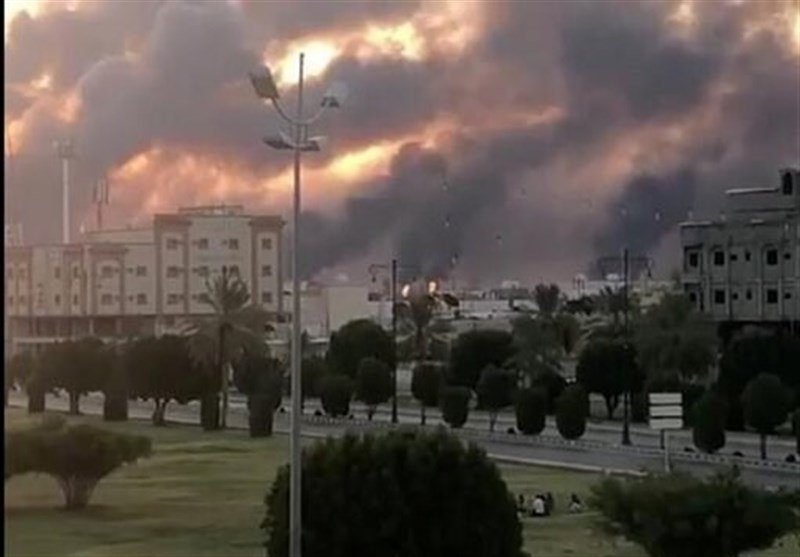
At 21:25 UTC on 20 June 2026, the @englishabuali Telegram channel reported three people killed by an Israeli drone strike on the Abu Hasna family home in al-Bureij refugee camp, central Gaza Strip, roughly half an hour earlier. One of the dead, the channel said, was Ahmad Washah, a cameraman identified by the photo agency Al Alanpa. By the end of the evening, the toll had climbed to six, and the dead journalist's name had begun to circulate in two contradictory forms.
The strike landed inside what is, on paper, a ceasefired Gaza. It also landed hours after the Israeli cabinet authorised a ceasefire in Lebanon following what Channel 12, cited by @thecradlemedia, described as "enormous" US pressure. Vice President Vance told reporters the same evening that "Marco and the entire team have been actively managing what's going on in Lebanon. Despite the headlines, things are actually getting better there" (@osintlive, 21:13 UTC). The word the administration kept reaching for was de-escalation. The picture on the ground in al-Bureij was something else.
Two identifications, one strike
The military's account, relayed by Open Source IntelIDF via @osintlive at 21:13 UTC, named the dead journalist as Ahmed Samir Muhammad Washah, alleging he was a Hamas sniper operative who worked as an Al Jazeera photojournalist, killed "alongside two other operatives." Al Jazeera's Arabic feed carried the original casualty report. The BBC's official account, posted to @BBCWorldoffl at 22:38 UTC, restated both claims and noted that the Israeli military had made the "Hamas sniper operative" allegation "without providing evidence."
That asymmetry is the story. A named fighter is a military claim that can be interrogated, weighed against intelligence holdings, challenged in court or by press. A dead cameraman's family is a fact. Under international humanitarian law, journalists are civilians unless they are directly participating in hostilities, and the determination of direct participation is the burden of the party making the strike. The wire sources document the accusation but contain no underlying evidence to test it against.
The ceasefire that does not hold
The label attached to the current period in Gaza is the polite fiction. Operations of the kind documented at the Abu Hasna home have continued through multiple declared pauses and partial truces since the war began. The Lebanese ceasefire decision, announced the same evening, sharpens the contrast: a northern front the Israeli government is willing to quieten with American backing, a southern front where the rules of engagement appear unchanged. Channel 12's framing of "enormous" US pressure on the Lebanon file, by implication, is the measure of how little of that pressure is being brought to bear on Gaza.
There is no equivalent official framing for a Gaza halt. The diplomatic vocabulary used for Lebanon ("managed", "slowing down a little", "getting better") is not being applied to the Strip by either government. The airstrike that killed Washah landed in the rhetorical gap.
What the wire is, and is not
Three of the six sources here are Telegram channels (@englishabuali, @gazaalanpa, @alalamarabic), two are secondary aggregators of Israeli or Western-wire copy (@osintlive, @BBCWorldoffl), and one is an Iranian-aligned outlet (@thecradlemedia) on the Lebanon ceasefire, sourced back to Channel 12. There is no Reuters or AFP dateline on the strike itself. The only visual evidence is the @gazaalanpa still of the family home and the red-circled identification of the dead journalist.
Monexus's editorial practice on this kind of gap is to name the gap. The Israeli military's allegation of a combatant role is a serious charge; reporting it is not the same as endorsing it. The absence of corroborating evidence on the wire does not mean the charge is false, but it does mean readers are being asked to accept a killing on the authority of the party that carried it out.
Stakes on the ground
The strike killed at least three and by some counts six people in a single home, in a refugee camp that has been on every humanitarian watchlist for twenty months. The dead include a working cameraman whose employer says he was on assignment and whose accusers say he was a sniper. Until the underlying intelligence, or the underlying footage he shot in his final hours, is independently reviewed, both characterisations stand in the public record unreconciled.
The Lebanese ceasefire will now absorb most of the diplomatic oxygen in the region. Gaza's tempo of strikes does not appear to be part of that conversation. Watching what gets called a ceasefire and what gets called an operation is, for now, the clearest indicator of where the pressure actually sits.