Hamilton at the halfway mark: a record that already needs context
On 18 June 2026, Lewis Hamilton sits closer to the end of his Formula 1 career than the beginning. The numbers already argue for a different framing than the one his critics still reach for.
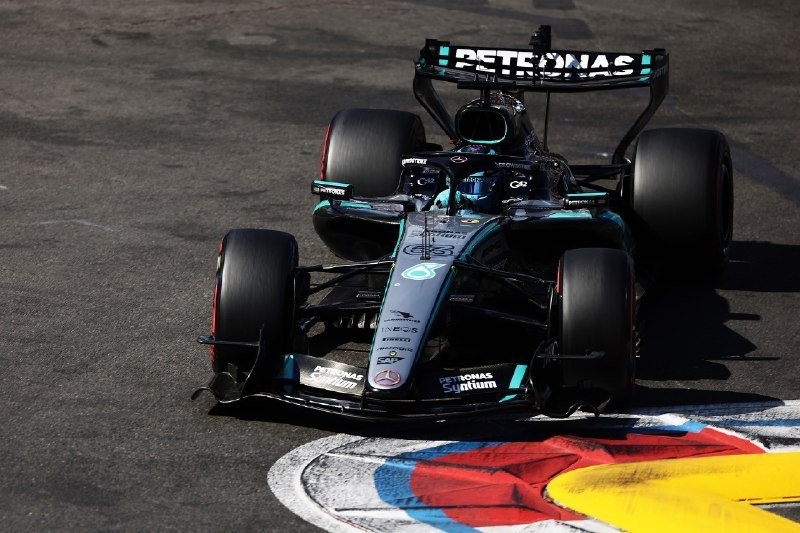
At 12:34 UTC on 18 June 2026, a Telegram channel with more than a million Formula 1 followers posted a single clip and a one-line caption: "Putting Lewis Hamilton's F1 career in perspective." The reaction was immediate. Within an hour the post had circulated through fan accounts, sports outlets, and the usual X pile-on. The argument beneath the clip is the one that follows Hamilton everywhere now: that the numbers, properly counted, already answer the question his critics keep asking.
Hamilton is 41 years old, driving for Ferrari in his first season outside Mercedes, and competing in a regulation reset that has reordered the field. By any conventional measure, the second half of a Formula 1 career is where the sport stops being kind. The cars punish indecision. The younger drivers arrive without the scar tissue. The teams quietly start planning the succession. None of that is news.
What's worth examining is the framing that the standard critique still depends on — that Hamilton is somehow playing out the string, that the record books will close on him before the cars do. The ledger, properly counted, says otherwise.
The numbers, counted properly
Hamilton holds 105 race wins, more than any other driver in Formula 1 history. He holds seven drivers' championships, tied with Michael Schumacher and unmatched in the post-Schumacher era. He holds the records for pole positions, podium finishes, and consecutive point-scoring finishes at the top of the sport. He holds 105 grand prix victories. He holds the record for the most wins at a single circuit — the British Grand Prix at Silverstone — and the most wins for a single constructor (Mercedes).
Those are not projections. They are not records he might reach. They are records he already owns.
What the standard critique usually does is subtract: subtract the years, subtract the regulation change, subtract the move to Ferrari, subtract whatever variable makes the next decade look like a comedown. By that math, of course, no active driver is ever the greatest. The same arithmetic, run forward in 2007, would have said the same of Schumacher.
The case against the case
The argument that Hamilton is somehow diminished rests on a small set of moves. The first is treating a regulation reset as a talent reset. It is not. A regulation reset rewards drivers who adapt quickly and teams that integrate young drivers into a new car philosophy. It does not penalise the experienced. McLaren's Lando Norris and Red Bull's Max Verstappen have been rapid in the 2026-spec cars, but neither has been able to treat the season as a coronation.
The second move is treating the move to Ferrari as evidence of decline rather than evidence of choice. Drivers at the top of the sport have always moved constructors when the constructor on offer is a constructor worth moving to. Ferrari in 2026 is not the Ferrari of 2020. The package is competitive. The car's development curve is pointed in the right direction. The team has invested in a driver pairing that includes a 41-year-old who does not need to be taught how to drive.
The third move is the one most worth interrogating: the assumption that a driver's career is a bell curve that must turn downward on schedule. There is no rule in the regulations that says this. There is a pattern, because the sport punishes the body and the reflexes eventually, but there is no schedule. The drivers who have raced into their forties have done so on their own terms, not on the sport's.
What the record actually argues
Hamilton's career is unusual not because he has won so much, but because he has won so much across so many different cars. The McLaren of 2007 was not the McLaren of 2012. The Mercedes of 2014 was not the Mercedes of 2021. The Ferrari of 2026 is not the Ferrari of any year before. The through-line in all of those cars is the driver.
That is the part the framing tends to leave out. A driver who wins in a car that is dominant is impressive. A driver who wins across multiple regulation cycles, in multiple team philosophies, in cars that were designed by different engineers in different decades — that is a different category. The category does not need a new word. It needs the existing word, greatest, applied without the usual caveats.
Stakes
What is at stake in the framing is not Hamilton's legacy. The legacy will outlast the framing. What is at stake is the standard against which the next generation of drivers will be measured. If the standard requires subtracting for age, subtracting for regulation change, subtracting for team move, then the standard will eventually consume any driver who survives long enough to be measured against it.
The cleaner standard is the one the record argues for on its own terms. Hamilton is the most decorated driver in the history of the sport, competing at a level no driver of his age has sustained, in a car that is competitive, on a team that has staked its current cycle on him. The critique that says otherwise is not wrong in its particulars. It is just incomplete in its arithmetic.
What remains genuinely uncertain is how the second half of the Ferrari season will land. The 2026 regulation reset has compressed the field more than the previous cycle did, and the development race is not over. The sources do not specify how many races Hamilton will win from here, because that is not knowable in advance. What is knowable is that the framing that depends on him slowing down has, for the better part of a decade, been wrong about him.
Desk note: The wire coverage of Hamilton tends to flatten the career into a count of wins and a count of years. Monexus's read is that the count itself is the story — and the count argues for a different headline.
Wire provenance
This editorial synthesis draws on the following public wire/social posts:
- https://t.me/s/formula1