Hegseth's NATO Review Is the Loud Part. The Quiet Part Is European Rearmament.
A six-month Pentagon review of US force posture in Europe, announced on 18 June 2026, reads less as a threat than as a schedule. The allies have been given a clock.
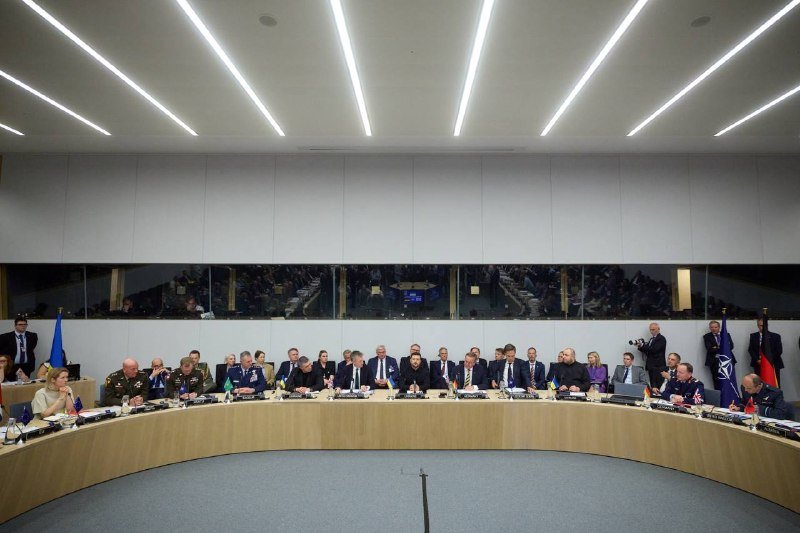
On 18 June 2026, at roughly 08:04 UTC, US Secretary of War Pete Hegseth stood at a podium and announced a six-month Department of War review of American force posture and basing in Europe, with an outside chance it wraps sooner. The same announcement was relayed across Telegram channels — Clash Report, DD Geopolitics, Open Source Intel — and confirmed by Reuters on X minutes later. By the standards of the last forty years of alliance politics, a sitting US defense secretary openly putting NATO's troop map under audit is a loud event. By the standards of the last four, it is closer to a footnote.
The reason it reads as a footnote is that the substance has been heading this way since at least the second Trump administration took office. What changed on 18 June is not the direction of American policy toward the alliance. It is the calendar.
The announcement, properly read
Hegseth's framing — "up to six months, it could be less" — is the operative line. A review with a defined endpoint is a scheduling tool. It tells European defense ministries and parliamentary committees in Warsaw, Berlin, Paris, the Baltics, and Brussels that they have a window to either pre-empt the American drawdown with credible European replacements, or accept the political cost of a US footprint that quietly shrinks to a tripwire. The Reuters wire on 08:25 UTC, headlined "Hegseth blasts NATO members, announces review of US forces in Europe," carried both halves of that message — the rhetorical pressure and the bureaucratic instrument.
European capitals should treat this as the deadline it is. Not because the United States is leaving NATO. The institutional gravity of the alliance, the dollar funding base, and the nuclear umbrella make a clean break implausible on any six-month horizon. But the marginal American presence — the brigade here, the aviation squadron there, the prepositioned stocks in Germany and Poland — is exactly the kind of thing that gets trimmed when a Pentagon review names it as a line item. Trimming is not withdrawal. Trimming is what happens when the hegemon decides its guarantor posture has become a subsidy.
The counter-read, and why it does not hold
The charitable read from inside the alliance is that reviews are how modern defense departments rehearse legitimacy. The last serious US force-posture review in Europe ran under the Obama administration in 2012–2014, and produced the European Reassurance Initiative that preceded the current forward presence. A new review, on this telling, is a chance for allies to make their case in writing.
The problem with that read is timing. Reviews that are instruments of reassurance are not announced in the same breath as public criticism of allied defense spending. Hegseth has been explicit, on the record and on camera, that NATO members are not carrying their share. A review launched under that premise is not a listening exercise. It is the paperwork phase of a decision.
What this sits inside
The structural frame is older than Hegseth and bigger than NATO. For two decades after the Cold War, the United States underwrote European security at a price Europeans were happy to pay because the alternative — rearming, building a serious industrial base, running their own nuclear conversations — was politically and fiscally harder. That bargain has expired in stages: the 2014 Wales pledge to reach 2% of GDP on defense, the 2022 Zeitenwende turning point after Russia's full-scale invasion of Ukraine, and now the slow acknowledgement inside European chancelleries that "America first, NATO second" is not a slogan but a budget line.
The Polish position is the cleanest illustration. Warsaw hit the 2% target before most NATO peers, hosted the bulk of the new forward presence after 2022, and is now the loudest European voice arguing that the alliance's eastern flank cannot be held on a Washington-defined clock. Paris and Berlin are converging on a similar view more slowly. The review Hegseth announced will accelerate that convergence whether or not it was designed to. A six-month American audit forces European capitals to answer a question they have been deferring since Maastricht: what does European security look like when the underwriter is no longer underwriting at the same level?
The stakes, on a six-month clock
If the review concludes with a measured drawdown of one or two formations, the political effect inside Europe will be larger than the operational one. European defense ministers will be obliged to publish credible replacement plans, parliamentary majorities will have to vote for them, and the European defence bond market — already the fastest-growing segment of the euro sovereign complex — will price the gap. Industrial consolidation in tanks, artillery, air defence, and ammunition will accelerate on a deadline, not a thesis.
If the review concludes with a sharper retrenchment, the consequence falls hardest on the frontline: the Baltic states, Poland, Romania, and the air-policing mission over the Black Sea. They will not be abandoned. They will be asked to do more with less while the continental centre debates force-generation. That is the dangerous interval — the window in which deterrence is loud but thin.
What remains genuinely uncertain is the disposition of American nuclear extended deterrence, which no announcement on 18 June touched and no review on this timeline is likely to touch. Extended deterrence is what actually holds the alliance together when the conventional map is redrawn. Until Washington clarifies that nothing has moved on that file, every European capital will hedge.
Hegseth gave the allies a clock. They will spend the next six months pretending it is a conversation. It is not. It is the schedule for a reckoning that has been deferred for a generation.
Desk note: Monexus framed this against the Reuters and Telegram wire coverage of the 18 June announcement, treating Hegseth's review as the calendar event it is, not the rupture the rhetoric suggests.
Wire provenance
This editorial synthesis draws on the following public wire/social posts:
- http://reut.rs/43HgraQ
- https://t.me/s/ClashReport
- https://t.me/s/DDGeopolitics
- https://t.me/s/osintlive