Hormuz reopens, but the bill for Europe is already on the table
A US-Iran arrangement lifts the Strait of Hormuz blockade and waives Iranian transit fees for sixty days, leaving Europe exposed to a chokepoint it does not control and a guarantee it has not been offered.
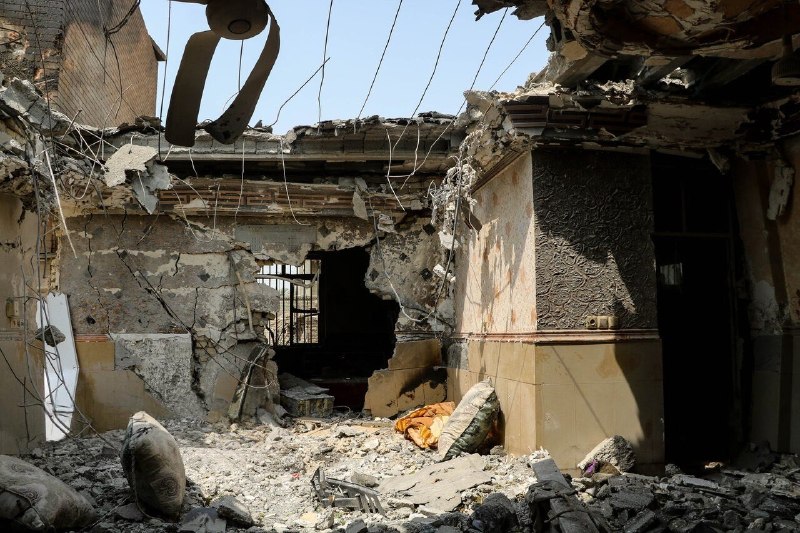
On 18 June 2026, the U.S. military announced that the blockade in the Strait of Hormuz had been officially lifted, following an agreement between Washington and Tehran. Within hours, Iran's Supreme Leader confirmed he had signed off on the deal — albeit with reservations, the scale of which Tehran did not detail — and Iran's authorities said they were suspending Strait of Hormuz transit charges for commercial vessels for sixty days. By the end of the European afternoon, French President Emmanuel Macron was on the record in Paris conceding, in answer to a direct question, that France had obtained no guarantees about the future of the strait because France was not a party to the arrangement. (Al Jazeera English, 18 June 2026; Cointelegraph wire via Telegram, 18 June 2026; ClashReport clip, 18 June 2026.)
The headline reads as a diplomatic success: a crisis defused, a chokepoint reopened, a fee waived. Read more carefully, the day tells a different story — about who negotiated the deal, who got left outside the room, and what kind of insurance policy Europe is now writing for itself.
What was actually agreed
The announced terms are narrow. According to the U.S. military statement carried by Cointelegraph's news wire on the afternoon of 18 June 2026, the blockade is lifted. According to Iranian reporting summarised by Al Jazeera English the same evening, Iran is suspending transit charges for commercial vessels in the Strait of Hormuz for a period of sixty days — a duration, not a renunciation. Iran's Supreme Leader publicly endorsed the agreement with the United States, while signalling that he held a different view on at least some of its terms. (Al Jazeera English, 18 June 2026; Cointelegraph via Telegram, 18 June 2026.)
Two facts stand out. First, the agreement is bilateral, between the United States and Iran. No European government is a signatory. Second, the relief is temporary: sixty days of suspended fees is not a permanent change in the regime governing the strait, and the underlying Iranian capacity to impose such fees — or to threaten shipping in other ways — is not part of what was relinquished. The strait has been reopened on a short lease, not surrendered.
The European exposure
The chokepoint through which a significant share of seaborne petroleum passes is now governed, on a rolling sixty-day clock, by an arrangement to which Europe's largest naval powers are not party. President Macron's exchange on the afternoon of 18 June, captured by ClashReport, put the question plainly: what guarantees had France obtained that the strait would not become a toll road controlled by Iran? His answer was equally plain — none, because France is not a part. (ClashReport, 18 June 2026.)
That is not a rhetorical complaint. It is a structural statement. Europe imports the bulk of its seaborne energy through waters that are physically inside the regional theatre of the Iran–Gulf relationship, but it negotiated no terms, signed no document, and received no security commitment under the deal announced on 18 June. When the sixty-day window expires, Iran retains the option to reimpose charges — or to reimpose them at a higher rate — and Europe will face that decision without being inside the room where it is taken.
The shape of the guarantee gap
The deeper pattern is older than this week. Europe's energy security has, for the better part of three decades, rested on the assumption that the United States would underwrite the maritime corridors on which European imports depend. That assumption held when U.S. naval power in the Gulf was uncontested and when European governments had little reason to think they would need a seat at the table. The arrangement announced on 18 June does not invalidate the assumption, but it does reveal its limits: a U.S.-Iran understanding on Hormuz is one in which European exposure is assumed, not addressed.
The sixty-day suspension of fees reads in that light as a concession Iran has made to keep the arrangement alive while preserving the underlying leverage. If the fee can be suspended for two months, it can be reimposed at the end of those two months, and the reimposition can be calibrated against Europe's negotiation posture. Macron's public acknowledgement that France has no guarantees is, in effect, an acknowledgement that Europe has no instrument — no signature, no clause, no enforcement hook — against that scenario. (Al Jazeera English, 18 June 2026; ClashReport, 18 June 2026.)
What Europe can still do
The remaining policy space for European governments is to write the insurance policy they should have started writing years ago. Three lines of work follow from the day.
The first is diplomatic. Europe can negotiate a parallel, formal understanding with Iran — covering transit fees, the treatment of commercial vessels, and the conditions under which any reimposition would be triggered. The sixty-day window is the natural clock for such a negotiation. The cost of starting late is now visible: a chokepoint is already open on terms Europe did not set.
The second is structural. The Strait of Hormuz is not the only maritime bottleneck on which European energy imports depend. The Bab-el-Mandeb, the Suez Canal, and the Turkish Straits all sit inside the same broader question of who insures the sea lanes Europe relies on. A serious European answer treats Hormuz as one node in a network, not as a unique vulnerability. (Al Jazeera English, 18 June 2026.)
The third is industrial. Europe's exposure is in part the product of import dependence it has had the technical capacity to reduce for years. The arrangement announced on 18 June does not change the underlying physics of that exposure; it does change the urgency of acting on it. Storage, diversification of supply, electrification of transport, and demand reduction are no longer background policy themes — they are the policy response to a world in which the United States and Iran can settle the terms of a chokepoint between them and tell Europe, by exclusion, what the new operating environment looks like.
What the sources leave uncertain
Several points remain opaque in the reporting of 18 June 2026. The Al Jazeera English wire reports that Iran's Supreme Leader approved the deal "despite having 'different' view" — without specifying what the different view concerns, or which provision of the arrangement it touches. (Al Jazeera English, 18 June 2026.) The U.S. military statement carried by Cointelegraph describes the lifting of the blockade but does not, in the wire copy circulated on the afternoon of 18 June, specify the reciprocal commitments Iran has undertaken beyond the sixty-day fee suspension. (Cointelegraph via Telegram, 18 June 2026.) Macron's exchange, as captured by ClashReport, confirms the absence of French guarantees but does not elaborate on what, if anything, the French government intends to do about it. (ClashReport, 18 June 2026.)
What is verifiable is narrower than the day's headlines suggest. The blockade has been lifted. Iran has suspended transit fees for sixty days. Europe was not at the table. Everything else — the durability of the arrangement, the terms of any extension, the European response — is still in front of the policymakers who now have to answer for it.
This publication framed the Hormuz reopening as a question of insurance and exposure rather than as a diplomatic triumph: the deal announced on 18 June 2026 resolves the immediate crisis but assigns the bill for the next one to European governments that were not party to it.
Wire provenance
This editorial synthesis draws on the following public wire/social posts:
- https://t.me/cointelegraph
- https://t.me/ClashReport
- https://t.me/cointelegraph/2
- https://t.me/s/ClashReport
- https://t.me/cointelegraph?before=2026-06-18T17:35:00Z
- https://t.me/s/cointelegraph
- https://t.me/s/AlJazeeraEnglish