The 48 hours that redrew the Gulf: Hormuz reopens, Israel digs in, and a US-Iran deal tests every party at home
A blockade lifted, a Lebanese occupation zone expanded, and a nuclear-track deal signed in the same window. The harder question is who, on each side, can survive the political cost of the new map.
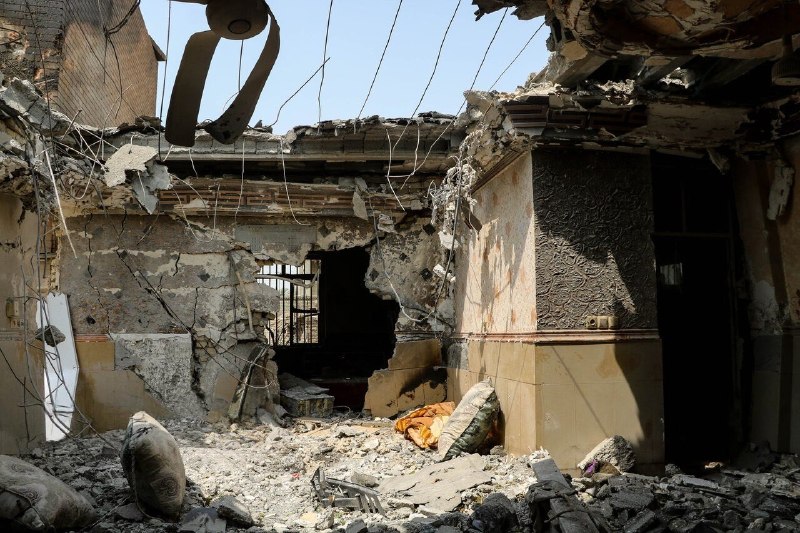
By 22:29 UTC on 18 June 2026, the shape of a week that had looked ungovernable had begun to resolve into a single, uncomfortable picture. Iran had agreed to arrange passage for commercial shipping through the Strait of Hormuz, free of charge, for sixty days. Israel was preparing an expanded occupation zone inside southern Lebanon in open defiance of the same US-Iran understanding that produced the Hormuz concession. And central banks from Washington to Frankfurt were signalling, in the same trading session, that the diplomatic thaw would not be enough to stop another leg of rate increases. Three movements, three time zones, one set of decisions taken within a forty-eight-hour window — and, in each case, a domestic political cost that the principals had not yet paid.
What changed this week was not the existence of a US-Iran deal — that framework had been in train for months — but the speed with which it imposed itself on every other file in the region. The blockade on Iranian oil exports had been the lever that brought Tehran to the table. With the Strait of Hormuz reopened and tanker traffic described as having resumed, the deal now has to be defended in three very different political markets: the Iranian street, the Israeli opposition benches, and the rate-setting committees of the world's major central banks. Each of those audiences has reason to want the deal to fail.
A corridor opened, with a countdown attached
The most concrete piece of news from the 48-hour window is also the most transactional. According to a 15:34 UTC post citing the Wall Street Journal, Iran will arrange passage for ships moving through the Strait of Hormuz and will not charge for the service during a sixty-day window. A 17:22 UTC dispatch from CryptoBriefing's newswire described the US as having lifted its naval blockade of Iranian shipping, with traffic through the strait reported as resuming. The mechanics, in other words, are already moving: oil is moving, and the political risk premium that priced the route for the better part of a year is being repriced in real time.
Sixty days is a short window. It is long enough to bring成品油 inventories back toward seasonal norms in Asia, where Hormuz-routed crude underpins refining margins from Singapore to Utsunomiya. It is not long enough to underwrite a multi-year investment cycle in Gulf midstream infrastructure. Traders and energy ministers will spend the next two months trying to work out whether the window is a goodwill gesture ahead of a permanent arrangement, a face-saving bridge for Tehran to dismantle its retaliatory architecture, or the first phase of a more durable bargain. Until the answer clarifies, freight rates, war-risk insurance premia, and the price of dated Brent will continue to oscillate on every statement from Washington, Tehran, or Tel Aviv.
The corridor arrangement also has a quiet financial dimension. The same window that frees up Iranian exports also frees up the dollar revenues that have been held in escrow or frozen under sanctions enforcement. As those flows re-enter the global settlement system, the central banks that have spent two years building alternative payment rails will be forced to decide how much of that infrastructure to keep, mothball, or expand. That choice is not technical. It is political, and it is being made in capitals that are not party to the deal.
Israel widens the map while Washington narrows the deal
If the Hormuz arrangement is the cooperative face of the 48 hours, the 21:26 UTC report from Middle East Eye on Israel's plans for an expanded occupation of Lebanon is its defiant mirror image. According to that report, Israel is preparing to extend its occupation zone inside Lebanese territory in open defiance of the US-Iran understanding. The framing in Tel Aviv, as reported across the Israeli press, is that the Iran deal does not address the northern front, and that the Israeli government intends to act on that gap. The framing in Washington, equally legible, is that an Israeli move south of the Litani at the moment a US-Iran framework is being sold to the region would amount to a deliberate sabotage of American diplomacy.
The political arithmetic inside Israel is unforgiving. As Middle East Eye noted in its 22:29 UTC dispatch, elections are expected in Israel in the coming months, and Prime Minister Netanyahu's coalition continues to trail in opinion polls. For a prime minister fighting for political survival, the choice between accepting a diplomatic architecture that has not visibly degraded Hezbollah's position and acting unilaterally to widen the buffer zone in the south is, in tactical terms, almost automatic. The cabinet calculus is straightforward: a wider occupation zone is legible to the domestic audience as a security achievement; a diplomatic concession in Washington is legible as a strategic loss. The longer-run question — whether Israel is buying a tactical gain at the cost of a strategic relationship with the United States — gets resolved in a different political cycle.
For Lebanon, the cost of the 48 hours is the cost of a neighbour's election. The expanded occupation, if it proceeds on the lines described, will compound an already severe displacement crisis in the south and tighten the squeeze on a state that has spent the last two years running a caretaker government through one external shock after another. The Lebanese state has limited instruments with which to resist. The instruments it has — complaints at the Security Council, negotiations over the line of withdrawal, a persistent request for ceasefire enforcement — all assume a US role that the next sixty days will be quietly testing.
Central banks read the same headlines, reach a different conclusion
The third leg of the 48 hours is the one that may end up mattering most for the global economy. A 21:40 UTC Reuters dispatch carried the headline that any peace dividend from an Iran agreement is not stopping central banks from raising borrowing costs. The juxtaposition is the story. Within hours of the Hormuz corridor reopening, the institutions that price money were signalling that they intend to keep tightening.
The structural reason is straightforward and worth stating plainly: the inflation that central banks are still fighting was not, on the whole, an oil-shock inflation. It was a fiscal-inflation, a supply-chain inflation, and — in a non-trivial number of economies — a labour-market inflation that the oil price could only ever have accelerated or decelerated, never set. A reopened strait lowers the probability of a fresh energy spike, which lowers the tail risk on inflation, which lowers the optionality value of waiting. It does not lower the level. The rate-setting committees of 2026 are not, on the evidence of the Reuters dispatch, behaving as though a peace dividend is around the corner. They are behaving as though the peace dividend has been priced in and the underlying problem is still there.
The political implication is harder. Governments that have been telling voters that the cost-of-living crisis would ease once geopolitical risk recedes are about to discover that geopolitical risk is not the variable that matters for the next twenty-five basis points. The blame for the next round of rate increases will, in the absence of a clean energy-shock story, drift back toward fiscal authorities, employers, and the central banks themselves. That is a less stable political coalition than the one that gathers around an external culprit. The US-Iran deal, in other words, may resolve one political crisis and create another.
What the deal is actually for
Stripped of its various national narratives, the US-Iran framework that produced the Hormuz concession is an arrangement about three things: a verifiable cap on Iranian enrichment, an inspected regime for Iranian missile production, and a sequenced release of frozen Iranian assets in exchange for compliance milestones. None of those three elements directly constrains Hezbollah, the Houthis, or the Iraqi militias. None of them directly constrains Israeli operations in Gaza, the West Bank, or — as of this week — southern Lebanon. The deal is, in this sense, narrower than either the Israeli or the Iranian opposition is willing to admit, and broader than either government is willing to claim.
The deal's narrowness is what makes it politically survivable in Tehran, where a broader accommodation with Washington would have been rejected by the security establishment. The deal's narrowness is also what makes it politically vulnerable in Jerusalem, where an arrangement that does not touch the northern file can be sold as a betrayal. Each side is reading the same document and seeing a different bargain, which is the most durable form a bargain can take in this region: everyone gets to declare victory, and no one has to defend the parts that were left out.
The question for the next sixty days is whether the gaps in the deal — the questions the document does not answer about Lebanon, about Gaza, about the missile supply lines that run through Iraqi airspace — are gaps the parties can quietly live with, or gaps that will be widened by unilateral action. Israel's reported move inside southern Lebanon is a strong early signal that the Israeli government intends to fill the gaps itself. The Iranian response to that move, and the American response to the Iranian response, will determine whether the deal that reopened Hormuz is the same deal that is in place at the end of the sixty-day window.
Stakes, with the clock running
The honest reading of the 48 hours is that no one has won decisively and no one has lost decisively. The Iranian state has reclaimed a revenue stream and a diplomatic relationship, at the cost of accepting constraints it has spent two decades rejecting. The Israeli government has held open the option of unilateral action in the north, at the cost of straining an alliance it cannot replace. The United States has produced a deal that is more defensible in Geneva than in the Knesset, and central banks have reminded everyone that the macro story has its own clock.
The single most important variable, looking out from this newsroom, is whether the sixty-day Hormuz arrangement gets converted into a permanent agreement on the same terms. If it does, the diplomatic architecture of 2026 looks, in retrospect, like the moment the region began to absorb the cost of a real settlement. If it does not, the next window opens with a wider Israeli occupation, a more heavily sanctioned Iran, and a central banking community that has just spent a quarter raising rates into a peace dividend that turned out to be rented, not owned.
What remains genuinely uncertain — and what the available reporting does not yet resolve — is the question of who, in Washington, owns the diplomatic file once the deal stops being a campaign asset and starts being an operational headache. The reporting surfaced this week describes the deal as a US-Iran arrangement. It does not describe a White House architecture for managing the inevitable Israeli, Saudi, and Gulf-state objections that will arrive in the next thirty days. That architecture, or its absence, is the story this publication will be following next.
Desk note: This piece leads with the diplomatic and military facts reported on 18 June 2026, then reads the macro and political consequences through the same wire. We did not name academic frameworks; the analysis is grounded in the explicit statements by Iran, Israel, and central banks as reported by Reuters, Middle East Eye, and CryptoBriefing's newswire.
Wire provenance
This editorial synthesis draws on the following public wire/social posts:
- https://x.com/MiddleEastEye/status/2067609185412427776
- http://reut.rs/4xHWLBy
- https://t.me/CryptoBriefing
- https://x.com/unusual_whales/status/2067600971874627584
- https://t.me/CryptoBriefing/2067678383593689088
Follow the event.
These dated source records provide context. They do not retrospectively verify this archive article.
Separate what the nuclear watchdog reported from what it could not determine after the June 2025 strikes.