Israel Publishes Map of Lebanese Security Zone as Residents Return to Hadada
On 18 June 2026, the IDF released a map asserting operations up to 10km inside Lebanese territory, while residents of Hadada in the south filtered back to homes the war had emptied.
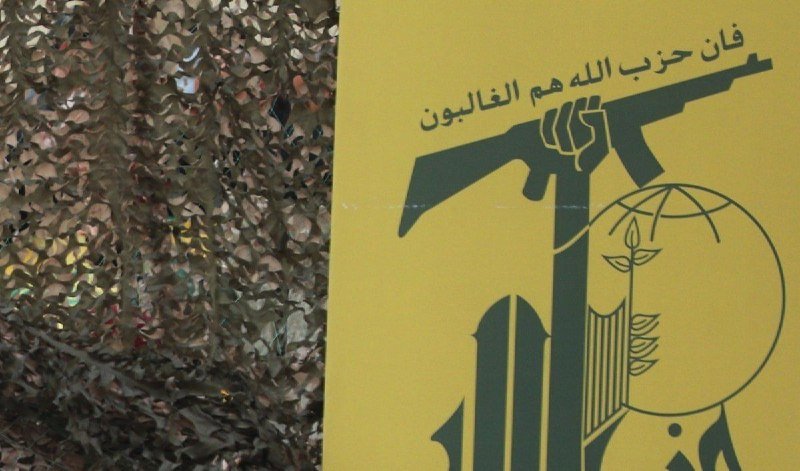
At 10:10 UTC on 18 June 2026, the Israeli Defense Forces published a map of what it described as a security zone in southern Lebanon, claiming its forces were operating up to approximately 10 kilometres inside Lebanese territory. By 10:25 UTC, residents of the southern Lebanese town of Hadada were reported to be filtering back to their homes, in a sequence that put on the wire within a single morning the two halves of a single picture: an Israeli military footprint pushed deep across the border, and a Lebanese civilian population moving back into a landscape those forces still dominate.
The simultaneity is the story. The IDF's cartography is a unilateral assertion of where the line will sit for now. The return of Hadada's residents is, in turn, a unilateral assertion from the other side of that line that the ground is livable again. Both moves are local; both have regional consequences; and both, read together, expose the gap between how each side is describing a still-fluid military situation along the frontier.
What the IDF actually published
The map, circulated by the IDF's Arabic-language spokesperson and relayed by the Telegram channel @wfwitness, is the most concrete public artefact the military has produced on the question of how deep into Lebanon it intends to hold. The roughly 10-kilometre depth is significant: it reaches well beyond the villages of the immediate frontier and into the network of secondary roads and orchards that line the Litani's upper tributaries. The IDF's own framing — "security zone," with the operational claim attached — is the kind of language that, in this corridor, has historically preceded months rather than weeks of presence.
Israeli security concerns along the Lebanon border are longstanding. Rocket and drone fire into northern Israel, the discovery of tunnel infrastructure, and the residual threat from Iran-aligned formations have all been cited by successive Israeli governments as the rationale for forward positioning. The publication of a map is not the same as a political decision to keep that depth on a permanent basis; it is, however, a public commitment to a particular geometry of control, made harder to walk back once soldiers are visibly occupying the ground.
The Hadada return
Hadada sits a short distance east of the coastal road in south Lebanon, a town emptied during the recent round of hostilities and one of the first to be named in Lebanese accounts of the return movement. Reporting by Iran's Tasnim News Agency, in both its English (@tasnimnews_en) and Farsi (@JahanTasnim) feeds, carried the line on 18 June that "the residents of Hadash [Hadada] town in south Lebanon are returning to their homes."
Tasnim is an Iranian state outlet, and its framing should be read as such. The agency's interest in the moment is not local journalism for its own sake; it is the visual texture of a Hezbollah-aligned population re-entering a landscape the IDF has just described as its operational depth. Two readings sit side by side: that the return is genuine and reflects a real easing of the immediate combat environment, or that it is a piece of carefully curated optics in a contest for the political meaning of the border. Both can be partly true; the reporting does not let the reader separate them.
Two unilateral acts, one contested line
The IDF's map and the Hadada return are not coordinated. They are two separate acts, each performed by one side, that the morning's wire put on adjacent screens. The Lebanese state has, in this reporting, no operative voice; the question of whether Beirut has been consulted on the security zone, and on what terms, is not addressed in the items in front of this publication. The same is true of any UNIFIL presence in the depth the IDF has marked — neither the UN Interim Force in Lebanon nor a Lebanese Armed Forces spokesperson appears in the thread material available to us. That silence is itself a fact, and a familiar one: when maps are published and towns are re-occupied, the diplomatic layer tends to follow rather than lead.
There is also a longer structural pattern at work. Cross-border security zones, whether declared or de facto, are how the absence of a political settlement expresses itself on the ground. The 10-kilometre depth is not a negotiation; it is a parameter. Residents returning to Hadada are moving back into a space governed, for now, by Israeli operational logic, and the Lebanese state's reach into that space is the part of the picture still to be drawn.
What the sources do not yet say
Three things remain unresolved in the public record. The first is duration: the IDF's framing of "security zone" implies persistence, but no source item available to this publication carries a timeline, a withdrawal condition, or a political commitment from Jerusalem. The second is authority: the reporting carries the IDF claim directly and Tasnim's account of the return directly, but does not give the reader a Lebanese government line, a UNIFIL statement, or a Hezbollah spokesperson's response to the map. The third is the mechanics of return — whether residents are returning under formal arrangements, under a tacit local arrangement, or on the strength of an observation that the immediate front has moved on. Each of these is the kind of question the next 72 hours of wire reporting will need to answer.
For the moment, the picture is what 18 June delivered: a map, a movement of people, and the unresolved space between them.
— Monexus framing note: the Israeli security rationale for the operation is treated as a first-order fact; the civilian cost inside Lebanon is treated with the same weight, sourced through Tasnim with its state-aligned provenance flagged. The diplomatic and UN layers are noted as gaps rather than filled in from sources we do not have.
Wire provenance
This editorial synthesis draws on the following public wire/social posts:
- https://t.me/tasnimnews_en
- https://t.me/JahanTasnim
- https://t.me/wfwitness