Iran's supreme leader breaks silence on US deal, signals reluctant blessing
Ayatollah Mojtaba Khamenei publicly endorsed a memorandum of understanding signed between Tehran and Washington, framing his backing as deference to the presidency even as he disclosed personal reservations.
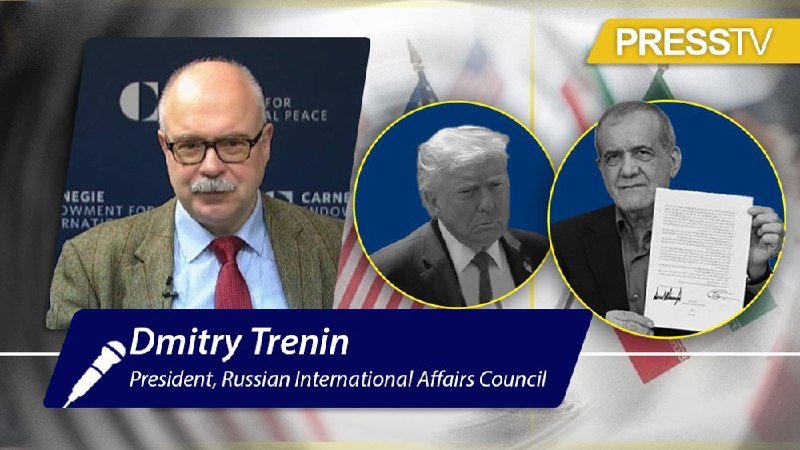
At 17:53 UTC on 18 June 2026, Iran's Supreme Leader Ayatollah Mojtaba Khamenei released a written address to the Iranian nation acknowledging that a memorandum of understanding had been signed between the presidents of the Islamic Republic of Iran and the United States. The statement, circulated by the Leader's official channels and republished in summary by state outlets, marks the first time the Supreme Leader has put his name — even conditionally — to a direct deal with Washington since the 2015 Joint Comprehensive Plan of Action collapsed in 2018. The Tehran-Washington MoU, signed in the Pakistani capital and referred to in Iranian official communications as the Islamabad Memorandum of Understanding, had until Thursday been carried in official Iranian readouts as a presidential initiative. The Leader's letter makes it a national one.
The strategic question is no longer whether Iran and the United States have a deal. They do, and the Supreme Leader has said so. The question is what kind of deal the Islamic Republic has actually bought — and on whose authority it will now be defended inside the Iranian system. Khamenei's letter threads that needle in unusually candid language for a faith-coded office, conceding personal disagreement while explicitly transferring political ownership of the agreement to the presidency.
A reluctant endorsement, on the record
The most striking passage in the statement, released in parallel on the Leader's Persian and English Telegram channels at 17:53 and 18:58 UTC, is Khamenei's disclosure that he held a different view "as a matter of principle." He attributes his endorsement to "the commitment that the esteemed president — as the head of the Supreme National Security Council — gave to me on his own behalf and on behalf of the officials." That formulation is constitutionally and politically loaded. The Supreme National Security Council (SNSC) is the formal Iranian body that coordinates defence and foreign-policy decisions across the civilian and military arms of the state. By deferring to the president in his capacity as SNSC head rather than to the office of the presidency as such, Khamenei has bounded his own endorsement to whatever commitments the president personally vouched for — and signalled, in plain Farsi, that he is not on the hook for anything the MoU does not explicitly contain.
The second notable passage credits the American side for the breakthrough, but in unenthusiastic terms. The US president, Khamenei writes, "out of desperation, used" a particular approach to reach this stage — a phrase that Iranian state-aligned outlets have already begun to translate into domestic-facing arguments that Washington conceded more than Tehran did. Iranian officials involved in the negotiations have spent the eighteen hours since the letter's release amplifying that line in interviews, framing the deal as a US climbdown rather than a mutual exchange. Whether that framing survives contact with the MoU's text — which has not been published in full — is a separate matter.
The Hormuz dimension
Khamenei's letter is not the only signal moving through the Iranian system on 18 June. At 18:43 UTC, the Iranian Supreme National Security Council published operational guidance on shipping through the Strait of Hormuz, instructing vessels to "pass on the route and at the announced time, so that the possibility of traffic can be gradually increased," and confirming that, under the Islamabad MoU, "no fees will be imposed on applicants for a period of sixty days." The traffic-routing instruction and the fee holiday are tied directly to the same agreement Khamenei endorsed.
The Hormuz link matters because the strait is the world's most consequential oil chokepoint — roughly a fifth of global petroleum trade transits it — and because Iran's control over its shipping regime is the single most powerful non-military lever the Islamic Republic holds. A sixty-day fee holiday is, in effect, a goodwill gesture priced in transit fees the IRGC-linked ports authority would otherwise collect, and a binding schedule is a concession on Iranian sovereign management of its own waters. The fact that the SNSC is announcing both in the same news cycle as Khamenei's letter suggests the two are meant to be read together: the Leader's political cover for the deal, and the Council's operational sign that Iran intends to honour the shipping track in the near term.
The counter-narrative inside Iran
The deal is not uncontested. Hardline outlets close to the Islamic Revolution Guard Corps and the conservative clerical establishment have, since the MoU's signing, framed the agreement as a one-sided concession that locks in Iranian compliance while leaving US sanctions architecture intact. Their argument is structurally simple: if sanctions remain in place, Iran is paying in shipping fees and routing concessions for promises that can be revoked by the next US administration, and the Leader's reference to presidential commitments — rather than to a binding treaty — gives them legal texture.
Khamenei's letter partially answers that critique. By stating that he held "a different view as a matter of principle" and by tying his endorsement to the president's personal undertaking, the Leader has effectively said: I am not the guarantor; the president is. That is a clarifying concession to critics, and a constraint on the presidency. It also tells foreign observers that the MoU's political lifespan inside Iran is tied to the credibility of the man who signed it. The leadership transition in Tehran that has long been speculated about is, in the meantime, less abstract than it was a week ago: any successor will inherit a deal whose principal author sits at the SNSC, not at the Marashi-yam.
What the MoU actually contains — and what it does not
The substantive text of the memorandum has not been released. Iranian state media have described its central commitments in general terms — a sixty-day fee-free transit window in the Strait of Hormuz, a routing schedule to be honoured by commercial shipping, and reciprocal undertakings on sanctions and on Iran's nuclear file — but the granular obligations, verification mechanisms, dispute-resolution procedures, and the status of frozen Iranian assets are not in the public domain. That opacity is itself a political fact. The Leader can describe his endorsement as bounded by what the president promised; the president can claim flexibility on details; and external partners — including the Gulf states whose waters adjoin the strait, and the European and Asian buyers of Gulf-origin crude — are left to read between the lines of Telegram posts.
The next test is procedural. A memorandum of understanding is, by its nature, a political document and not a treaty. Whether the Iranian Council of Ministers, the parliament, or the SNSC will codify any of its terms in binding domestic law, and whether the US side will issue parallel executive orders or Treasury guidance, will determine whether 18 June 2026 is remembered as a turning point or as the opening move in a longer negotiation. The Leader's letter, for all its candour, does not settle that question — and may have been drafted precisely so that it does not have to.
This publication's framing followed the official Iranian channels for the text of the Leader's statement and the SNSC shipping guidance, and read both against the hardline commentary that has surfaced in Persian-language outlets since the MoU was signed. The MoU's full text has not been independently verified.
Wire provenance
This editorial synthesis draws on the following public wire/social posts:
- https://t.me/Khamenei_en
- https://t.me/Khamenei_en/100
- https://t.me/alalamarabic
- https://t.me/alalamarabic/200
- https://t.me/presstv
- https://t.me/Irna_en
- https://t.me/osintlive
- https://t.me/GeoPWatch