Israel's southern Lebanon strikes force Iran to suspend US talks — and the deal's first clause is the casualty
Iran has paused its delegation to Switzerland after Israeli airstrikes in southern Lebanon, casting doubt on a Friday signing that was meant to cap a 60-day negotiation window.
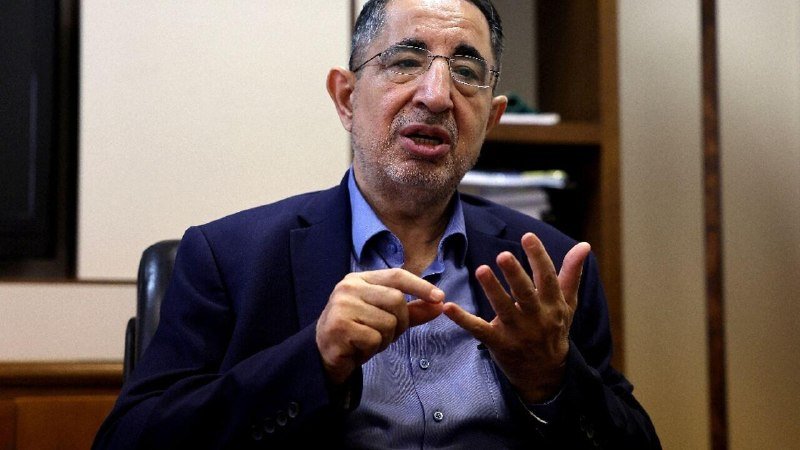
At 22:27 UTC on 18 June 2026, an Iranian delegation that had been due to fly to Switzerland for the first round of renewed talks with the United States was told to stand down. The trigger, according to regional reporting carried on Telegram by the @megatron_ron channel and amplified by @Cointelegraph, was not a procedural snag in Geneva. It was Israeli airstrikes inside southern Lebanon that Tehran characterised as a violation of the first clause of the agreement the two sides had been quietly assembling.
The episode crystallises a problem the entire US–Iran track has been trying to outrun for months. A diplomatic process that was meant to culminate in a Friday signing ceremony — confirmed by both Washington and Tehran, per a Middle East Eye live blog updated at 22:46 UTC — is now being held hostage to events on a third country's border. The architecture of de-escalation is being stress-tested in real time, and the first load-bearing wall to crack is the one Israel sits on.
What was supposed to happen this week
The sequence was meant to be orderly. Iran and the US confirmed a Friday signing date; a 60-day negotiating window was already in motion. Iranian negotiators were to travel to Switzerland for an opening round before the formal ceremony, with the text of an agreement — the language of which has not been disclosed in the thread materials — already advanced enough to be called a "first clause." That is a thin reed on which to hang a suspension, but it is the reed the Iranian side chose to grasp.
Israeli media, as relayed by the @DDGeopolitics channel at 23:02 UTC, described a "complex and difficult security incident in southern Lebanon" with details under censorship. The phrase is Israeli-press idiom for an operation the military does not yet want to characterise publicly; it is not a denial that an operation took place. Two earlier Telegram flashes from @wfwitness, at 22:40 and 23:04 UTC, reported a fresh Israeli airstrike on southern Lebanon, situating the incident in the Tyre-to-Nabatiyeh corridor where Israeli operations against Hezbollah infrastructure have been concentrated.
Why Iran reads this as a deal-breaker
Tehran's framing is structural, not sentimental. The thread materials carry the Iranian position twice, through the @megatron_ron dispatch and the @Cointelegraph summary, and in both cases the operative phrase is "violation of the agreement's first clause." That is significant. It tells us the agreement under negotiation is not a single instrument with a vague preamble; it is a sequenced text, and the first clause is the one Iran considers most load-bearing. Read alongside Iran's prior insistence that any deal be coupled to a regional de-escalation track, the claim is straightforward: an Israeli strike on Lebanese territory while Iranian negotiators are mid-flight is, in Tehran's eyes, a strike on the deal itself.
The Western-wire counterpoint is that Lebanon is not Iran, that Israeli operations against Hezbollah are a separate security track, and that conflating the two is precisely what hardliners in Tehran want. There is force to that reading. Israeli security concerns on the northern border are legitimate, hostage-related and rocket-fire considerations remain live, and tying a US–Iran accord to the tempo of operations in Bint Jbeil is to give a third-party veto to the process. The dominant framing — that the talks should continue while the security track is managed separately — is the one most Western chancelleries will reach for.
The structural problem: parallel tracks, one calendar
The harder question is whether the parallel-tracks model is still operable. A US–Iran deal that does not constrain Israeli action on the Hezbollah front is, from Tehran's perspective, a deal that can be shredded from Tel Aviv. A deal that does constrain it is, from Jerusalem's perspective, a deal that subcontracts Israeli security policy to a foreign negotiating table. Both positions are coherent; they are also mutually exclusive. The 60-day negotiating window was supposed to finesse this contradiction by sequencing confidence-building measures on a tight schedule, but sequencing requires every actor to stay in their lane, and the events of 18 June show one actor leaving it.
This is the plain-language version of the recurring diplomatic pattern: a hegemonic power and a regional rival attempt to lock in a framework, while a third party with operational freedom of movement on the ground decides whether the framework holds. The text in Geneva is the visible architecture; the air activity over southern Lebanon is the load-bearing one.
What remains genuinely uncertain
Three things the sources do not settle. First, the substantive content of the "first clause" — the thread materials do not publish its text, and without it, the Iranian claim of a violation is a characterisation, not a demonstrable breach. Second, the operational specifics of the Israeli strike: location, target, and casualty figures are not in the materials at hand, and Israeli media's censorship language signals an active information control, not a finished narrative. Third, the trajectory of the US response — whether Washington treats the suspension as a pause to be managed or as a collapse to be re-papered. The Friday signing date is now in question, but not yet formally cancelled in the materials available.
What can be said with confidence is narrower. A delegation did not fly. A strike did occur. A framework that both the US and Iran had publicly endorsed is now in procedural limbo, and the most plausible proximate cause, on the evidence available, is the Lebanese theatre, not the negotiating room.
Stakes
If the suspension holds into the weekend, the 60-day window starts to bleed. Each lost day compresses the time available for the technical annexes that typically accompany these accords — sanctions sequencing, escrow architecture, verification modality — and the more compressed the timeline, the less room there is for the kind of reciprocal ambiguity that gets a deal over the line. Iran loses a diplomatic moment it had spent months constructing; the US loses a foreign-policy deliverable in an election cycle that has rewarded delivery; Israel retains operational freedom in the north but at the cost of being the cited reason a deal collapsed. The longer the freeze, the more each side's domestic hardliners gain the argument they always wanted to make: that the other side was never serious.
The next forty-eight hours will tell whether the Swiss track revives or whether 18 June 2026 becomes the date the architecture visibly cracked.
This publication treats the Iran–US negotiating window as a live wire: any framing that reads the collapse of the Swiss track as a unilateral Iranian decision has to contend with the operational record on the ground in southern Lebanon, and any framing that reads it as a unilateral Israeli decision has to contend with the fact that the agreement under negotiation was, on the available text, an Iranian–American one.
Wire provenance
This editorial synthesis draws on the following public wire/social posts:
- https://t.me/megatron_ron
- https://t.me/Cointelegraph
- https://t.me/DDGeopolitics
- https://t.me/wfwitness
Follow the event.
These dated source records provide context. They do not retrospectively verify this archive article.
Separate what the nuclear watchdog reported from what it could not determine after the June 2025 strikes.