Israel pushes into Nabatieh hills as Hezbollah counter-strikes test the post-ceasefire line
Clashes around the Ali al-Taher heights in south Lebanon's Nabatieh Governorate on 18 June 2026 put fresh pressure on a fragile ceasefire, with Israeli forces advancing under artillery cover and Hezbollah firing back with guided munitions and rockets.
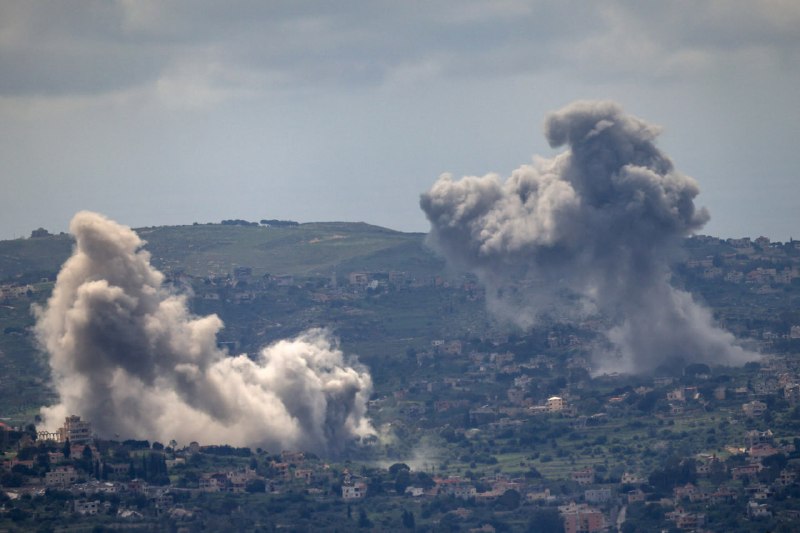
Fighting in the hills above Nabatieh flared on the evening of 18 June 2026, with Israeli ground forces attempting to advance on the Ali al-Taher ridgeline while Hezbollah fighters engaged them with anti-tank guided munitions and rocket fire, according to a stream of dispatches from field channels on both sides of the border. The clashes, concentrated in south Lebanon's Nabatieh Governorate, marked the most serious exchange inside the governorate in weeks and underlined how thin the post-war equilibrium along the Blue Line has become.
The exchange matters because it is being read in three different capitals — Beirut, Jerusalem and Washington — as a stress test of a ceasefire arrangement that was supposed to have cooled exactly this stretch of the border. The pattern on display on 18 June is a familiar one: Israeli forces move into a disputed high-ground pocket, Hezbollah fires back, and the question becomes whether the response is contained or escalates into a wider artillery duel across south Lebanon.
What happened on the ground
The first public reports of movement on the Ali al-Taher hills came in the late evening local time. According to the Telegram channel intelslava, Israeli forces were attempting to advance toward the Ali al-Taher hills in southern Lebanon under heavy artillery fire from Hezbollah positions. The channel described "intense clashes" between the IDF and Hezbollah near the village as Israeli troops tried to push uphill. That account was broadly corroborated by wfwitness, which reported intense Israeli artillery bombardment across multiple towns in the greater Nabatieh area, especially around the Ali al-Taher heights, and separately logged Israeli artillery shelling over the Nabatieh region following clashes with Hezbollah. wfwitness also noted Israeli jets operating over southern Lebanon as the engagement expanded.
The firing was not one-sided. rnintel reported that Hezbollah fighters were clashing with Israeli forces at Ali al-Taher and that Hezbollah had been launching rockets at Israeli positions while the IDF targeted the area. thecradlemedia carried video purporting to show a guided missile striking an Israeli military vehicle attempting to advance toward the Ali al-Taher area — footage consistent with the type of anti-tank guided munitions Hezbollah has used against armour in earlier rounds of the conflict. None of the Telegram channels is an independent on-the-ground source; all four should be read as partisan-aligned dispatches, two of them broadly sympathetic to the Israeli side and two broadly sympathetic to the axis of resistance.
What can be said with confidence from the four wire items is narrower than the headlines: between roughly 19:19 UTC and 23:25 UTC on 18 June 2026, there was an Israeli ground movement toward Ali al-Taher in Nabatieh Governorate, accompanied by Israeli artillery and air activity over southern Lebanon, and there was Hezbollah fire directed at Israeli forces and positions. The casualty toll, the exact units involved, and the specific Israeli objectives on the ridgeline are not stated in the four wire items.
A village that has been a flashpoint before
Ali al-Taher is not a random piece of high ground. The village and the heights above it sit on the spine of the Nabatieh range, looking north toward the Litani and south toward the Israeli frontier. In earlier rounds of the Israel–Hezbollah war, the ridges above Nabatieh were used by Hezbollah observers and short-range fire positions, and Israeli forces periodically pushed into the pockets they could reach to clear observation lines. The geography rewards whoever controls the high ground: an IDF platoon on the ridge can see ten kilometres into the Litani basin, while a Hezbollah presence there can bring fire down on the northern Israeli communities that sit only a few kilometres away across the border.
The Nabatieh Governorate has therefore been one of the more sensitive stretches of the ceasefire line that took hold at the end of the 2024 hostilities. Israeli complaints about Hezbollah presence north of the Litani and along the frontier villages have been a recurring background note in Israeli security reporting since the deal was signed. From the Hezbollah side, the framing — repeated in channels aligned with the group — has been that Israeli "incursions" into south Lebanon violate the understanding under which the fighting stopped. Both framings are partial, and both are politically convenient. The deeper structural fact is that no ceasefire along this border has ever been self-enforcing; each one has relied on a third-party mechanism — UNIFIL in earlier decades, US-French diplomacy in 2024 — to police the edges.
Why the post-war architecture is creaking
The pattern visible in the four wire items is the same one that has broken previous arrangements: a unilateral probing action by one side, a response by the other, and a question over whether the response is calibrated. Israeli forces advancing into the Nabatieh hills fits a long-standing doctrine of pre-empting what Israeli planners describe as re-establishment of hostile infrastructure in border villages. Hezbollah firing guided missiles at Israeli armour inside Lebanese territory fits the group's stated doctrine of resisting any "occupation" of Lebanese soil. Both doctrines can be defended on their own terms and both, when followed literally, produce exactly the kind of artillery and rocket exchange that the ceasefire was supposed to prevent.
The structural problem is that the enforcement mechanism is thin. UNIFIL remains deployed in south Lebanon but has neither the mandate nor the equipment to physically separate two armies that have decided to engage. The ceasefire committee mechanism that was set up in 2024 has reportedly been used to handle complaints on paper, but the four wire items do not mention any committee activity, and the timing — late on a Wednesday evening — is precisely the window in which field commanders act before political principals can be consulted. That is not a coincidence; it is how this border has operated for two decades.
The plausible alternative reads
There are at least three competing explanations for the 18 June exchange, and the available wire items do not allow a confident choice between them. The first is the Israeli framing: a localised, defensive clearing operation in response to Hezbollah re-positioning on a ridge that overlooks Israeli communities, executed under cover of artillery, intended to be brief. The second is the Hezbollah framing: an Israeli incursion into Lebanese territory in violation of the ceasefire, met with the minimum force necessary to repel it. The third is the structural read: an incident driven less by either side's grand strategy than by the routine friction of two forces deployed within a few hundred metres of each other along a line that has never been fully demarcated on the ground.
Each of these can be partly right. Israeli forces have, in earlier rounds, advanced into border villages for what they describe as limited operations and stayed longer than announced. Hezbollah has, in earlier rounds, used periods of quiet to reposition assets in villages north of the Litani in ways Israel has publicly complained about. And the third reading — that much of the firing on this border is friction-driven — has been the consensus view of most UN reporting on UNIFIL's area of operations for years. The risk is that a friction-driven incident tips into one of the framed narratives on either side and then becomes very hard to walk back.
Stakes beyond the ridgeline
The reason an exchange on a hill in Nabatieh Governorate matters outside Lebanon is that it sits inside a wider regional frame the wire items do not name. The Israeli–Hezbollah front has been treated since late 2024 as one node in a larger architecture that includes Gaza, the West Bank, Syria, and the Iranian-aligned axis running from Tehran through Baghdad and Damascus to Beirut. Israeli planners have publicly argued that pressure on Hezbollah in the north is connected to deterrence in the south. Iranian-aligned channels have argued, with equal consistency, that any Israeli move in Lebanon will be answered. Neither framing proves anything about what happened on the Ali al-Taher heights on the evening of 18 June, but both shape what happens next.
The immediate stakes are concrete. If the exchange is contained and the ceasefire committee handles the complaints, the line holds and the political track in Beirut and Washington continues. If the exchange widens — if Israeli artillery moves from the Nabatieh hills into populated areas of the governorate, or if Hezbollah rocket fire reaches deeper into northern Israel — the political cover for restraint on both sides evaporates quickly. The four wire items describe an artillery bombardment across "multiple towns in the greater Nabatieh area." That phrase, in earlier rounds of this conflict, has been the prelude to the displacement of civilians and to Israeli political declarations of expanded operations. Whether that is what is unfolding at the time of writing is not knowable from the available sources. What is knowable is that the pattern, once started, is hard to reverse on a Wednesday night.
What remains uncertain
The honest version of this story, given only the four wire items on the table, is narrower than the headlines being written about it. The wire items confirm an Israeli advance attempt on the Ali al-Taher hills in Nabatieh Governorate on 18 June 2026, Israeli artillery and air activity over southern Lebanon during the same period, Hezbollah rocket and anti-tank guided-munitions fire at Israeli forces and positions, and a Telegram-distributed video claiming to show a guided-missile strike on an Israeli vehicle in the same area. They do not confirm Israeli military objectives, Hezbollah order-of-battle on the ridge, casualty figures on either side, the status of ceasefire-committee contact during the engagement, or the diplomatic posture of any third-party guarantor. Until independent reporting — from wire services, UNIFIL, or Lebanese and Israeli official briefings — fills in those gaps, the analysis above is provisional. The shape of the event is clear; the substance of it is not.
Desk note: The wire items feeding this piece come from four Telegram channels, two broadly aligned with the Israeli side (wfwitness, rnintel) and two broadly aligned with the axis of resistance (thecradlemedia, intelslava). Monexus has reported the contested ground as contested rather than picking a frame; the structural argument — that no ceasefire along this border has ever been self-enforcing — is drawn from the geometry of the deployment and from the pattern visible in the dispatches themselves.
Wire provenance
This editorial synthesis draws on the following public wire/social posts:
- https://t.me/thecradlemedia
- https://t.me/wfwitness
- https://t.me/intelslava
- https://t.me/wfwitness/2
- https://t.me/rnintel
- https://en.wikipedia.org/wiki/Nabatieh_Governorate
- https://en.wikipedia.org/wiki/Blue_Line_(Lebanon)
- https://en.wikipedia.org/wiki/United_Nations_Interim_Force_in_Lebanon
- https://en.wikipedia.org/wiki/Litani_River
- https://t.me/thecradlemedia
- https://t.me/wfwitness
- https://t.me/intelslava
- https://t.me/wfwitness/2
- https://t.me/rnintel
- https://en.wikipedia.org/wiki/Nabatieh_Governorate
- https://en.wikipedia.org/wiki/Blue_Line_(Lebanon
- https://en.wikipedia.org/wiki/United_Nations_Interim_Force_in_Lebanon
- https://en.wikipedia.org/wiki/Litani_River