Kenya's JKIA upgrade is now a transparency test, not just an infrastructure story
A Cabinet Secretary contradicts press leaks within hours. The substantive question is no longer the airport's cost — it's who, if anyone, is accountable for the original number.
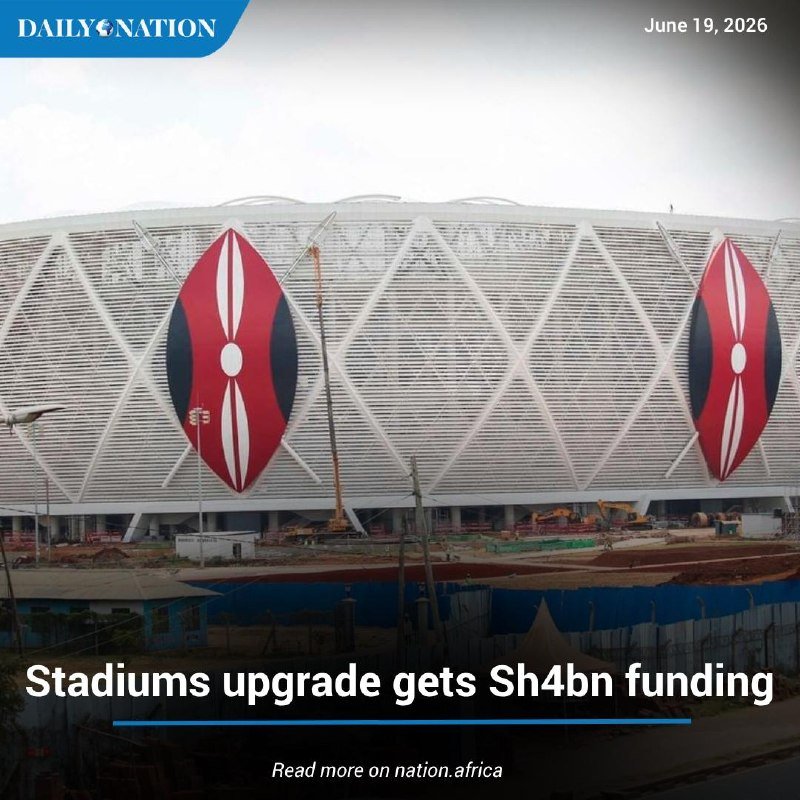
By the time Transport Cabinet Secretary Davis Chirchir stepped to the microphones on 18 June 2026, the press had already done the government's work for it. Headlines for the better part of a week had tied Zimbabwean businessman Wicknell Chivayo to a Sh375 billion (≈$2.9 billion) airport modernisation at Jomo Kenyatta International Airport. Within a single afternoon, the Cabinet Secretary denied both halves of that story. The contract, he said, is not signed. The figure is wrong. And the firm linked to Chivayo never bid.
The denial, in other words, was not a single rebuttal but a triple: deny the man, deny the money, deny the mechanism. Each denial raises its own questions — and each, if true, makes the original reporting harder to explain.
What the government actually said
Chirchir's remarks, carried by Standard Kenya and the Daily Nation on 18 June, drew three distinct lines. First, the cost ceiling: the JKIA expansion "will cost no more than Sh154.2 billion," roughly 41 percent of the figure that had circulated in preceding coverage. Second, the institutional channel: the Kenya Airports Authority is the implementing agency, and the contract is yet to be signed. Third, the Chivayo link: a company associated with the Harare-based businessman "did not participate as bidder in the process." The Transport ministry had no role in the JKIA deal, Chirchir added, gesturing away from his own docket. (Standard Kenya, 18 June 2026; Daily Nation, 18 June 2026)
Stack those three lines together and the picture is one of a project substantially smaller in price, run through a parastatal rather than a line ministry, and unconnected to a politically inconvenient foreign name.
Why the Chivayo connection keeps surfacing
The Zimbabwean angle did not arrive from nowhere. Wicknell Chivayo is not a marginal figure in southern African deal-flow — his name has surfaced in previous procurement controversies tied to Zimbabwean state contracts, which is precisely what makes him a useful peg for any story about cross-border infrastructure money. If a firm linked to him was in fact involved in early-stage discussions around JKIA, the denial is news; if it was not, the question becomes who first placed his name in the frame, and on what basis.
The press treatment so far does not resolve that ambiguity. The Daily Nation's framing — "SECRET JKIA deal" — assumes concealment; the Cabinet Secretary's denial assumes the absence of any such secret. Monexus cannot, from the available reporting, adjudicate who is right. What we can say is that a Sh375 billion headline figure, once published, tends to harden into public memory regardless of subsequent corrections, and the political cost of walking it back falls on the same government that allowed it to circulate.
The structural frame: procurement opacity as the actual story
Strip the personalities out and the underlying pattern is familiar across the region. Large-ticket infrastructure projects — airports, rail, ports, the standard set-pieces of national modernisation — are routinely announced with round-numbered valuations that nobody at the announcement can fully justify, then "clarified" weeks later in technical briefings nobody attends. The first number does the political work: it signals ambition, reassures markets, and locks in the narrative that the project is moving. The second number does the bureaucratic work: it survives an audit.
JKIA fits the pattern almost exactly. The Sh375 billion figure carried the ambition. The Sh154.2 billion ceiling, announced by the implementing agency only after the controversy had spread, carries the audit. Whether the lower figure is the real ceiling or merely the disclosable one is a question this round of reporting cannot answer. The point worth registering is that the gap between the two numbers — roughly Sh220 billion, or close to $1.7 billion at current rates — is large enough to fund a sizeable secondary project on its own. That is the scale at which transparency failures in African procurement tend to compound, and the scale at which donor partners and bilateral lenders tend to start asking their own questions.
Stakes — and what remains contested
For the Ruto administration, the immediate cost of the episode is reputational rather than financial. Kenya's airport modernisation is, on the government's own telling, a fraction of the price that was reported; that is a defensible position. But the chain of denials — man, money, mechanism — has now produced a clearer test than the original leak did. If the contract is genuinely unsigned, the government can publish the bidder shortlist, the technical evaluation report, and the financing structure. If Chivayo-linked entities were genuinely not involved, the procurement record should show no trace of them.
What the sources do not yet settle is whether the JKIA story is principally about a procurement that was misreported, or about a procurement that was conducted in conditions that allowed it to be misreported so credibly. Monexus will treat that distinction as load-bearing until the underlying documents clarify it.
Desk note: Monexus leads with the official rebuttal from Cabinet Secretary Chirchir, then surfaces the unresolved prior reporting rather than pretending it did not exist. Where wire coverage and government position diverge, both are shown, and the contestable question — transparency of process — is named explicitly.
Wire provenance
This editorial synthesis draws on the following public wire/social posts:
- https://t.me/StandardKenya
- https://t.me/StandardKenya
- https://t.me/DailyNation