Tehran's Bilingual Endorsement: Why Khamenei's Letter Matters Less Than the Silence Around It
Tehran's English- and Persian-language channels pushed Khamenei's MoU endorsement in lockstep, but no third party has confirmed the text. The louder the bilingual apparatus, the more carefully the silence around it should be read.
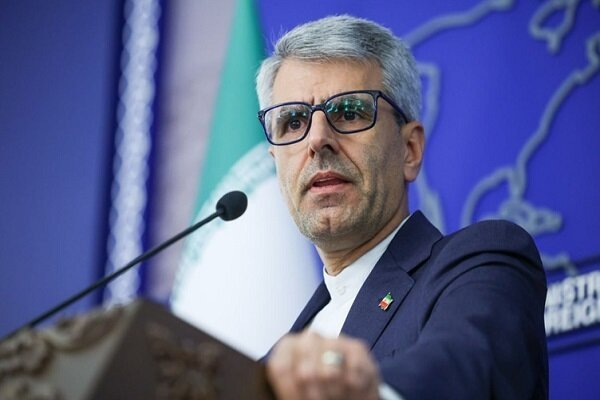
On 17 June 2026, an English-language statement from Ayatollah Ali Khamenei's office described a new memorandum of understanding between Tehran and a regional partner as a step toward a "more secure" Middle East, and within twelve hours both Iranian state outlets and pan-Arab Telegram channels were running the same bilingual endorsement in lockstep. The synchronised release, in Persian and English, was notable less for what it said than for what it conspicuously did not: no transcript of the signing ceremony, no photographs of the principals, no third-party readouts. The gap between the volume of the endorsement and the thinness of the documentation is the story.
The dominant wire read treats the letter as a fait accompli. Iranian outlets IRNA English and the regional commentary channel Middle East Spectator carried the full text within hours, and The Cradle's Telegram channel ran a summary that framed the MoU as a structural realignment of regional security architecture. Read closely, however, the artefact looks less like a diplomatic milestone than like a tightly engineered information operation. It was designed to make a still-vague agreement defensible across the Iranian political spectrum at a moment when that spectrum is unusually narrow and unusually brittle.
What the document actually says
Stripped of its rhetorical packaging, the letter performs three functions. It asserts a continuing strategic partnership. It frames that partnership as defensive rather than offensive, the familiar "common threats" formulation that allows Tehran to claim convergence without naming the partner's military role. And it positions Iran as a status-quo regional actor, a tone choice that reads as deliberate given the concurrent pressure campaign from Washington and the persistent protests inside Iran that any overt regional entente now risks amplifying.
What it does not do is more revealing. There is no text of the MoU itself, no description of its operational clauses, no timeline for implementation, and no acknowledgment of the bilateral consultations that, by Iran's own account of similar announcements in past years, would normally precede such language by weeks. The channel that carried Khamenei's English statement is the official Khamenei_ir Telegram, not a foreign ministry handle, which places the document in the religious-leadership lane rather than the diplomatic one.
The bilingual apparatus
Iran's English-language diplomatic output has expanded sharply since 2024, a pattern documented across IRNA English and the regime's official translation channels. The production of simultaneous Persian and English releases is no longer exceptional; it is the default for any item intended for foreign consumption. The choice to publish the Khamenei letter through that same bilingual pipeline is itself a signal about audience. The Persian text is for internal mobilisation. The English text is for the lattice of regional Telegram accounts, friendly foreign-policy circles, and Western analysts who consume Iranian official English as primary source material.
The amplification pattern that followed tracked that pipeline closely. The Cradle, a Beirut-based outlet with documented ties to the Iranian-aligned axis, ran the framing story within hours. Middle East Spectator, which functions as a regional aggregator, mirrored the headline. OSINTLive, a channel that has grown its audience by being early on Iranian and Russian state English releases, carried the text with light editorial framing. None of these outlets is independent in the conventional sense; the convergence of their coverage is the point, not a coincidence. They are the channels through which Tehran's English-language diplomatic register is meant to travel.
The silence around it
The more telling record is the coverage that did not appear. Major wire services did not run the MoU as a discrete story on 18 June. No Saudi, Emirati or Qatari foreign ministry produced a confirmatory read. Western intelligence commentators treated the letter as a useful but unverified data point. The absence of a third-party paper trail, combined with the high-volume amplification through the usual channels, produces a familiar signature: a release whose principal function is to set the terms of subsequent debate among analysts and sympathetic outlets, rather than to record a settled diplomatic fact.
Iranian-aligned coverage of comparable MoUs in past cycles has followed a similar arc: an English-language endorsement from Khamenei's office, parallel Persian-language coverage framed in nationalist terms, and then a long silence as the operational substance, if any, is negotiated away from public view. The 2026 letter fits that pattern closely enough to make the parallel worth naming.
Why the framing matters
For analysts outside the Iranian-aligned media ecosystem, the temptation is to treat the letter as confirmation of a regional realignment. That is exactly the response the document is engineered to provoke, and exactly the response that should be treated with the most caution. The MoU may yet prove substantive. It may yet produce visible cooperation, joint exercises, or shared infrastructure investments that vindicates the headline. The signal of the release on 17 June, however, is that Tehran's information apparatus wanted the headline to land first and the substance to follow later, in whatever form and on whatever timetable the regime's internal politics permit.
The readership this publication serves should hold both possibilities in view. The bilingual endorsement is real, in the sense that the document exists and carries the Supreme Leader's authority. What it endorses, and what it obliges, remain genuinely unknown. The silence around the MoU is the more reliable signal, and the one that the first wave of celebratory or alarmed coverage is least likely to surface.
What to watch next
Two near-term tests will determine whether the letter was the opening of a substantive process or a piece of stagecraft. The first is whether any third government publishes a parallel confirmation of the MoU's text within the next two weeks; the second is whether Tehran permits any Iranian-language outlet outside the official pipeline to describe the agreement's operational content. If neither materialises, the bilingual endorsement will join the growing pile of Iranian-English diplomatic artefacts that travelled widely and changed nothing.
Sources: t.me/Khamenei_en; t.me/Irna_en; t.me/thecradlemedia; t.me/Middle_East_Spectator; t.me/osintlive.
Desk note: Monexus reads the Khamenei letter as a calibrated information operation rather than the regional realignment headline coverage implies. Where wires amplified, we asked what was missing from the paper trail.