Live Wire
15:00ZSBSNEWSAUSConcerns over government’s new aged care algorithmhttps://www.sbs.com.au/news/video/concerns-over-governments…15:00ZPRESSTVIran's Foreign Minister Seyyed Abbas Araghchi held a phone conversation with French Foreign Minister Jean-Noë…14:59ZDDGEOPOLITCuba's President Miguel Díaz-Canel:No revolution has ever had it easy. And ours has had the audacity to survi…14:59ZSBSNEWSAUSHanson asked to explain NPC speech controversy14:58ZSBSNEWSAUSLabor reverses capital gains tax hikes from budget plan14:56ZFARSNEWSINTrump: I will probably support Netanyahu in the elections, the American president said in an interview with t…14:56ZCLASHREPORCuban president invites overseas citizens to invest, import technology, build projects14:55ZKYIVPOSTOFBritain to send Ukraine 150,000 drones, 350 air defense systems in £752m aid package
Markets
S&P 500746.55 1.01%Nasdaq26,373 1.35%Nasdaq 10030,308 2.15%Dow517.65 0.54%Nikkei96.38 2.04%China 5033.36 0.88%Europe88.45 0.47%DAX41.66 0.71%BTC$63,665 2.24%ETH$1,735 1.14%BNB$588.58 2.30%XRP$1.16 3.09%SOL$70.92 2.01%TRX$0.3194 0.38%HYPE$69.31 4.01%DOGE$0.0838 2.70%RAIN$0.0146 3.84%LEO$9.61 0.44%QQQ$737.76 2.11%VOO$688.05 0.97%VTI$369.86 1.12%IWM$294.16 1.48%ARKK$79.63 1.45%HYG$80.01 0.34%Gold$390.23 0.42%Silver$60.11 0.83%WTI Crude$111.28 2.58%Brent$42.56 2.15%Nat Gas$11.52 0.43%Copper$39.07 1.11%EUR/USD1.1461 0.00%GBP/USD1.3229 0.00%USD/JPY160.93 0.00%USD/CNY6.7716 0.00%
OPENNYSEcloses in 4h 56m
The Monexus
Vol. I · No. 169
Thursday, 18 June 2026
Saturday Ed.
Updated 15:03 UTC
  • UTC15:03
  • EDT11:03
  • GMT16:03
  • CET17:03
  • JST00:03
  • HKT23:03
← The MonexusOpinion

Late-Night Hosts, Foreign Policy, and the Curious Reflex of American Satire

A US-Iran memorandum of understanding lands. Within hours, Jimmy Kimmel is on air reading jokes about it. The reflex is the story.

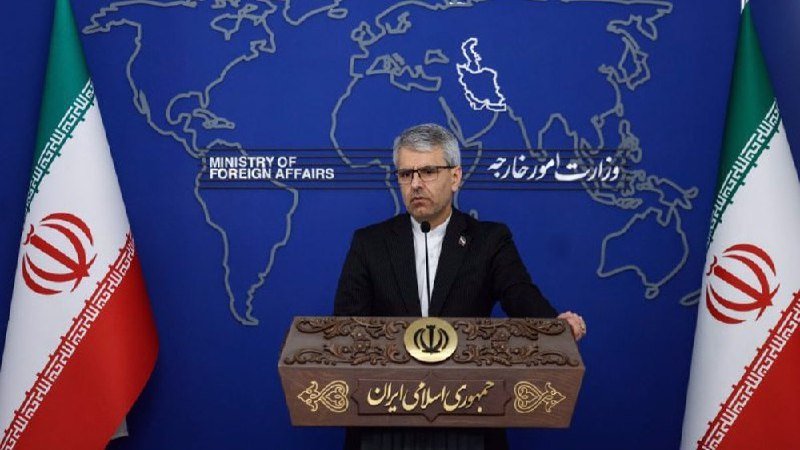
@presstv · Telegram

On 18 June 2026, within hours of the United States and Iran signing a memorandum of understanding, ABC's Jimmy Kimmel was on air doing what Jimmy Kimmel does: he "roasted" the sitting president for the deal. The clips surfaced almost immediately on Arabic-language news channels tied to the Iran file — including English-language coverage that explicitly identified the late-night host with the Democratic camp and as an opponent of President Trump — as evidence that even American comedians were turning on the agreement before the ink was dry on the cable-news analysis of it.

This is not a column about whether the monologue was funny. It is a column about the reflex it reveals — the speed at which a complex foreign-policy document, negotiated between two governments that do not currently maintain formal diplomatic relations, gets flattened into a six-minute stand-up segment that an overseas audience can use as a proxy for "American elite opinion."

The two-day news cycle and the joke window

The news cycle now has a joke window. For roughly two hours after a major policy event, the late-night monologues operate as a parallel news feed — shorter, sharper, and aimed at a different attention economy. Foreign outlets that cannot rely on fluent access to Washington briefings will often treat those monologues as a primary read on the US domestic temperature. It is faster than polling, and it travels further than an editorial.

The risk is what gets lost in transit. A memorandum of understanding is a specific legal instrument — it is not a treaty, it does not bind Congress, and its terms can vary dramatically from one page to the next. None of that nuance survives a punchline. What survives is the tone: the sense that the deal is, in the words of the genre, ridiculous.

Satire as geopolitical signal

There is a long history here, and it is not unique to any one network. Late-night comedy has, for at least a generation, functioned as a soft-power signal — not because the jokes are profound, but because they tell an overseas observer what the host's roughly two-million nightly viewers are willing to laugh at. A monologue that savages a sitting president is, in this register, a market signal about the president's domestic coalition.

When that signal lands in Tehran, Beirut, or Doha, it does work. Officials in those capitals are not making policy based on a punchline. But they are calibrating expectations: how durable is the deal, how much heat will the administration take from its own side, how long before the next reversal. A monologue that lands on the same day the MOU is signed tells them that the heat is immediate.

The flattening problem

The flattening is the problem. A complex diplomatic event — one that involves sanctions architecture, nuclear-inspection regimes, regional security guarantees, and hostage-track adjacencies — gets compressed into a frame the audience can metabolise in six minutes: hero, villain, punchline. The audience leaves the segment feeling informed. They are not informed. They have been oriented.

This is not a complaint about Kimmel specifically, or about late-night comedy as a form. The form has always been orientation rather than information. The complaint is about what happens when foreign outlets — including the Arabic-language channels that surfaced the clips on 18 June — treat the orientation as if it were analysis. The clips are circulating in a region where the underlying deal has direct, material consequences, and they are circulating without the explanatory scaffolding that would let a viewer weigh whether the joke tracks the policy.

What the sources do and do not tell us

The available reporting on this story is narrow. Two outlets tied to Iran coverage noted that Kimmel mocked Trump following the MOU; neither published the transcript of the monologue, the specific joke targets, or the audience reception metrics. What we know is limited to: the event happened, it was framed as a "roast" of the president, and the host's political alignment was flagged explicitly. We do not have ratings, we do not have the text, and we do not have independent confirmation of how the segment was received by the diplomatic or analyst class in the region.

That matters for the conclusion. The instinct to read the monologue as a verdict on the deal is itself an artefact of the two-day cycle — it treats speed as a substitute for substance. A better read is that an American comedian did what American comedians do when their preferred target signs a deal their audience is expected to dislike. The fact that this reflex travels to Tehran at the speed of Telegram is a fact about the architecture of global news distribution, not about the merits of the deal itself.

The stakes for the next forty-eight hours

If the deal holds, the monologue becomes a footnote. If the deal collapses, the monologue becomes a primary document for the "everyone saw it coming" narrative that will be assembled in its aftermath. Either way, the structural lesson is the same: in the first forty-eight hours of any major foreign-policy event, the late-night segment is now part of the diplomatic weather. Coverage that treats it as such — without granting it the weight of analysis — is the only honest move.


Desk note: Monexus treats the late-night monologue as a signal worth reporting, not a verdict worth endorsing. The Iran file at Monexus runs on primary documents and named-source reporting; the joke window is adjacent to that work, not central to it.

Wire provenance

This editorial synthesis draws on the following public wire/social posts:

  • https://t.me/englishabuali
  • https://t.me/abualiexpress
  • https://t.me/englishabuali/2
  • https://t.me/abualiexpress/2
© 2026 Monexus Media · reported from the wire