Lebanon's health ministry puts four months of Israeli strikes at 3,912 dead — and the framing fight is already under way
Four Lebanese ministries of health have now reported the same toll from Israeli strikes since 2 March. The dispute is no longer over the numbers — it is over what they mean.
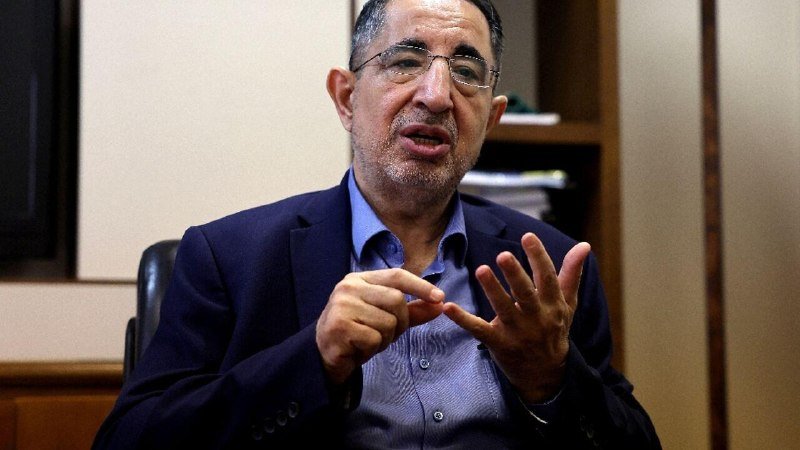
The Lebanese Ministry of Health announced on Tuesday, 18 June 2026, that 3,912 people have been killed and 11,873 injured in Israeli strikes on Lebanon since 2 March, the date Israeli forces resumed major operations against Hezbollah after a months-long exchange of fire across the Blue Line. The toll, distributed by the ministry's public communications channel and carried on 18 June 2026 at 13:12 UTC by Iran's Tasnim news agency and on 18 June 2026 at 13:33 UTC by Beirut-based outlet The Cradle, marks a grimly round milestone in a campaign that has now run longer than the 2006 war's heaviest month and shows no sign, on the ground, of abating.
The numbers are not in serious dispute. What is in dispute — and what will determine the diplomatic shape of the next sixty days — is the frame. Read from Beirut, this is a civilian-protection crisis demanding an immediate ceasefire. Read from Tel Aviv, it is the cost of degrading an armed non-state actor that spent two years firing into northern Israel. Both readings rest on real evidence. The story sits in the gap between them.
What the health ministry is actually reporting
The figure of 3,912 dead and 11,873 injured covers the period from 2 March 2026 to 18 June 2026 — a span of 108 days. The Lebanese Ministry of Health's public communications channel published the cumulative update on Tuesday morning local time; Tasnim, the Iranian state news agency, carried the wire at 13:12 UTC on 18 June 2026, and The Cradle, a Beirut-based outlet that has covered the campaign closely, repeated the figures at 13:33 UTC the same day. The toll includes women, children, and medical personnel, according to the ministry's standard disaggregation; specific breakdowns by category have not yet been published for the cumulative figure, and the ministry has not, in this update, distinguished combatant from non-combatant deaths. That distinction will matter for how Western wire desks file the story, and it is the first place an attentive reader should expect a number to be quietly hedged.
At a daily rate, the 108-day total implies an average of roughly 36 deaths per day, with the curve heavily weighted toward the opening weeks of the campaign, when Israeli airstrikes on the southern suburbs of Beirut, the Bekaa Valley, and the south were running at their most intensive tempo. The Cradle and Tasnim both framed the 18 June update as a marker of the campaign's human cost rather than as a turning point. The Lebanese health ministry itself has, in recent weeks, shifted to publishing casualty updates on a near-daily basis, a procedural change that tracks the rising toll.
The Israeli frame, in its own words
Israeli military and political spokespeople have, since 2 March, framed the operations as a necessary response to Hezbollah rocket and drone fire into northern Israel, the displacement of tens of thousands of Israeli civilians from border communities, and the failure of the November 2024 ceasefire arrangement to hold. Israeli media, including Hebrew-language outlets, have carried IDF briefings describing specific strikes against what the military identifies as Hezbollah commanders, weapons depots, missile sites, and command infrastructure. The Fars News Agency, an Iranian state outlet that has run parallel coverage from Beirut, reported at 13:18 UTC on 18 June 2026 — fifteen minutes after Tasnim's first wire of the health ministry update — that "the fire of Israeli artillery and drones does not stop in southern Lebanon, despite the claim of stopping the advance of the Israeli army deep in Lebanon by the Hebrew media." Fars cited its correspondent in southern Lebanon, Topkhan, for the claim.
That single dispatch captures the framing war in miniature. Fars is asserting that ground and air operations continue at a tempo inconsistent with the public posture of the Israeli government; the Israeli outlets Fars is referencing are not named in the wire, but the pattern is familiar from earlier phases of the conflict, when the IDF has used Hebrew-language media to float operational pauses that English-language wires do not pick up. The substance — whether strikes paused, slowed, or continued at intensity — is exactly the kind of question that a serious reader cannot answer from the open sources alone. The Cradle's reporting on the 3,912 figure sits inside a longer Cradle narrative that treats the Israeli campaign as indiscriminate; Tasnim sits inside an Iranian state narrative that treats it as a US-backed aggression; Fars sits inside a regional security frame that treats it as unfinished business. None of these frames is, on its own, the story.
Why the framing is doing more work than the numbers
The 3,912 figure will, in the next forty-eight hours, propagate through wire desks in three distinct ways. Western wire services covering the Middle East — Reuters, the Associated Press, Agence France-Presse, the BBC — will report the Lebanese ministry's number, attribute it explicitly, and almost certainly pair it with an Israeli military response noting the targets struck and the IDF's stated effort to minimise civilian harm. The Cradle, Middle East Eye, and the Iranian state cluster (Tasnim, Fars, IRNA) will report the same number inside a frame that emphasises continuity of strikes and US complicity, and will be more aggressive about characterising the dead as civilians. Israeli English-language outlets (the Times of Israel, Ynetnews, the Jerusalem Post) will be the slowest to amplify the headline figure, and when they do they will contextualise it against rocket fire into Israel and the evacuation of the north.
The same number, three different stories. This is not a flaw of the press so much as the operating condition of a conflict where the underlying facts are largely agreed but the meaning of those facts is the actual battlefield. A reader who sees only one of the three framings will come away with a different policy conclusion: a humanitarian-imperative conclusion from the Beirut frame, a security-imperative conclusion from the Tel Aviv frame, and a regional-order conclusion from the Tehran frame. The structural fact — that a dense urban-adjacent campaign has produced roughly 36 deaths per day for 108 days — is the same in all three.
What the next sixty days will turn on
Three things will determine whether the 3,912 figure keeps climbing or plateaus. First, whether the diplomatic track that has been rumoured in recent weeks — mediated, in various configurations, by the United States, France, and Qatar — produces a written arrangement that pauses operations in exchange for a verifiable Hezbollah withdrawal north of the Litani. The November 2024 framework, mediated by Amos Hochstein for the United States, produced an initial quiet that did not hold; the question for any successor deal is whether the verification mechanism is stronger this time, and that question is not yet answered in open sources. Second, whether the Israeli domestic political calendar produces a pressure point for de-escalation. Third, whether the casualty curve on the Israeli side — the rocket and drone fire into northern Israel, the displacement of border communities — changes in a way that alters the cost-benefit calculus of the campaign. The 18 June reports do not resolve any of these three; they underline that the human cost of leaving them unresolved is being counted, every day, in the morgues of south Lebanon and the Bekaa.
Desk note: where wire services report the Lebanese health ministry's 3,912 figure, the framing usually determines which paragraphs make the cut. Monexus has reported the number inside both its civilian-protection and its security frames, and is publishing the Iranian and Israeli source wires in parallel so readers can see the dispute over continuation, not just the dispute over the count.
Wire provenance
This editorial synthesis draws on the following public wire/social posts:
- https://t.me/thecradlemedia
- https://t.me/Tasnimnews
- https://t.me/FarsNewsInt
- https://t.me/wfwitness
- https://t.me/thecradlemedia/2
- https://en.wikipedia.org/wiki/2026_Lebanon_campaign