Macron's gilded-stage diplomacy and Trump's missile logic collide at Versailles G7
At a G7 built for symbolism, Emmanuel Macron's decade of stage-managed summits meets a US president now publicly defending Iran's right to ballistic missiles — a posture that scrambles the Western negotiating line.
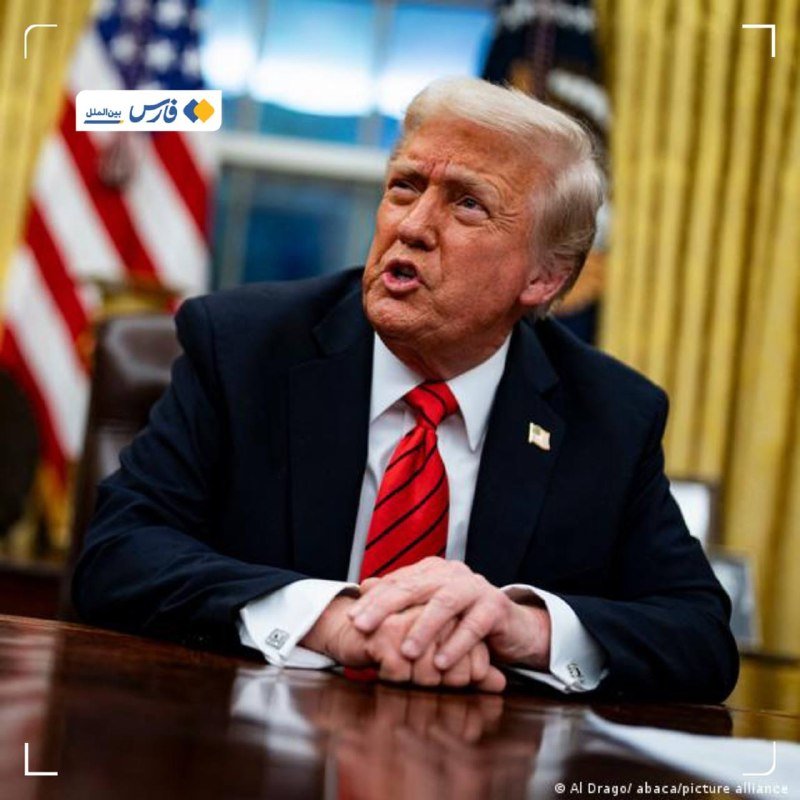
The Palace of Versailles opened its gilded gates to the Group of Seven on 18 June 2026, and the choreography was vintage Macron. French President Emmanuel Macron courted his US counterpart Donald Trump with the full repertoire of French statecraft — gilded Hall of Mirrors, king-scale portraiture, the implicit suggestion that the host still matters in a world where the White House sets the tempo. France 24's English desk framed the moment in a single line: "Macron's 'Versailles diplomacy' yields mixed results after a decade in power," noting the trademark blend of symbolism and leverage that has defined Macron's foreign policy since 2017.
What made the day more than a photo opportunity was the gap between the script Macron wrote and the line Trump read off the same stage. Within hours, Trump had told reporters that it would be "unfair" for Iran not to possess ballistic missiles if other countries were permitted to keep theirs, according to a 14:10 UTC post by Middle East Eye on X. The remark — delivered in a G7 corridor, in front of allies who have spent years building a sanctions architecture around exactly the opposite premise — is the kind of off-hand Trump line that resets a negotiating position by accident. It is also, on the record, the most consequential single sentence to come out of Versailles this week.
A decade of gilded hosting
Macron's instinct to mount summits in France's royal residences is not incidental. It is the foreign policy of a president who came to power arguing that Europe had outsourced too much agency to Washington and that the way to recover it was to be indispensable — to host, to convene, to flatter, and to leave a guest with the impression that the Elysee was doing him a favour by showing up. France 24's read is measured but pointed: after ten years, the results are mixed. The Halls of Mirrors and the Orangerie produce good television. They have produced less in the way of binding outcomes than Macron's office has sometimes claimed.
The structural problem is straightforward. The G7 is no longer the centre of global economic gravity; the G20 long ago absorbed that role, and a growing share of consequential diplomacy now happens bilaterally between Washington and Beijing, or in formats Washington assembles ad hoc. A French president who wants to lead must either build a coalition big enough to be a pole of its own, or position himself as the indispensable translator between an erratic US administration and a European Union that is still working out whether it has a foreign policy at all. The Versailles summit is best read as the second strategy in its purest form.
The missile line that scrambles the brief
Trump's Iran comment, reported by Middle East Eye on 18 June at 14:10 UTC, was not a slip in the usual sense. It was a restatement, in plain language, of an argument his administration has been edging toward for months: that the existing non-proliferation regime is structurally unfair, because it asks Iran to give up capabilities that other states — including close US partners — are permitted to retain. The logic, taken seriously, is destabilising. It implies that the joint comprehensive plan of action architecture, the successive UN Security Council resolutions, and the EU's own sanctions regime are all premised on a discrimination that the United States is no longer willing to enforce.
For Macron, this is a problem. France's Iran policy for the last decade has rested on a tripod: sanctions enforcement, snapback mechanisms, and the demand that Tehran's ballistic programme be rolled back as a condition for any relief. If the US president is now publicly contesting the third leg of that tripod, the European position cannot survive intact. The Versailles stagecraft — the gilded gates, the carefully sequenced bilaterals — was designed precisely to manage moments like this. It did not.
There is a counter-reading worth taking seriously. Trump may be using the language of fairness not to legitimise Iranian missiles but to extract a price: if Tehran wants the programme, what is it prepared to give in return? On that reading, the remark is a negotiating posture, not a doctrinal shift, and the European allies should treat it as such. The risk of that reading is that it depends on Trump's interlocutors correctly reading Trump, a category of person who has historically been thin on the ground in both European and Middle Eastern capitals.
The structural frame: stagecraft versus substance
The collision on 18 June is a clean case study in the limits of stage-managed diplomacy. Macron's Versailles approach assumes that the right setting, the right choreography, and the right personal touch can bend outcomes in France's favour. It works when the underlying alignment is sound — when France and the United States want broadly the same thing, and the question is whose version of it prevails. It works less well when the underlying alignment is itself in dispute, which is the position the Western allies now find themselves in on Iran.
There is a larger pattern here, visible in the dollar politics, the platform governance fights, and the industrial policy debates of the last three years: the post-1991 order is no longer a given, and the institutions designed to manage it — the G7, the P5+1 process, the UN Security Council non-proliferation consensus — are being asked to do work they were not built for. Macron's response has been to over-invest in the ceremonial. Trump's response, repeatedly, is to point at the ceremony and ask what it is actually delivering. On 18 June, that question was unusually pointed.
What is contested, and what comes next
Several things remain genuinely uncertain. The Trump administration's actual negotiating position on Iranian missiles is not on the public record; the Middle East Eye report is a single remark in a corridor, and the full transcript of the president's comments is not yet available. France 24's mixed-verdict framing of Macron's decade likewise rests on a single summit's optics, not on a clean accounting of policy outcomes. The European response to the missile remark — whether the E3 will issue a public pushback, whether the EU foreign policy chief will stake out a separate line, whether Germany's coalition government will use the moment to assert itself — is also not yet visible in the source material.
What is clear is that the Versailles summit will not resolve the underlying tension. It may sharpen it. A French president who built his foreign policy on the proposition that he could manage the United States from the front of the room is now managing a US president who has just publicly conceded a core premise of European Iran policy. The gilded gates will close, the cameras will move on, and the question of whether the West has a coherent non-proliferation position will be back on the table by the next crisis — which, on current form, will not be long in coming.
Desk note: Monexus reads this as a clash between two diplomacy brands — Macron's ceremonial leverage and Trump's blunt ad-hoc logic — rather than a substantive G7 outcome. The Iran-missile remark is the lede; the Versailles frame is the structural context.
Wire provenance
This editorial synthesis draws on the following public wire/social posts:
- https://t.me/france24_en
- https://t.me/france24_en/