Nets' big swing at No. 6, a sliding shooter, and the contours of an unsettled 2026 NBA Draft
With less than a week to go before the 2026 NBA Draft, Brooklyn's decision to take Nate Ament at No. 6 and Keaton Wagler's slide down the board define the shape of a top 10 still in motion.
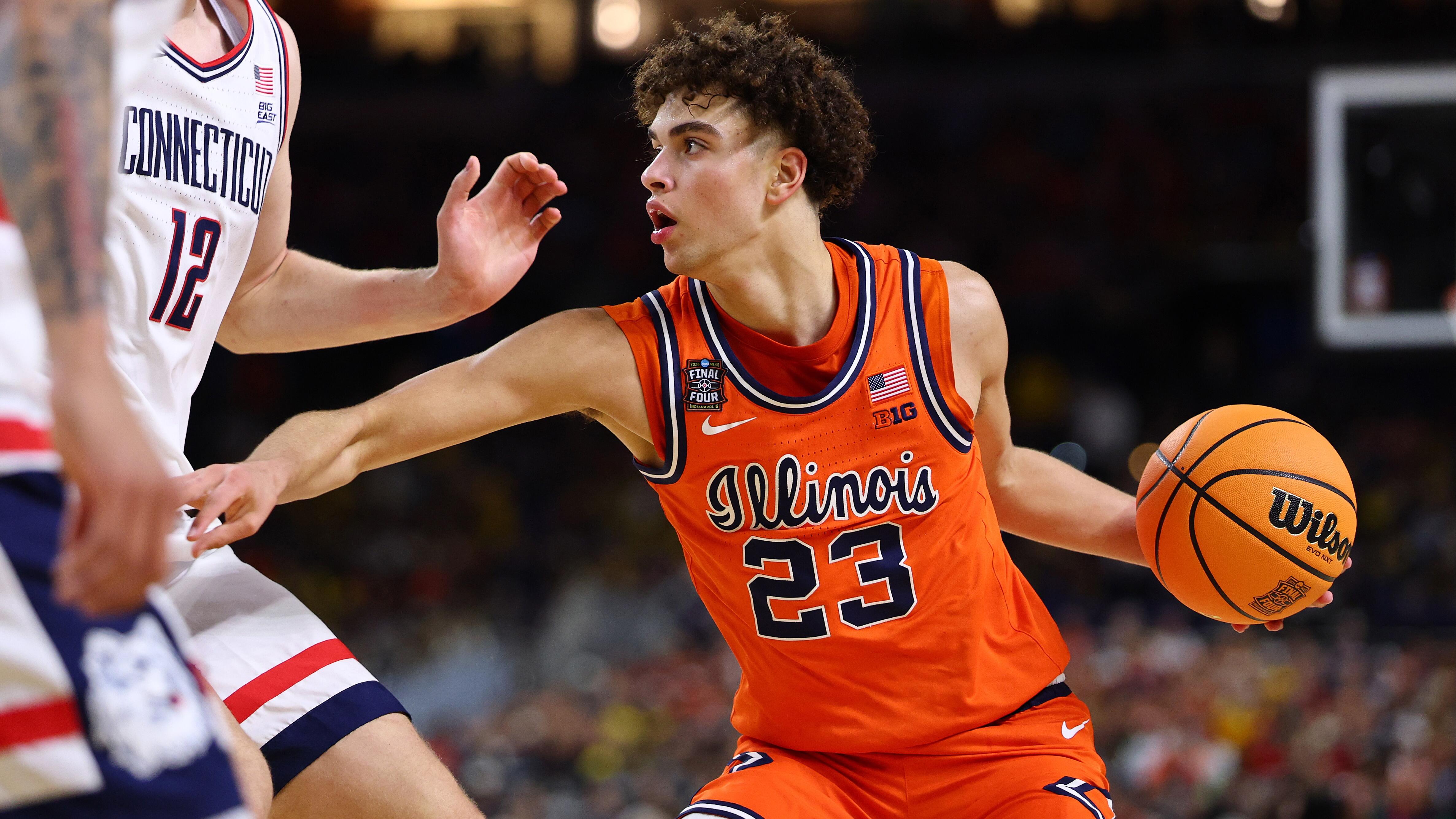
The 2026 NBA Draft sits less than a week away, and the top 10 is still fluid in a way that mocks rarely admit. CBS Sports' latest projection, published on 18 June 2026, has Brooklyn taking Nate Ament at No. 6 — a bet on a long, skilled wing — while Keaton Wagler, a shooter whose stock once felt locked into the lottery, has slid down the board. Both moves say something specific about how the league is reading value in this class, and both are contingent on deals that have not yet been made.
The Nets' decision, if it holds, is a structural statement. Brooklyn is not picking for need at the top of the roster so much as for ceiling, taking a player whose profile — size, perimeter skill, and shot-creation for his position — has been thinly available in recent drafts. The slide of a shooter like Wagler, by contrast, is a reminder that even in an era that has never valued spacing more, pure shooting is being re-priced against the cost of giving up a top-10 asset.
What the top 10 is actually telling us
Ament's projection to Brooklyn is less a verdict on the player than on the team. The Nets hold the No. 6 pick, and the available pool of wings with his size-and-skill combination is thin. CBS Sports' framing — "the Nets bet big" — is shorthand for a real evaluative position: that Ament's perimeter shot creation, combined with his frame, gives a rebuilding roster a single, unblockable axis to build around. That is a particular kind of asset, and it is the kind that has historically moved up draft boards in the final seventy-two hours, as teams become more willing to trade up rather than risk watching the player fall into a divisional rival's lap.
The counter-read is that taking a high-ceiling wing at No. 6 only works if the front office is confident it can develop him. A player whose game is shot-making from a young age does not always translate cleanly when defences force him to score off the catch. The risk is not that Ament is bad; it is that he is a 25-to-28-minute player for his first two seasons rather than a starter, and that the cost of a top-six pick is a heavier anchor on a rebuilding timeline than a more plug-and-ready prospect.
The slide of a shooter
Wagler's position is the more interesting data point. Pure shooters tend to be one of the more stable assets in the modern NBA — their skill travels, and it is the kind of thing that playoff teams trade up to acquire. His slide, as CBS Sports describes it, suggests one of two things is happening in the league's front offices: either the rest of the lottery is interior- and wing-heavy in a way that has pushed the premium on the perimeter shooter down, or evaluators are pricing in the defensive limitations that come with a one-skill profile.
The optimistic read is that he lands with a contender that can hide him and let him do the one thing he does at a top-of-the-league level. The pessimistic read is that teams have learned to be wary of a non-shooting, non-passing, non-defending guard whose trade value is essentially a single efficiency number. Either way, the slide is the kind of late-cycle information that tends to surface only in the final week, when more discussions happen and fewer public commitments are made.
What could still move
Mock drafts in the final week are best read as snapshots of the most conservative possible read of the board. The actual action happens in the room, and the room's preferences are reshaped by three things in the days leading up to the draft: medical re-checks that turn a top-10 player into a non-lottery one, trade conversations that move picks up or down the order, and pre-draft workouts that either confirm or disturb what teams believed they saw across the college season. CBS Sports' framing — "still plenty of unknowns in the talent-rich top 10" — is the safe version of that observation, and it is the right one. A class can be both deep and unsettled at the same time, and this one is.
The other structural fact worth naming is that the league is drafting into a salary-cap environment that has shifted what teams need from their rookies. Roster spots are at a premium. Two-way players and end-of-bench contracts are scarcer than they were three years ago. A rookie who cannot contribute on either end within his first year is now a real luxury, and that is a lens that almost certainly explains part of the reshuffling at the bottom of the top 10 — and part of the reason a shooter with a narrow portfolio can slide.
Stakes and what is unresolved
For Brooklyn, the bet is whether Ament can be a primary on-ball creator by year two, or whether the team is committing to a longer rebuild than its public messaging has suggested. For Wagler, the stakes are the inverse: a slide down the board is recoverable, but a slide into the second half of the lottery is the difference between a clear path to a playoff rotation and a years-long fight to prove the rest of his game exists.
The open question that the public mocks do not resolve is medical. If even one of the top six prospects fails a re-check between now and draft night, the board reshuffles in a way that mocks do not yet reflect, and a player like Wagler is the kind of late-rising name that benefits from that kind of disruption. The other unresolved question is trade activity — the Nets are one of several teams openly weighing a move, and any deal in the top ten would force a re-projection of the entire rest of the board. Until then, Ament-to-Brooklyn and the Wagler slide are the two coordinates that most reliably describe where the league's evaluative centre of gravity sits at the close of 18 June 2026.
Desk note: Monexus treats pre-draft projections as a snapshot of team-level evaluation, not as forecasts. The CBS Sports mock is the primary public input; any movement between now and draft night will be reported on its own terms rather than retrofitted to the current board.