Siberian folk-electronic act Otyken turns ethnic costume and ritual into a touring export
A band from the Khanty-Mansi region is filling European festival stages by fusing throat-singing and ritual costume with club production — and forcing a wider question about who gets to package Siberia for international audiences.
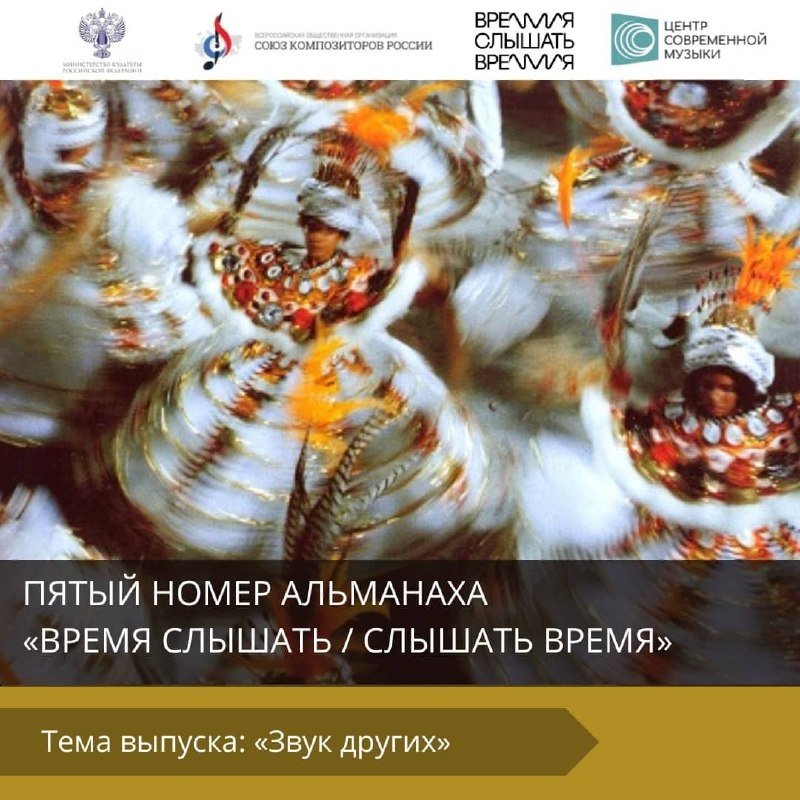
Otyken, a folk-electronic collective drawn from the indigenous communities of the Khanty-Mansi region in western Siberia, has built a touring circuit across Europe by fusing ritual vocals and costume with hard-edged club production. A short clip circulated on Telegram on 18 June 2026 at 21:30 UTC by the Russian military-correspondent channel Two Majors showed the group in full fantasy dress, framed as a cultural export capable of holding a stage in its own right. The framing matters: the band's appeal is no longer novelty. It is booking power.
That a Khanty-Mansi-rooted act is selling headline slots to European festival programmers is the structural story, not the aesthetic one. Moscow's cultural agencies have spent the better part of a decade marketing Siberia as a soft-power asset, and Otyken sits at the precise intersection of that effort and a global audience that has grown tired of Anglo-American pop templates. The band's ascent is therefore not just a music-industry curiosity. It is a small but legible case study in how non-Western cultural production travels under conditions of partial isolation.
The product: ritual, costume, and a hard kick drum
Otyken's signature is the collision of traditional Khanty and related Siberian vocal techniques — long, keening throat-driven lines, group harmonies, hand percussion — with contemporary electronic beats and what the band itself describes as fantasy costuming drawn from ethnic traditions. The Two Majors clip, like the band's existing catalogue, leans hard on the visual: layered robes, antler-and-bead headpieces, painted faces. The genre label that has stuck in Western press is "folk-electronic," though the group resists neat categorisation. According to the band's own public-facing material and the OneRepublic-style festival programming that has booked them into European summer circuits, the act is built to be read at distance — silhouette, scale, sound — and to reward closer listening with detail. The music videos, several of which have cleared multi-million view counts on YouTube without major-label distribution, are doing the heavy lifting that a Western act would normally outsource to a label marketing department.
That self-distribution is not incidental. It is the engine. The visual language travels on platforms where algorithms reward the unfamiliar, and the cost-of-entry for a Siberian act pitching directly to a global audience has collapsed in the same way it has for West African and Andean producers over the last five years. What was once a pipeline through Moscow or a state-affiliated touring agency is now a YouTube channel and a booking agent with a European address.
The Russian framing: cultural sovereignty as statecraft
Russian state-aligned coverage of indigenous Siberian acts has, in recent years, treated groups like Otyken as proof that the federation's cultural periphery can project outward as effectively as its metropolitan centres. The Two Majors post — a channel more commonly associated with frontline military reporting from Ukraine — republishing the band's imagery is itself a tell. The framing collapses the distance between "fighter-correspondent" and "cultural ambassador," treating both as exports that travel well.
That framing is not entirely without foundation. Bookings are bookings. The group has appeared at the Netnakisum festival in Khanty-Mansiysk and at a string of European summer events. Press coverage in Russian outlets has tracked the band's growing international schedule as a soft-power win. The structural argument — that Siberia can be packaged for European audiences without going through Moscow's heavy cultural institutions — holds up empirically, at least to the extent that YouTube counts and festival bills can be taken as proxies for reach.
The counter-read: who profits, and who signs the contract
The harder question is the one Russian state-aligned coverage tends to skip: who captures the economic value, and on what terms. Otyyen-style acts are, in most documented cases, collectives that emerged from regional cultural institutions, with funding and rehearsal infrastructure that flows through regional governments tied to the federal centre. When such a group signs with a European booking agency, the contracts — like those in most of the global music industry — are structured in ways that tend to favour the intermediary. A Siberian collective with limited access to Western legal counsel is negotiating against agencies that have closed this kind of deal hundreds of times before.
There is also the question of authorship. Costume and ritual are not generic; they are tied to specific communities, totemic systems, and ceremonial uses. When a group re-packages those elements for an electronic beat and a European festival crowd, the prior-consent infrastructure — the kind that museum and heritage sectors have spent two decades developing — is typically absent. Russian state media tends to treat indigenous Siberian material as part of a shared national cultural patrimony, an inheritance that can be deployed by any Russian act. The communities whose material is being deployed have, in several documented cases, contested that framing in the heritage sector, even where they have not done so in the music market. The band's rise does not resolve that tension. It sharpens it.
The structural frame: non-Western cultural export under sanctions-era logistics
The wider pattern is one that runs well beyond Siberia. Over the last three years, Russian cultural exports have had to reroute around payment rails, touring-visa frictions, and a general Western reluctance to book acts seen as state-adjacent. Otyken's clean festival trajectory is, in that sense, the exception that proves the rule. The act is booking Europe not because the broader Russian music industry is booking Europe — most Russian popular acts have been effectively shut out of Western summer circuits since 2022 — but because the group's branding, language choices, and visual register read as a-cultural or pre-political to European programmers. Siberian shamanic iconography, in other words, does not trip the same filters that a Moscow-based rap act does.
That asymmetry is worth naming plainly. The market is sorting Russian cultural output by whether it can be read, by a European booker, as apolitical. Indigenous Siberian ritual passes that test; metropolitan Russian pop does not. The result is a strange distribution: the further an act is from Moscow's cultural institutions in optics, the easier its European circulation. Otyken is the most successful case study of that principle in action, and it is not clear that the band itself chose the role.
Stakes: a model, or a one-off
If Otyken's model holds — if other indigenous Siberian and Far East collectives can build the same self-distribution pipeline, the same YouTube-first reach, the same European festival bookings — the structural consequence is that Russia's cultural periphery becomes more internationally legible than its centre. That has obvious appeal to regional governments in Khanty-Mansi, Yakutia, and Tuva, all of whom have been pushing variants of this thesis for years. It also has obvious appeal to Moscow, which gets the soft-power credit without the political friction of sponsoring metropolitan acts.
The countervailing risk is the standard one. Acts that scale internationally on a single visual signature tend to ossify around it; the costume becomes the brand, and the music becomes the thing underneath. Several indigenous-pop acts from other regions have followed that arc. Otyken's task, if it is to avoid the same fate, is to deepen the musical argument as the bookings multiply. The Two Majors clip suggests the visual is already locked. The question now is whether the catalogue can carry the same weight.
Desk note: where Russian state-aligned channels treated Otyken as a clean soft-power win, Monexus read the same clip as a small case study in how non-Western cultural exports travel under sanctions-era logistics — and in who signs the contract when they arrive.
Wire provenance
This editorial synthesis draws on the following public wire/social posts:
- https://t.me/two_majors/
- https://en.wikipedia.org/wiki/Otyken
- https://en.wikipedia.org/wiki/Khanty-Mansi_Autonomous_Okrug
- https://en.wikipedia.org/wiki/Netnakisum