Qatar's quiet hand: how Doha brokered the latest US-Iran understanding
A memorandum brokered in Doha, with Pakistan as cover and the IRGC publicly undermining it from Tehran, has 60 days to prove it is a deal rather than a pause.
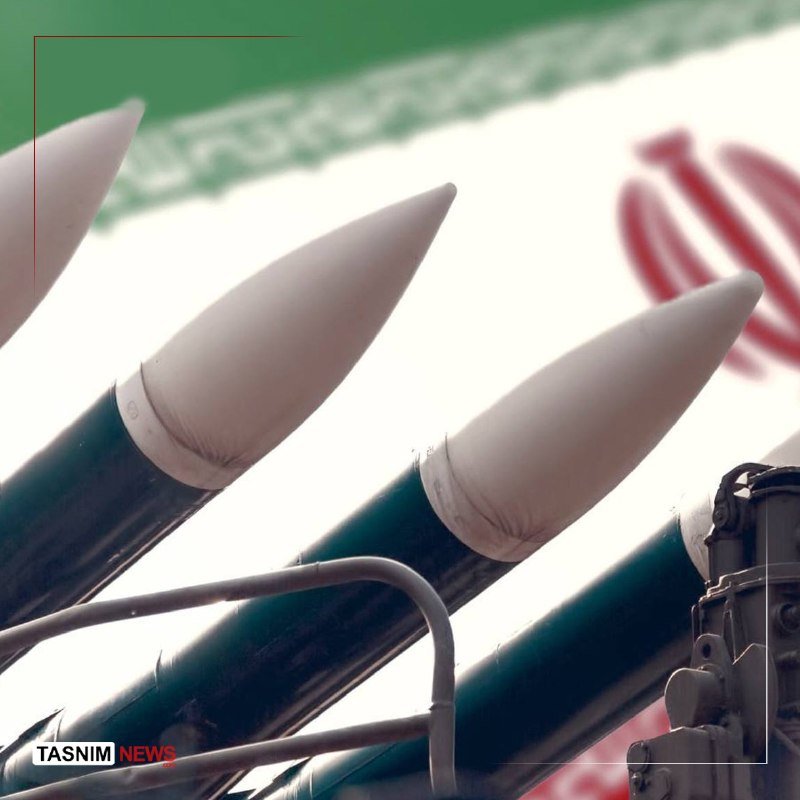
Pakistan's Prime Minister Shahbaz Sharif touched down in Geneva on 20 June 2026, joining Qatari mediators and a US delegation led by Vice President JD Vance for the technical round of a memorandum of understanding that has, almost without anyone in Washington admitting it, been in the works for weeks. The Iranian delegation arrived in Switzerland the same day, according to open-source monitors tracking the talks. Sharif's office framed the visit as "follow up on the implementation of the memorandum between Iran and the United States," a phrase that confirms the document is already signed in principle and now in the grinding phase of operational translation.
What the West is calling a track of negotiations is, in practice, a Qatari-brokered understanding that survives or dies on Doha's diplomatic upkeep. Vance, departing for Switzerland, thanked the Pakistani and Qatari partners by name: "I'm looking forward to starting the technical talks with the Iranians, the Pakistanis, and the Qataris… we're going to hopefully make progress on the nuclear issue." The geographic centre of gravity has shifted. The conversation the Trump administration is having with Tehran is no longer being held in capitals that talk at Iran. It is being held in a capital that talks with it.
The 60-day window, and the Hormuz fight inside it
Al Jazeera's breaking-wire reporting on 20 June put the concrete shape of the deal on the table for the first time. President Donald Trump has vowed that Iran will not charge tolls on shipping through the Strait of Hormuz during an initial 60-day window. The same memorandum, however, does not rule out tolls after that period. The strait is the chokepoint through which roughly a fifth of seaborne oil passes; pricing power over it is the single most valuable piece of leverage Iran holds outside its enrichment programme. A 60-day grace period is a pause, not a concession.
Within hours of the Vance statement, the Iranian Revolutionary Guards signalled that any reading of the deal as durable would be premature. A Guards statement carried by Iranian-aligned channels declared: "We are no longer bound by any commitment or agreement related to the opening of shipping lanes or to any other understanding that was conditional on" prior arrangements. The message reads as a warning to negotiators in Geneva: the Guards reserve the right to treat the memorandum as a tactical document, not a strategic one. Hours later, an advisor to Supreme Leader Ali Khamenei, Mohammad Mokber, publicly threatened "a possible suspension of energy supplies throughout the Middle East," posting the warning directly on X. The IRGC and the Supreme Leader's office are publicly coordinating pressure on the same negotiation their own foreign ministry is sitting at.
What Qatar actually bought Washington
Qatar's role is the through-line that Western wire coverage has been slowest to name. It is Doha that kept the channel open during the air war of 2025 and through the long, ugly spring of 2026, when Israeli strikes on Iranian proxy infrastructure and the US pressure campaign on the Strait made any face-to-face contact politically toxic in both directions. The Sharif readout from Geneva confirms Doha's position in the room: this is a three-broker architecture, not a bilateral. Pakistani involvement adds a Muslim-majority nuclear state with a working relationship with both the Gulf monarchy and the Iranian clerical establishment. It also gives the Trump administration a domestic political cover story: this is not Washington negotiating alone with Tehran.
American conservatives have begun to notice the cost. Tucker Carlson, in statements carried by Iranian state-affiliated outlet Mehr News, argued that "Trump has understood that for the success of the agreement with Iran, he must weaken Netanyahu and Israel," and warned that "the understanding between Washington and Tehran can be jeopardized by Israel." Carlson is an unreliable witness on most things, but his framing tracks the underlying structural problem: an understanding brokered in Doha, with Pakistani cover, on terms that Israel publicly rejects, is going to need active White House discipline to hold.
The resistance inside Iran
The Iranian street is not buying the script. Foad Izadi, a Tehran University academic who has become the public face of the anti-negotiation position inside the country, argued in interviews carried on the Ali Alizadeh show that the entire process is a strategic trap laid for Tehran. Posts documenting those interviews have circulated widely on X, with commentators noting that Izadi's pre-talks predictions have been borne out by the IRGC's own public posture in the days since the memorandum was signalled. Iranian opposition accounts have framed Trita Parsi and other Iranian-American negotiators who favour engagement as "funded by Koch/Soros" assets, a charge that exaggerates the influence of diaspora advocacy but captures how isolated the deal's domestic defenders now are.
The structural problem is straightforward. A government that cannot enforce its own foreign ministry's commitments against its own Guards Corps does not have a deal. A deal that survives only on Qatari and Pakistani diplomatic patience will eventually exhaust the patience of the mediators. A deal that survives in Washington only by openly picking a fight with a sitting Israeli government is a deal with a half-life, not a future.
What Geneva is actually for
The Vance-led technical round in Switzerland is not, despite the White House framing, a negotiation over whether the memorandum exists. It is a negotiation over what the memorandum means in the dark. The 60-day Hormuz no-toll window has to be policed by Iran's navy against its own Guards' instincts. The nuclear file has to be sequenced so that each step Tehran takes gives Tehran something durable in return. The sanctions architecture has to be unwound in a way that does not collapse the moment an Iranian faction, an Israeli strike, or a US election reopens the file.
Doha has done the hardest diplomatic work in this file for over a year. It will be the Qatari readout, not the State Department one, that tells you in real time whether the memorandum is holding on 21 August, when the 60-day window closes.
Sources
- Al Jazeera Breaking News (wire), 20 June 2026: Trump vows Iran will not charge Strait of Hormuz tolls, but says US might.
- OSINT Defender / Telegram, 20 June 2026: Iranian delegation arrives in Switzerland for US-Iran talks brokered by Qatar and Pakistan; VP JD Vance departing for talks.
- Al-Alam Arabic / Telegram, 20 June 2026: Pakistani PM Shahbaz Sharif travels to Switzerland to follow up on implementation of Iran-US memorandum.
- Mehr News / Telegram, 20 June 2026: Tucker Carlson statements on Trump's need for a deal with Tehran and risk of Israeli disruption.
- English-language Abuali channel / Telegram, 20 June 2026: IRGC statement on Hormuz shipping-lane commitments.
- Sprinterpress / X, 20 June 2026: Advisor to Iran's Supreme Leader Mohammad Mokber threatens Middle East energy-supply suspension.
- ZEI Squirrel / X, 20 June 2026: Thread documenting Foad Izadi interviews and Iranian opposition to negotiations.
Desk note
Monexus filed this on the strength of regional-state confirmation, Pakistani readout, and Iranian open-source channels, with Western wire reporting on the underlying memorandum still thin at the time of publication. We have weighted Doha's role as the through-line of the story, since the US readout deliberately downplays the mediation architecture.
Follow the event.
These dated source records provide context. They do not retrospectively verify this archive article.
Separate what the nuclear watchdog reported from what it could not determine after the June 2025 strikes.