Southern Lebanon is burning again, and the Israeli–Iranian subtext is the only story that matters
Israeli operations continue against Hezbollah positions in southern Lebanon while US and Iranian officials prepare for peace talks in Switzerland. The messaging on Telegram, more than the fighting itself, tells you who wants what before Sunday.
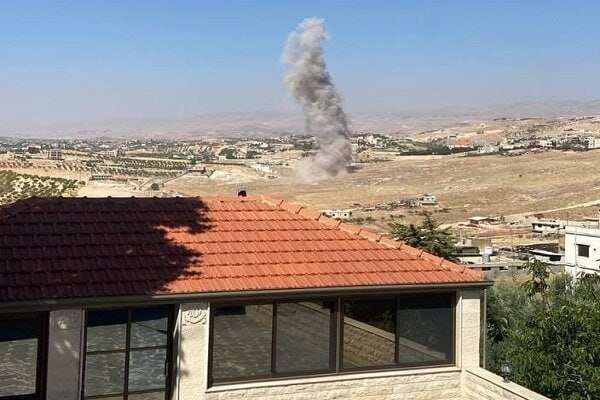
At 21:02 UTC on 20 June, the IDF confirmed the deaths of two NCOs in southern Lebanon, aged 20 and 21, killed inside an armoured vehicle during a failed assault on Ali al-Taher hill near Kfar Tebnit. Within twenty minutes, Lebanon's Ministry of Health, reported through the Beirut-allied al-Alam and Tasnim channels, announced seven dead in two airstrikes on the Sahmar area of the Bekaa. By the end of the hour, rescue crews were still clawing at the rubble of a building called Canarit in Saida. The messages, even more than the casualty counts, are the story. Israel is fighting in southern Lebanon. Iran is watching, and being watched.
A ceasefire that nobody trusts
Israel's Channel 12, citing Israeli sources and relayed through the Cradle on the 20th, said the decision to implement a ceasefire in Lebanon had been taken under "enormous" US pressure on Israel. Channel 13, via the same diplomatic source, said something different. The New York Times published its report on the same day: the next round of US–Iran peace talks was expected to begin on Sunday in Switzerland, "amid fighting in Lebanon and renewed confusion over the Strait of Hormuz". The contradictions stack up fast. A ceasefire is being implemented in public. Airstrikes are continuing on the ground. A diplomatic track is opening. Each actor is managing the others' expectations, and their own.
The Ali al-Taher pocket
The tactical story is narrow and ugly. Open Source Intel's Telegram feed, running from 20 June at 21:13 UTC, put at least thirty Hezbollah fighters inside a command node on the Ali al-Taher ridge, "completely surrounded by the IDF". The IDF announcement of Nir Ben Ari and Yoav Klein read, in the Middle East Spectator's restatement of the IDF's own wording, as the pair being "eliminated inside their tank" during the same operation. PressTV's relay added a third name hours later: 20-year-old Staff Sgt. Liav Kababia of the 52nd Battalion, whose death was confirmed by the Israeli army itself through the Tasnim mirror.
The official terminology matters. Israeli messaging calls the operations "targeted" and "surrounded". Iranian-aligned Telegram chains call them "heavy attacks" and "martyrdom operations". The Bekaa strikes killed seven per the Lebanese health ministry cited in Tasnim and al-Alam. The civil defence teams, with the Red Cross, were still pulling at rubble in Saida by 22:30 UTC.
What the messaging is actually doing
This is not a he-said-she-said. Read in sequence, the channel behaviour is legible. The Iranian-aligned feeds (Fars, Tasnim, al-Alam, PressTV) are using the casualty counts to argue that the Lebanese front is open and that Tehran's restraint, embodied in the imminent Geneva talks, is being tested in real time. The Iranian protest footage from Esfahan, where crowds in front of a senior official chanted "President of Iran, go to the aid of Lebanon" on 20 June at 21:55 UTC, reads as one half of a dual signal to Washington: enough movement to look engaged, not enough to wreck the diplomatic track.
The Israeli feed is doing the opposite work. Two soldier deaths in a single engagement, named with ages and units, are the price the IDF is willing to publish in order to justify continuing the Ali al-Taher clearance. A ceasefire can be implemented at the rhetorical level while a siege is finished at the tactical level. The IDF's word "operation" and Iran's word "sahmar" are aimed at different audiences, and that is the point.
The Geneva shadow
The peace talks are the subtext. The NYT's 22:16 UTC dispatch frames the Switzerland meeting as a "next phase" to end the broader war with Iran, not just the Lebanese front. Australian and Syrian framings intruded: Iran used the 23:30 UTC press window to slam Canberra for "targeting doctors" who criticised Israeli operations in Gaza and Lebanon, an unusually pointed diplomatic jab. Syrian sources relayed through al-Alam reported seven Israeli "violations" in southern Syria in twenty-four hours, including five incursions. Iraq's parliament, via Fars, warned of ISIS resurgence "following Trump's statements", a reminder that the wider file is not stable either.
None of this is the same as a wider escalation. It is the choreography of an escalation that has been temporarily postponed, and every Telegram channel listed above is one of the instruments.
What the next 72 hours test
The objective facts for 20 June are thin enough to draw a clean line: two Israeli soldiers and at least seven Lebanese civilians killed, a Geneva peace track scheduled to open within days, Iranian public mobilisation visible in Esfahan, and an IDF pocket at Ali al-Taher that has not yet been reported as cleared. If Geneva holds, the Ali al-Taher ridge will finish being cleared and the casualty frames will be archived as part of a deterrent narrative. If Geneva stalls, the same casualty frames become recruitment material for the Iranian-aligned channels already running them at full volume tonight.
Follow the event.
These dated source records provide context. They do not retrospectively verify this archive article.
Separate what the nuclear watchdog reported from what it could not determine after the June 2025 strikes.