The Southern Lebanon Flare-Up Is Now a Routine, Not an Exception
Heavy clashes around Ali al-Taher on 18 June 2026 are the latest data point in a southern Lebanon pattern that has hardened into something resembling a slow-motion war of position, with the village name now appearing in daily dispatches from multiple directions.
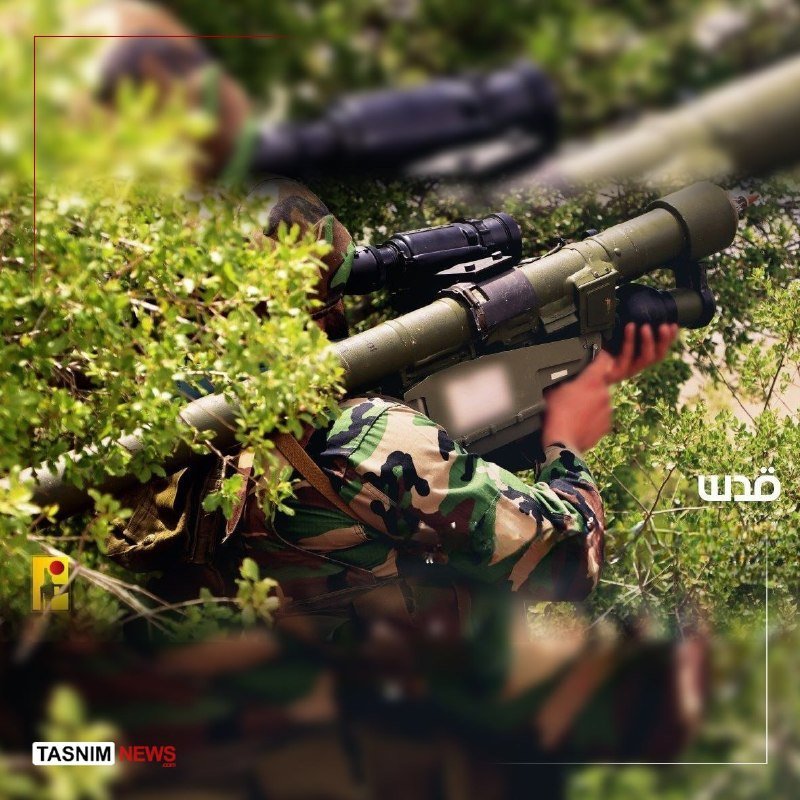
Sometime around 21:36 UTC on 18 June 2026, the IDF began dropping illumination flares over the Ali al-Taher area of southern Lebanon, and within minutes the sky above one small stretch of the frontier had three sets of cameras pointed at it. By 21:50 UTC, Hezbollah was broadcasting footage of fighters clashing with Israeli troops moving through the village. By 22:51 UTC, an Iranian-aligned channel was reporting that the clashes were intensifying under heavy artillery fire. By 22:57 UTC, footage had surfaced of a guided missile striking an IDF vehicle attempting to advance on the same area. Six hours of reporting, one village, four Telegram channels, and the same handful of toponyms repeated until they blurred together.
Ali al-Taher is no longer a fresh story. It is a marker. The frequency of the dispatches, the symmetry of the framing, and the predictability of the visual cycle — flares, then rockets, then guided-missile footage, then artillery, then a dusk-time lull — suggest that what is happening on this stretch of the Blue Line is not an escalation but a routine. The point worth making in plain editorial prose is that the routine itself is the story. When both sides' battlefield communication shops have a template for a given patch of ground, that patch of ground has become a managed theatre of operations, not a flashpoint.
The shape of the evening
The day's reporting, as compiled from four Telegram channels operating in real time, sketches a recognisable arc. The earliest item, from gazaalanpa at 21:38 UTC, is a one-line notice: illumination flares over Ali al-Taher. The wfwitness channel picks it up at 21:36 and 21:37 UTC, layering footage of the flares with footage of rocket fire landing in Israeli positions. By 21:50 UTC, rnintel is reporting direct firefights between Hezbollah fighters and Israeli troops in the village itself, with Hezbollah launching rockets on Israeli positions and the IDF targeting the area in return. By 22:51 UTC, intelslava — an Iranian-aligned feed — describes "intense clashes" as Israeli forces attempt to advance on the Ali al-Taher hills under heavy artillery. By 22:57 UTC, the day's signature clip appears: a guided missile, fired at an Israeli military vehicle attempting to advance, with the impact shown in slow enough motion to be unmistakable.
None of these items is independently verifiable in the open-source sense. They are unverified operational claims, and they come from channels whose institutional alignments span the spectrum from Iran-aligned to Lebanese field-correspondent to war-monitoring aggregator. The point is not that any one of them is reliable as a stand-alone factual basis, but that the cluster of them, pointing at the same place at the same time, is the actual signal. Six hours of cross-channel corroboration is not the same thing as confirmation, but it is more than coincidence.
The counter-narrative that doesn't quite counter
There is a parallel story that ought to be named plainly. Mainstream Western and Israeli coverage of this same ground has, for the better part of two years, framed these exchanges as the product of an Iranian-backed proxy testing Israeli sovereignty, with Hezbollah as the operational arm of a wider regional posture. The Hezbollah footage of a guided-missile strike on an Israeli vehicle, posted in triumph, fits that frame from the Hezbollah side. The IDF's flares and artillery preparation fit it from the Israeli side. The Iranian-aligned intelslava feed fits it from the Iranian side. Everyone, in other words, is reading the same script.
The script has a problem. It cannot explain why a village of no obvious strategic value — Ali al-Taher is a hillside locality, not a crossing, not a command node, not a symbolic capital — has become the daily named site of these exchanges. If the Iranian-axis goal were to probe Israeli air defences or to signal to a domestic Lebanese audience, the geography should drift. The fact that it has not drifted suggests that the ground itself has acquired a function that none of the official narratives admit: it has become a venue. Both sides return to it because it is the place where the other side reliably appears, and the audience — domestic on each side, plus the Telegram watching class across the region — reliably tunes in.
The structural frame
The honest way to read this is as a slow war of position that has hardened into a media format. The flares do a job. The footage does a job. The cross-channel amplification does a job. Each side is producing content for an audience that is partly domestic, partly regional, and partly the foreign press corps that picks up whatever is loudest. The military actions are real — people are firing weapons, people are presumably being wounded — but the packaging of the military actions has become the point, and the packaging requires a recurring set. Ali al-Taher is one node in a small network of villages — Marwahin, Aita al-Shaab, Yarine, Dhaira, Blida — that rotate through the evening cycle depending on which side wants a clip.
This is not a new pattern. The infrastructure of cross-border media-trace warfare has been visible in the region for the better part of three years. What is new in mid-2026 is the routinisation. When the same four toponyms reappear in the same Telegram channels on most evenings of the week, the threshold of "breaking news" has been crossed in the other direction. A flare-up in southern Lebanon is no longer news. It is weather.
Stakes and forward view
The risk of a routine is that the routine accumulates. A slow war of position at this tempo burns through ammunition, costs occasional casualties on both sides, and normalises a tempo of engagement that, if it accelerated, would produce a full-scale war within hours. Diplomatic off-ramps — the kind that require a defined set of demands, a mediator, and a quiet corridor — do not exist for a routine. Routines end either by being broken or by being formalised, and there is no sign of either.
What remains genuinely uncertain is whether the Ali al-Taher pattern is being driven from the top of either chain of command or whether it is a middle-tier operational tempo that has slipped out of anyone's control. The source material does not resolve this. It is plausible that a Hezbollah field commander in the area has settled into a pattern that satisfies his own metrics — clip production, casualties inflicted, ground held for a few hours — and that an IDF brigade has settled into a counter-pattern that satisfies theirs. It is equally plausible that both are operating to orders from above. The Telegram record cannot tell us which.
This article draws exclusively on operational Telegram feeds. Where a specific casualty count, a named commander, or a specific weapon system would normally appear, none was available in the source set, and Monexus has not inferred one.
Wire provenance
This editorial synthesis draws on the following public wire/social posts:
- https://t.me/rnintel
- https://t.me/intelslava
- https://t.me/wfwitness
- https://t.me/gazaalanpa