Lai's appeal to Beijing is a speech, not a strategy — and both sides know it
Taipei's president used a national-security stage to call on Beijing to disarm the Taiwan Strait. The harder question is what comes after the camera cuts.
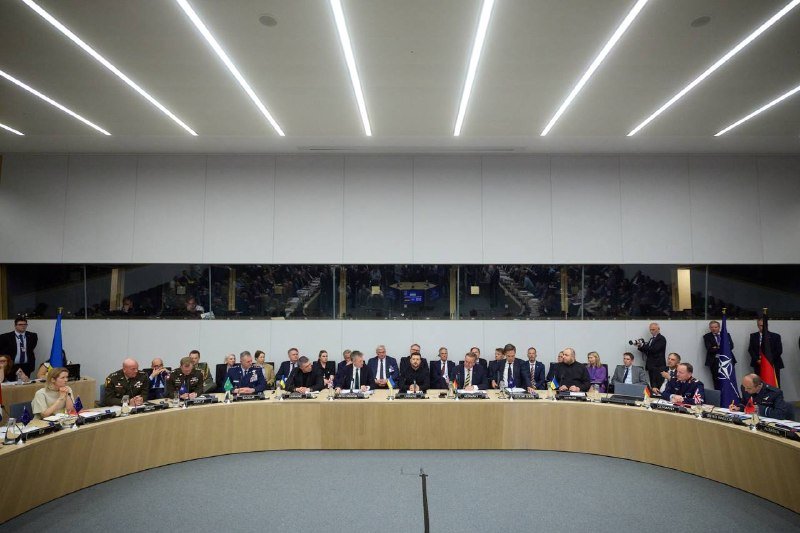
At a national-security–coded moment on 18 June 2026, Taiwan's President Lai Ching-te walked up to a podium and made a request that everyone in the room — Taipei, Beijing, Washington — already knew the answer to. He called on China to give up its military power in the South China Sea, the East China Sea and the Taiwan Strait, and to give up the use of force to invade Taiwan. The remarks were carried in full by open-source channels including Open Source Intel and Clash Report within hours of delivery. The phrasing was deliberate, the staging was deliberate, and the futility of the ask was also deliberate.
The question worth asking is not whether Beijing will comply. Beijing will not comply — not this year, not on Lai's terms. The question is what work the speech is supposed to do, who it is aimed at, and whether the people applauding it in Taipei understand the gap between the rhetoric of deterrence and the actual practice of it.
The audience in the room is not in Beijing
A presidential appeal of this kind performs two functions at once. The first is domestic: it tells the Taiwanese public that their government is still willing to name the threat out loud, in plain language, without the diplomatic softening that usually wraps cross-strait language. The second is external: it generates a transcript that foreign ministries in Washington, Tokyo, Canberra and the EU can quote when they want to justify the next tranche of engagement with Taipei — a sale, a transit, a parliamentary visit, a sanctions package on some PLA-adjacent entity.
The phrasing matters because it is designed to be quotable. "Give up use of force to invade Taiwan" is the kind of sentence that can be lifted into a G7 communique without translation. That is not an accident. It is the product of a political class in Taipei that has, over the last decade, learned to weaponise its own vulnerability in the language of shared Western values. The lesson has been learned well. It has also, at times, been learned too well — to the point where the rhetorical posture outruns the strategic capacity behind it.
What the speech does not say
Nowhere in the appeal, as carried by the open-source channels that broadcast it, does Lai offer a corresponding commitment from Taiwan. There is no matching pledge to demilitarise the outlying islands, no offer of a confidence-building measure, no gesture toward the kind of engagement that Beijing has, at various points, said it would accept as a precondition for talks. The ask is one-directional: Beijing disarms; Taipei continues as is.
This is the standard posture of the current government, and it is internally coherent — the DPP's reading of cross-strait reality is that any unilateral concession is a down-payment on absorption. But it leaves the appeal sounding less like an opening and more like a demand. Demands have their uses. They are not negotiations.
The structural read is straightforward: the cross-strait balance is being managed, year on year, by an asymmetry of exposure that favours the side willing to absorb more cost. Beijing has, over the last decade, absorbed a great deal of cost — diplomatic isolation of Taipei, sanctions on its trading partners, the reputational damage of the 2022–2025 exercises, the political risk of being seen as the party that fires the first shot across a maritime boundary the world is watching. It has done so because the alternative — a Taiwan that drifts permanently into the de facto security perimeter of another great power — is, in Beijing's reading, the more expensive outcome over a longer horizon. That reading is not sympathetic to Taipei, but it is structural, and it has not shifted in response to appeals of this kind.
The counter-read, and why it still holds
The most plausible alternative reading of Lai's appeal is that it is aimed squarely at the United States in the run-up to another round of arms sales discussions. The appeal gives Washington a clean line to use in its own messaging: Taipei asked for peace; Beijing refused. The framing slots neatly into existing US congressional templates, and it lowers the political cost of approving transfers of asymmetric systems — the mines, the anti-ship missiles, the coastal defence cruise missiles — that the PLA's amphibious doctrine is most vulnerable to.
The reason this counter-read does not overturn the first is that it is not actually a counter. It is the same speech, viewed from a different audience. A speech can simultaneously reassure the Taiwanese public, furnish Washington with a quotable line, and signal to Beijing that the political space for a unilateral de-escalation is shrinking. All three of those uses are real. None of them requires Beijing to do anything in particular.
Stakes that the open-source channels cannot settle
The open-source reporting that surfaced the speech on 18 June 2026 gives the public the words. It does not give the public the surrounding choreography — which foreign minister was briefed beforehand, which US official received an advance copy, which parliamentary delegation from a European capital was in the room. Those details are the ones that convert a speech from a statement of position into a signal of intent. Their absence leaves a question the open sources are not equipped to answer: was this the opening of a campaign, or the punctuation mark on one?
What the public record does support is a narrower and more sober conclusion. The appeal to Beijing is a request that costs the requester nothing and asks the requested party for everything. It is the kind of request that wins applause in the chamber where it is delivered, earns coverage in the wires for the next news cycle, and changes nothing about the deployment patterns of the Eastern Theatre Command. Both sides know this. The interesting question is not whether the speech was sincere. The interesting question is what the speech is buying time for.
This piece is part of Monexus's ongoing coverage of cross-strait security. The open-source record gives the text; the diplomatic record, when it surfaces, will determine the weight.
Wire provenance
This editorial synthesis draws on the following public wire/social posts:
- https://t.me/osintlive
- https://t.me/ClashReport