Tehran's negotiators go public, but the warlords are doing the talking
As Iran's parliament speaker aired a hostile, public negotiating posture on 18 June 2026, the country's elected president took a softer line. The split is now the story.
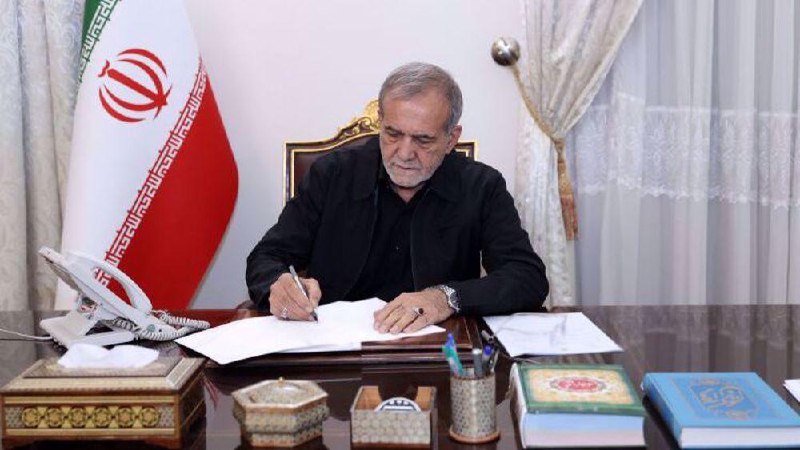
On the evening of 18 June 2026, Iran's domestic political theatre served up a contradiction on live television, and the contradiction is now the story. Mohammad-Bagher Ghalibaf, the Speaker of the Islamic Consultative Assembly and a former Islamic Revolutionary Guard Corps commander, addressed a public audience in a series of statements broadcast on Al-Alam Arabic between 20:44 and 21:56 UTC. Within twelve minutes of each other, the country's elected president, Masoud Pezeshkian, declared that the Supreme Leader's authorisation to begin negotiations represented a source of "relief and pride" for the Iranian people, while the Speaker of parliament framed the same negotiations as a contest in which any "excessive demands" from the opposing side would be met with Iranian hands on the trigger. Two men, one state, two opposite press strategies. The substance of the dispute is being fought in the open.
The optics matter. Pezeshkian, a relative moderate within the system, has been the public face of the negotiating track. The Supreme Leader's message — which both leaders cited in their evening remarks — has been characterised by the president as a definition of "responsibilities of all parties influencing the course of the negotiations." Qalibaf, by contrast, framed the same message as the prelude to a "difficult road," said the negotiating team had its "directives" from the Leader, and threatened that Tehran would not allow any party to violate obligations "using the logic of force." The Speaker's language, addressed to an Arabic-language audience via Al-Alam, was deliberately harder than the president's, and the timing was deliberate too. The two men were speaking to different constituencies on the same evening: Pezeshkian to a domestic audience hoping for sanctions relief, Qalibaf to a regional one that takes its tone from the language of the IRGC-aligned political class.
Reading the split
The competing statements are not a bug of the Iranian system; they are the system. The Islamic Republic has, for decades, run two-track signalling in moments of negotiation: a diplomatic track that speaks the language of compromise, and a security-political track that reminds observers of the cost of failure. The novelty in 2026 is how nakedly the two tracks are now being run by named political figures on the same day, in the same media environment, in the same hour. Iran's official negotiating dossier is being publicly shadowed by the man who would in any other system be the prime minister's constitutional counter-weight, and he is using the podium of the Majles to do it.
For outside observers, the immediate question is which message travels further. The Speaker of parliament does not control the negotiating brief; the presidency and the foreign ministry do, working under the Supreme Leader's authority. But the Speaker controls the legislature, the parliamentary schedule, and the domestic narrative around whatever deal may eventually be presented for ratification. The history of Iranian nuclear diplomacy from 2013 to 2015 — and its harder edges in 2019 and 2023 — has been shaped as much by spoilers inside the system as by the negotiators at the table. Qalibaf's "hands on the trigger" line is the public assertion that the spoilers remain organised, equipped with a megaphone, and unwilling to be bound by any framework the diplomats bring home.
The hardliner veto, in plain language
What is being staged is a familiar pattern in authoritarian-bureaucratic systems: a parallel political constituency that reserves the right to repudiate a deal its own negotiators sign. Iran's hardliners do not need a formal veto to break an agreement. They have institutional weight inside the Majles, the judiciary, the IRGC's political arm, and the controlled press. A Speaker who frames the negotiating adversary as an "enemy" and any compromise as a "violation of obligations" does not need to write a single line of legislation to make a future agreement politically toxic. He has already done so by 21:56 UTC on 18 June 2026. The negotiating team now sits across from a foreign counterpart that has watched its opposite number publicly undercut in real time.
The structural point is that the Iranian state does not negotiate the way a unitary actor does. It negotiates as a coalition of competing power centres, each of which needs to claim credit or distance from any final text. The Supreme Leader's message, cited by both men, is the document that papered over the split. But the two interpretations aired on Al-Alam in the space of one broadcast cycle show how thinly that paper is stretched.
Stakes and what remains contested
The stakes of the split are concrete. If a deal is signed, Qalibaf's framing gives Iranian hardliners a domestic alibi: they can claim they never accepted "excessive demands" because they never recognised the document as binding in the first place. If a deal collapses, the president's framing gives reformers an alibi in the opposite direction: that the negotiating track was sabotaged by the legislature, not by Iranian diplomacy. In either case, the Speaker's public posture is a hedge against accountability for whatever the final outcome turns out to be. The country is being prepared, in real time, for an outcome the political class is already positioning itself to disclaim.
The reading that should be hedged is the one that treats the president's softer line as a sign that Iranian decision-makers are moving towards a settlement. The two statements aired within twelve minutes of each other, in the same language family, on the same channel, on the same evening. They are not contradictory in the way a confused actor is contradictory; they are complementary in the way a coalition manages risk. The negotiation is being prepared as a public performance, with each faction casting itself for the after-deal politics. That is the news. The contested part — the part the wire has not yet resolved — is which faction will be the one whose interpretation is treated as authoritative when the text is signed, if a text is signed at all.
— Monexus framed this against the regional wire: Al-Alam's Arabic broadcast set the tone, but the political reading here goes further than the headline. The Qalibaf-Pezeshkian split is not noise around the negotiation; it is the negotiation, in the form Iranian politics allows.
Wire provenance
This editorial synthesis draws on the following public wire/social posts:
- https://t.me/s/alalamarabic
- https://t.me/s/gazaalanpa
- https://t.me/s/alalamarabic
- https://t.me/s/alalamarabic
- https://t.me/s/alalamarabic
- https://t.me/s/alalamarabic
- https://t.me/s/alalamarabic
- https://t.me/s/alalamarabic
- https://en.wikipedia.org/wiki/Mohammad-Bagher_Ghalibaf
Follow the event.
These dated source records provide context. They do not retrospectively verify this archive article.
Separate what the nuclear watchdog reported from what it could not determine after the June 2025 strikes.