Trump claims Iran deal 'averted global energy crisis' as Strait of Hormuz reopens
A US-Iran ceasefire framework has reopened the Strait of Hormuz. Donald Trump says the agreement headed off a global energy crunch; Tehran says he was driven by fear of economic disaster.
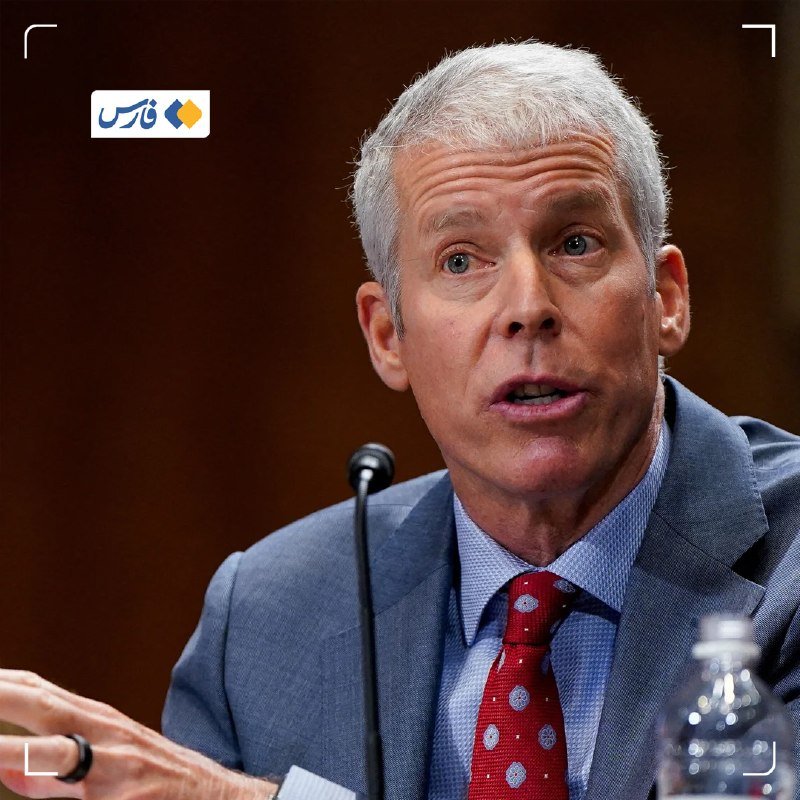
Donald Trump said on 18 June 2026 that a newly announced understanding with Iran had prevented a global energy crisis, framing the deal in unusually blunt terms about US oil reserves and supply-chain exposure. In a clip circulated by The Cradle Media at 09:28 UTC, the US president argued that American strategic reserves were at risk of rapid depletion and that shortages would have followed had the two sides failed to reach a framework. Within hours, Reuters' broadcast desk was running live imagery of the Strait of Hormuz, showing vessel traffic resuming through the waterway that carries a significant share of globally traded crude. The sequence — American concessions, an Iranian counter-narrative, and a churning chokepoint — is now the defining frame for the deal.
The story of the past 48 hours is less about who blinked first than about who gets to write the explanation. Trump told supporters that the agreement was a defensive manoeuvre forced by energy arithmetic. Iranian state-aligned outlet NTV, relayed through Tasnim at 08:15 UTC, ran the inverse read: that fear of economic disaster had compelled the US president to sign. Both versions cannot be entirely true, but both are politically useful, and both are being pushed simultaneously to two non-overlapping audiences. That is the real product of the deal so far — a piece of news that each side can sell at home.
What the US side is claiming
The Cradle's clip of Trump's remarks, posted at 09:28 UTC, has the president invoking strategic petroleum reserves in a way the White House has not used in public since the early months of the Russia–Ukraine war. His argument, as paraphrased in the channel's reporting: the US was on a path to drawing down reserves fast enough that domestic fuel prices and global supply chains would have been hit simultaneously, and the framework agreement with Tehran was a way to back away from that trajectory before the inventories became a campaign issue. The framing is striking because it concedes, in effect, that sanctions and pressure alone were not stabilising the Gulf — and that reopening shipping was the operative objective.
A second strand of the US message, captured by Russia-linked channel rnintel at 08:39 UTC, was more combative. Trump attacked critics of his Iran posture, calling them "fools" and accusing them of being "jealous, bad people, or stupid." The outburst is consistent with a White House preparing to defend the deal against hawks who want the pressure campaign to continue. It is also a tell: a president who felt he had won decisively would not need to spend the morning insulting domestic opponents. The volume of the rhetoric is a rough proxy for the underlying anxiety about the political durability of the agreement.
What Iran is claiming
The Iranian counter-narrative, as presented by NTV via Tasnim, is the mirror image. Tehran's read is that the United States signed because it was no longer willing to absorb the cost of confrontation — including, presumably, the price-tag of keeping the Strait effectively contested. By doing this, the framing suggests, Trump acknowledged economic vulnerability that Iran had been betting on for months. Whether or not that is true in detail, the positioning is what matters diplomatically. A government that believes it extracted concessions under duress behaves differently in the next round of talks than one that believes it was rescued by American goodwill.
The Daily Nation's Africa-facing wire, reporting at 08:15 UTC, gave the deal a more neutral billing: "Strait of Hormuz reopens as US and Iran sign historic digital peace deal." The phrase "digital peace deal" is doing work the rest of the sentence is not. It suggests that what was signed is less a traditional arms-control or non-proliferation agreement than a structured channel — possibly involving escrow, monitoring, or algorithmic compliance tools — designed to manage friction without requiring full normalisation. That reading is consistent with Iran's preference for agreements that can be presented domestically as gains without committing to the kind of inspections the US side would want.
The structural frame: chokepoint politics, restated
The Strait of Hormuz is the textbook case of energy chokepoint politics. Roughly a fifth of globally traded oil transits the narrow passage, and even a partial closure produces immediate spot-price moves. For decades the standard US posture has been that freedom of navigation through the Strait is a non-negotiable interest, backed by the Fifth Fleet. The 2026 sequence departs from that posture in one specific way: instead of leaning on the fleet to keep the lanes open, the administration chose to negotiate the lanes open. That is a tactical shift, not necessarily a strategic one, but it changes the precedent. The next time a regional power threatens a chokepoint, the diplomatic playbook now has a recent model in which the US was the one seeking the deal.
For Iran, the chokepoint is leverage. Tehran does not need to close Hormuz to benefit from the threat; it only needs to keep the threat credible long enough for the markets and for American domestic politics to do the rest. The fact that the channel is now visibly open is a win for the US, but the fact that it was the variable being negotiated is the structural story. So is the dollar side of it. Oil priced in petrodollars, cleared through Gulf infrastructure, has long been the spine of the US financial leverage over the region. A deal in which the US is openly trading energy arithmetic for strategic-patience relief quietly tests how elastic that spine still is.
Stakes and what to watch
The near-term stakes are concrete. If vessel traffic through the Strait normalises in the days ahead, the immediate downward pressure on global crude benchmarks will be visible in the tape — and Trump will be able to claim a win. If Iran tests the agreement with a single provocative move, the market will reprice the deal as fragile, and the political centre of gravity in Washington will swing back to the hawks the president spent the morning insulting. The Reuters broadcast running at 08:44 UTC is the early data point: ships are moving. The harder question is whether the framework has a credible enforcement mechanism, and the sources available at publication do not specify one.
Two things remain genuinely uncertain. First, the substance of the "digital peace deal" that Daily Nation referenced: the term is suggestive but undefined in the wire copy available, and the verifiable text of any signed understanding is not yet in the public sources Monexus reviewed. Second, the political lifespan of the deal inside the US system. Trump's rhetoric, both the energy-reserves warning and the insult-laden counter-attack, suggests an administration that expects to be attacked for the agreement. The deal's survival will depend less on Iranian compliance than on whether the White House can hold its own coalition together through the autumn political cycle.
What this publication is watching, then, is not the chokepoint so much as the two narrative machines running on either side of it. One says the US was prudent. The other says the US was cornered. For now, the ships are moving, and that is the only fact both sides are willing to accept.
Wire provenance
This editorial synthesis draws on the following public wire/social posts:
- https://t.me/TheCradleMedia
- https://t.me/thecradlemedia
- https://t.me/rnintel
- https://t.me/JahanTasnim