Trump's Iran deal: the frozen-money question Tehran won't let go
Washington is selling a deal as economic rescue. Tehran is asking the obvious follow-up: rescue paid with whose money, and on whose terms?
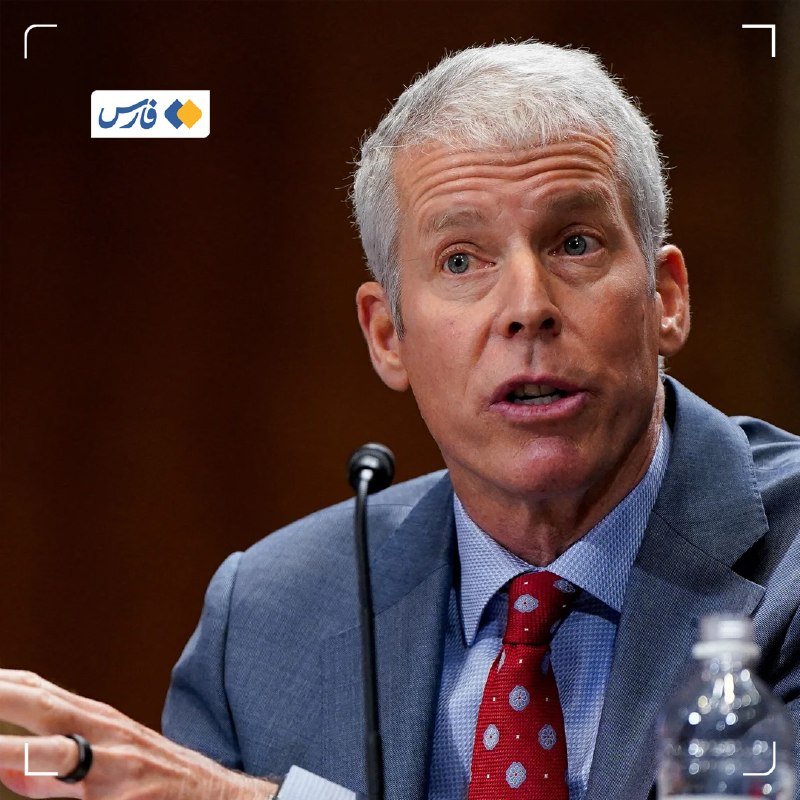
The diplomatic choreography in Washington this week has the texture of a closing argument. President Donald Trump, addressing reporters on 17 June, leaned into a single line of defence for a US-Iran arrangement that has yet to be made public in full: that the deal was constructed, in his telling, to head off an "economic catastrophe," and that a measure of ballistic-missile parity for the Islamic Republic is, as he put it, "a little unfair" to deny Iran while other states keep theirs (per @unusual_whales, 2026-06-18T03:14 UTC; 2026-06-18T02:50 UTC). It is the salesman's pitch — economic survival, strategic fairness — and it lands exactly where it is meant to. The harder question is being asked elsewhere, in a more accusatory register: where, exactly, are Iran's frozen billions, and who controls the release of them (Clash Report, 2026-06-18T15:12 UTC)?
What is striking is the symmetry of the grievance. The Trump administration is asking the public to accept a deal whose principal benefits to Iran are economic. Tehran, through the question its proxies keep surfacing, is asking whether those economic benefits are real, or whether they amount to a temporary permission slip to access funds that remain, structurally, in someone else's custody. Both questions can be true at once. That is the point.
The frame Washington is selling
The White House position, as summarised in the pool exchanges, rests on two pillars. The first is apocalyptic framing: a US-Iran breakdown would have triggered an economic shock large enough to be worth preventing by concession (per @unusual_whales, 2026-06-18T03:14 UTC). The second is equity framing: a non-proliferation bargain that denies Iran missile parity while tolerating missile arsenals elsewhere is, in the president's words, "a little unfair" (per @unusual_whales, 2026-06-18T02:50 UTC). Read together, the pitch is that the deal trades Iranian restraint for both sanctions relief and a tacit acknowledgment of regional status.
The pitch is calibrated for a domestic audience that has been told, for years, that any accommodation with Tehran is a giveaway. By recasting the arrangement as catastrophe-avoidance plus a fairness correction, the administration tries to disarm that critique in advance.
The frame Tehran is selling
Tehran's proxies are running the inverse pitch. The persistent question — where are the frozen billions? — concedes the existence of a deal while refusing to concede its substance. The implicit claim is that whatever economic relief flows to Iran will be derivative, contingent, and reversible: oil revenues routed through escrow, central-bank assets released in tranches, humanitarian channels policed by Western compliance officers. Each of those mechanisms has been used in prior arrangements, including the limited thaw that followed the 2015 JCPOA, and each has functioned, in practice, as a permission system rather than a transfer of sovereignty over Iranian money (per Clash Report, 2026-06-18T15:12 UTC).
The pool exchange captured another beat worth pausing on. A reporter attributed the line "Iran never won a war, but never lost a negotiation" to Donald Trump; the president asked who said it; the reporter replied "Donald Trump" (per @unusual_whales, 2026-06-17T22:30 UTC). Read as theatre, it is a small comic vignette. Read as policy signal, it is a warning shot: the Iranians are not coming to the table expecting to be charmed. They are coming expecting to be out-negotiated, and they are bracing for it.
The structural question underneath both frames
Both sales pitches obscure the same underlying mechanism: dollar-denominated finance. The "frozen billions" question is not really about a number on a ledger in Tehran. It is about which jurisdictions, which correspondent banks, and which compliance regimes sit between Iranian oil revenue and the Iranian budget. A deal that nominally unlocks those funds can still leave them functionally locked if the routing architecture stays in Western hands. A deal that formally acknowledges Iranian missile equity can still leave Iran's defence-industrial base supply-chained to dual-use choke points. The bargaining is, in significant part, about who holds the keys to the pipes — and for how long.
This is the part that rarely makes the press conference transcript. The dispute over a billion dollars of released funds is, in practice, a dispute over the topology of the financial plumbing that connects Tehran to the global economy. Control of that plumbing is the real strategic asset on the table, and neither side is keen to name it that way in public.
What the press is not yet asking
The two questions worth pushing on are obvious and largely absent. First, the deal's text: as of 18 June 2026, the substantive terms have not been published, which leaves both the catastrophe framing and the fairness framing in a vacuum of verifiable detail. Second, the release mechanism: a sequence of tranches, escrow accounts, and compliance gates is not the same as unfreezing, and the difference matters more than the headline number. Until those answers are on the record, the public conversation is being conducted entirely in the vocabulary of the two pitches above — and the public is, accordingly, in no position to judge which one is closer to the truth.
There is also the question of who is excluded from the negotiation. The reported exchanges involve the United States and Iran; the Gulf states, the European Union, Russia, and China are present in the surrounding diplomatic weather without being confirmed at the table. A deal that addresses the ballistic-missile equity complaint without those actors in the room is a deal whose stability depends on the willingness of bystanders to accept its conclusions — a thinner foundation than the administration has, so far, cared to admit.
The honest reading is that both sides are partly right. The economic-catastrophe pitch is not cynical; a breakdown would impose real costs. The frozen-money question is not agitprop; the architecture of any release will determine how much of the relief is, in practice, sovereignty over Iranian assets and how much is permission to use them. The deal's actual quality will be measurable not by what the principals say about it in the next two weeks, but by which side ends up holding the keys to the pipes at the end of the year.
Desk note: this article is built from Telegram and X wire traffic. Where reporting remains thin — on deal text, on the routing architecture for any released funds, on the role of third-party governments — Monexus has flagged the gap in prose rather than padding the source list. The pool exchanges, dated 17-18 June 2026, are the only verifiable on-record material available at publication time.
Wire provenance
This editorial synthesis draws on the following public wire/social posts:
- https://t.me/ClashReport
- https://x.com/unusual_whales/status/
- https://x.com/unusual_whales/status/
- https://x.com/unusual_whales/status/
Follow the event.
These dated source records provide context. They do not retrospectively verify this archive article.
Separate what the nuclear watchdog reported from what it could not determine after the June 2025 strikes.