Trump’s Iran deal wobbles before the ink dries: a ‘peace’ that is less a peace than a postponement
A MoU signed in France and a presidential truth-shuffle within hours: the US-Iran arrangement marketed as a peace deal looks more like a pause button with no enforcement teeth.
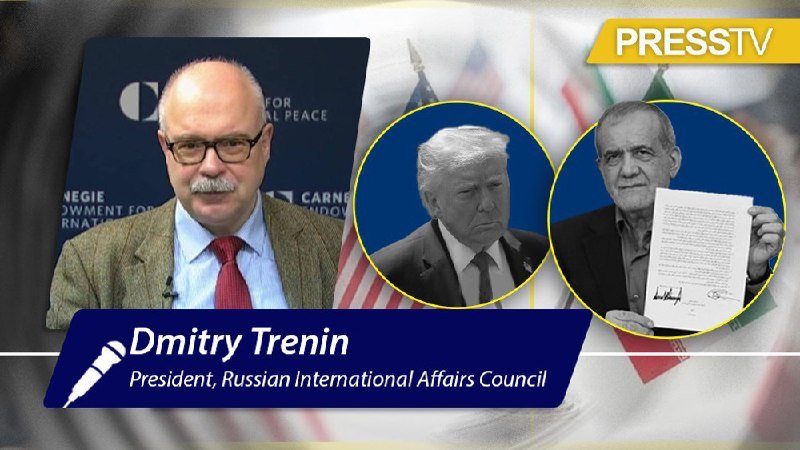
On 18 June 2026, the White House staged the most photographed diplomatic ceremony of the year, and then, within hours, walked back what it had just signed. Donald Trump put his name to a US-Iran memorandum of understanding at a ceremony in France, with French President Emmanuel Macron posting footage of the signing in real time. By the same afternoon, in a separate exchange with reporters, Trump was already hedging: the document was "not final," a press conference was being added to clarify terms, and the substantive question of whether Iran should be permitted to retain any ballistic-missile capability was being reframed on the spot. The result is a diplomatic object that exists in two states at once: a signed MoU, and a presidential disclaimer that the signature does not yet bind.
What is on the table in France is not, by any honest reading, a peace deal. It is a framework with a window — a window in which fighting is meant to stop, inspectors are meant to move, and the harder questions about enrichment, missiles, sanctions sequencing and regional proxy forces are meant to be negotiated before the window closes. The South China Morning Post, citing analysts tracking the talks, reported on 18 June that the agreement was "vague" and "wobbly at best," a description that fits the public text better than the presidential rhetoric does. Trump’s defence of the deal to reporters — that the alternative was "economic catastrophe" — is the tell. The pitch is no longer that the terms are good. The pitch is that the absence of a deal would be worse.
The signing and the immediate reversal
The MoU was signed in France on 18 June 2026, in a ceremony that Macron’s office documented on camera and the Élysée distributed through social channels. Middle East Eye’s live coverage of the day’s events carried Macron’s video and noted that the French presidency was treating the document as a binding output of the meeting, not a placeholder. The setting mattered: Paris was positioning itself as the diplomatic venue of record for a US-Iran détente that Washington, until days before, had said was not on the agenda.
Within hours, Trump told reporters the deal was "not final." A press conference was added in France to walk through the terms. SCMP’s diplomatic correspondent filed that the US side was already softening the substance of what had been signed, while Trump’s public posts defended the arrangement as a way to head off "economic catastrophe" — language that frames the deal as damage control, not as a strategic settlement. The sequence — ceremony, then qualifier, then press conference to explain the qualifier — is the kind of pattern that usually indicates a谈判过程中 is unfinished work being dressed up as a deliverable.
What the deal does, and what it does not
The MoU, on the public record available, gestures at de-escalation but does not resolve the three issues that have blocked US-Iran rapprochement for two decades.
First, enrichment. There is no published commitment by Iran to halt uranium enrichment, no IAEA verification protocol with a timetable, and no agreed definition of what a "civilian" programme looks like. The Trump team’s marketing of the deal rests on the assumption that Iran will accept limits; the Iranian public position, to the extent it has been articulated in this round, treats enrichment as a sovereign right.
Second, missiles. On 18 June, in comments carried by Reuters, Trump argued it was "unfair" for Iran to be denied ballistic missiles while other states retain them — a remark that doubles as an opening offer and a tell. If the US is publicly entertaining an Iranian missile inventory as a negotiating chip, the resulting bargain is structurally different from the maximum-pressure posture of 2018–2025. Whether the regional states most exposed to Iranian missiles — Israel, Saudi Arabia, the UAE — accept that trade is the second-order question the MoU does not answer.
Third, sanctions sequencing. A real deal maps out which sanctions lift, in what order, against what Iranian behaviour. The reporting on 18 June names no such map. Without one, the Iranian incentive to comply is theoretical, and the US incentive to follow through is whatever the political weather in Washington happens to be on a given Tuesday.
Why the framing is selling a postponement
The dominant Western framing — a "peace deal" — borrows the vocabulary of the Egypt–Israel and Jordan–Israel accords, agreements that ended wars. Nothing in the public text of the 18 June MoU ends a war. There is no war to end. What the document manages, at most, is a temporary halt in the escalatory cycle that has run since the 12-day exchanges of 2025 and the Israeli operations in south Lebanon, the latter referenced in the same Middle East Eye live blog that carried the Macron video.
The structural pattern is familiar: a framework signed in conditions of mutual exhaustion, sold as a peace, in which the hard choices are deferred. Coverage that takes the framework at its marketing copy — "peace," "deal," "agreement" — misses the architecture. The architecture is a window. The question is whether anything substantive can be built inside it before the window closes, and whether either side has an incentive to let the window close with the work undone.
The counter-read, and why it does not quite hold
The contrarian case is that a vague deal is better than no deal, that ambiguity is the price of getting two governments that do not trust each other to the same table, and that the public hedging is the normal sound of a negotiation in progress. There is something to that. Treaties that announce themselves cleanly are rare. The 2015 JCPOA was, by historical standards, an unusually specific document, and it still collapsed under a change of US administration.
The case does not fully hold because this is not a treaty. It is a memorandum, signed in a single sitting, with a presidential disclaimer attached before the ink reached the cameras. The JCPOA at least had the discipline of a multi-year negotiation with a published text. The 18 June MoU has a ceremony and a press conference scheduled to explain why the ceremony should not be read literally. That is not the sound of a deal maturing in public. It is the sound of a deal being laundered for domestic consumption before its terms are settled.
Stakes, and what remains genuinely uncertain
The losers in the wobble scenario are predictable. Iranian moderates who staked political capital on engagement get a document they cannot defend. The IAEA, which has been the technical backbone of every previous arrangement, gets a framework that does not name its role. Israel and the Gulf states, already uneasy about a US-Iran thaw, get a sequence of reassurances without the underlying architecture. The winners, in the short term, are the political actors who can claim credit for the ceremony without having to enforce the substance.
The single largest uncertainty is whether the press conference in France produces a clarified text or another layer of qualification. Reporting on 18 June does not yet specify whether the follow-up event will publish an annex, a joint statement, or simply a transcript of the president explaining himself. The next 72 hours will determine whether 18 June 2026 is remembered as the day a US-Iran accommodation began, or as the day a US-Iran illusion peaked.
Desk note: the wire services led with the ceremony; Monexus led with the disclaimer. The signing is the fact. The "not final" is the story.
Wire provenance
This editorial synthesis draws on the following public wire/social posts:
- http://reut.rs/4ecPfqw
Follow the event.
These dated source records provide context. They do not retrospectively verify this archive article.
Separate what the nuclear watchdog reported from what it could not determine after the June 2025 strikes.