Trump’s Iran MoU and the $300bn Reconstruction Question: A Deal, a Denial, and a Domestic Political Fault Line
A Geneva MoU and a $300bn reconstruction fund have landed on the same day the US president publicly denies involvement — leaving lawmakers to argue about who pays.
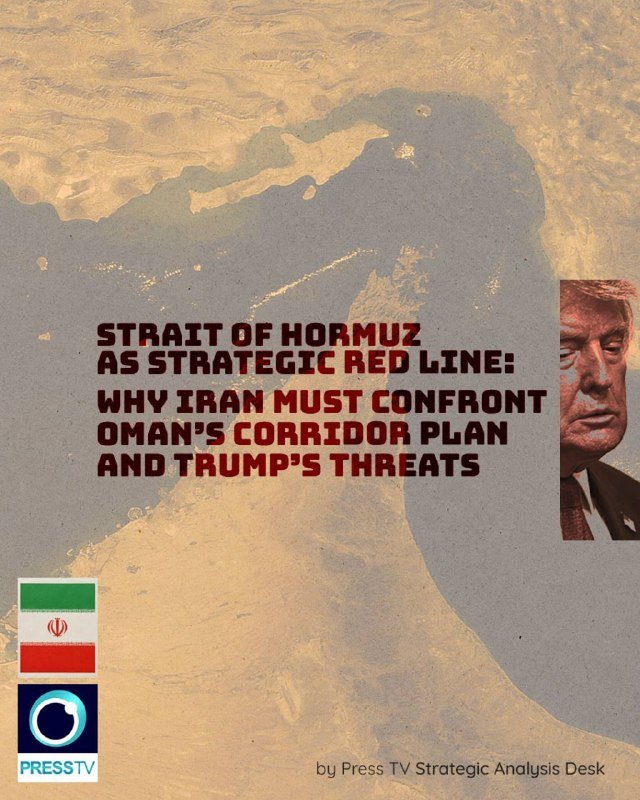
By the evening of 18 June 2026, the Trump administration was simultaneously selling a sweeping agreement with Iran and denying responsibility for its price tag. The memorandum of understanding signed in Geneva commits the United States to a "complete ceasefire on all fronts," according to a posting on X by Middle East Eye at 19:57 UTC, citing the US president’s own remarks [source: Middle East Eye]. Hours earlier, The New York Times had published a piece reading the agreement as "a list of concessions to Iran" — a framing that has now collided with the president’s own posts about the accompanying reconstruction package [source: NYT, 18 June 2026].
The conflict inside the administration is not over the diplomacy. It is over the bill. A memorandum committing the United States and Iran to a $300bn reconstruction programme has become a domestic political flashpoint, after the president used his own X account to call US participation in that fund "fake news" — a denial captured and reposted by the X account @sprinterpress at 20:09 UTC on 18 June 2026 [source: @sprinterpress]. Al Jazeera’s breaking-news desk reported the same day that the memorandum’s reconstruction fund had become the focus of Capitol Hill attacks connecting the price tag to questions of affordability for American voters [source: Al Jazeera, 18 June 2026].
What is actually on the table
The Geneva document is a memorandum of understanding, not a treaty. In the Iranian–American relationship, that distinction matters: a MoU signals political intent without binding either side to a ratified legal text, and it can be repudiated or revised by either signatory with comparatively little domestic procedure. The Middle East Eye live feed, updated through the evening of 18 June 2026, frames the package as a "peace accord" whose signing in Geneva was scheduled for Friday, with both Washington and Tehran publicly confirming the arrangement [source: Middle East Eye]. The president’s accompanying language — "complete ceasefire on all fronts" — extends beyond any single proxy theatre, suggesting a parallel arrangement covering Iranian-aligned fronts from Lebanon to Yemen and Iraq.
The reconstruction fund is the second, harder component. Al Jazeera reports the figure at $300bn, with lawmakers already connecting that number to US domestic fiscal concerns [source: Al Jazeera, 18 June 2026]. The president’s denial of American participation, captured in the @sprinterpress screenshot of his X post, narrows the public US commitment to the political and security tracks, while leaving the financing architecture ambiguous [source: @sprinterpress]. That ambiguity is doing more damage than the figure itself.
The denial and what it costs
Presidential denials of his own administration’s signature initiatives are not unusual in the second Trump term, but the sequencing here is unusual. The MoU and the denial were issued within hours of each other on 18 June 2026 — the diplomacy and the disavowal travelling together in the same news cycle. The result is a credibility problem the NYT analysis already names: an agreement that "reads like a list of concessions" is even harder to defend domestically when the president himself disowns its cost [source: NYT, 18 June 2026].
The political cost is being paid by the deal’s supporters in Congress. Lawmakers who might have defended the reconstruction package on strategic grounds — stabilisation funding as a cheaper alternative to continued military posture — now face a White House line that there is no package to defend. The Al Jazeera breaking-news desk reports that legislators are leaning on the $300bn figure precisely because it animates an affordability argument that maps onto existing voter anxiety [source: Al Jazeera, 18 June 2026]. For an administration that came to office promising to extract costs from allies rather than absorb them, even the appearance of writing a $300bn cheque to Tehran is politically toxic.
What the deal does for Iran
For Tehran, the Geneva package — even with the funding question unresolved — is the most consequential diplomatic opening with Washington in years. A "complete ceasefire on all fronts" would, in principle, quiet the regional architecture that has defined Iran’s deterrent posture since 2023, and it would do so at a moment when the Islamic Republic’s proxies are visibly attrited and its domestic economy is under sustained pressure. A reconstruction commitment of $300bn, whether underwritten by Gulf states, the United States, European creditors, or some combination, would underwrite the post-sanctions recovery that Iranian officials have argued is the legitimate return on years of endurance under sanctions.
The structural argument here is straightforward: the incumbent order has run out of cheap options for managing Iran, and the price of renewed pressure has risen above the price of accommodation. That is not a normative judgement; it is the arithmetic of a regional balance that has shifted against maximalist enforcement.
Stakes and what remains unresolved
Three things remain unsettled at the close of 18 June 2026. First, the funding question: who pays the $300bn, on what schedule, and under what conditionality, is not specified in the publicly reported material. Second, the verification regime: a "complete ceasefire on all fronts" is a claim that has to be tested by events on multiple separate fronts, and no single announcement can substitute for that. Third, the domestic political coalition behind the deal: the NYT analysis frames the agreement as politically damaging to the president in its current form [source: NYT, 18 June 2026]; Al Jazeera frames the funding fight as the immediate legislative battle [source: Al Jazeera, 18 June 2026]; and the president’s own denial suggests the White House has chosen, at least for the moment, to absorb the diplomatic credit while shedding the financial exposure.
The most plausible read of the evidence available on 18 June 2026 is that the Geneva MoU will hold in its political form — ceasefire language, prisoner-track confidence-building, sanctions choreography — while the $300bn reconstruction component is renegotiated downward or rebranded as Gulf-and-European financing with a marginal US role. That outcome would let the president claim the diplomatic win and the fiscal restraint simultaneously. It would also leave Tehran with a thinner economic dividend than the headline figure suggested.
The risk in that outcome is that Iranian constituencies who were promised reconstruction as the return for strategic patience will judge the gap between the announcement and the delivery as another instance of Western bad faith. The sources available on 18 June 2026 do not specify how Tehran has framed the reconstruction component internally; that reporting has not yet surfaced in the thread. Until it does, the most that can be said with confidence is that the deal, the denial, and the funding fight have all arrived together — and that the next forty-eight hours will determine which of them survives contact with the political process in Washington and Tehran.
— This article draws on the NYT’s analysis, Al Jazeera’s breaking-news desk, Middle East Eye’s live feed, and a public X post captured on 18 June 2026. The sources disagree about tone and emphasis but agree on the underlying facts of the MoU, the $300bn figure, and the presidential denial. Where they diverge on political interpretation, that divergence is reported rather than resolved.