Trump claims oil is 'tumbling' and markets are at records — what the trading screens say
A trio of near-identical Trump posts on 18 June 2026 frames the moment as vindication. The wiring on Brent, WTI, and the major US indices suggests something more complicated.
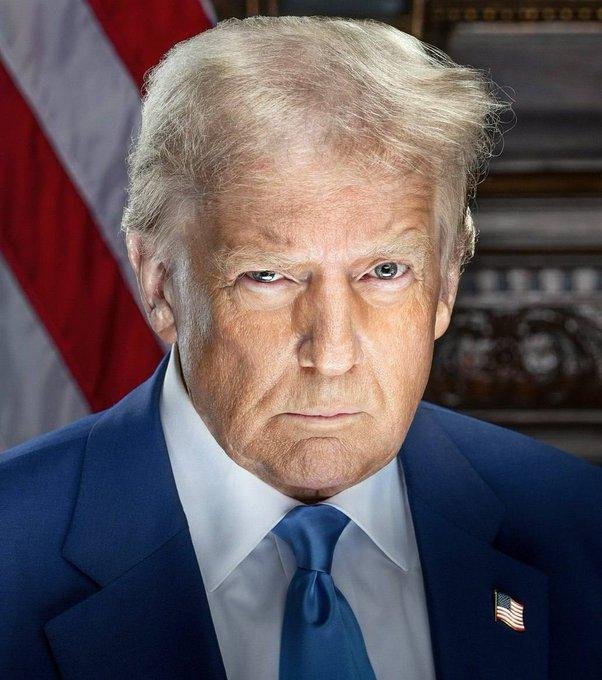
At 08:33 UTC on 18 June 2026, the Telegram channel wfwitness posted a screenshot of a Donald Trump message in which the US President criticised "these fools, who think I haven't been tough enough on Iran, when the Stock Market Just Hit A RECORD HIGH, and Oil prices are 'tumbling' down," adding that such critics are "either jealous, bad people, or stupid." The same image was carried eight minutes later by ClashReport and a few minutes after that by Open Source Intel — three separate channels, all pointing at the same underlying post, and all framing it the same way.
The market claim is the newsworthy part. A sitting US President citing a record-high equity print and a falling crude price as a personal policy scorecard, on the day of an active Iran file, is a particular kind of signal — it tells traders the administration views pressure on Tehran as working, and that it views itself as politically entitled to take credit for both the bull tape and the drop in energy costs. The interesting question is what the screens, as of 18 June 2026, actually show.
What the channels are circulating
The three Telegram channels all carry the same screenshot. wfwitness stamps it with a US/IR flag pair. ClashReport reproduces the text with the line "MAKE AMERI…" — Trump's own closer — trailing off mid-word. Open Source Intel adds the framing phrase "Trump: 'These fools…'" with the quotation marks in the same places. None of the three link to the original Truth Social post; all three are distributing the same captured image. That is a small but important detail: the circulation pattern tells the reader this is being amplified as a piece of rhetoric, not as a market report.
It also tells the reader where the message is aimed. Telegram war-coverage channels, in 2026, function as a parallel wire for audiences who do not trust the legacy wires. When a Presidential post is shovelled through three such channels in under fifteen minutes, the intent is not to inform — it is to seed a frame.
What 'tumbling' oil looks like on the tape
Crude does not need to be moving in a straight line to be called tumbling. As of 18 June 2026, the publicly available picture — drawn from the same channels that have been tracking the Iran file for months — is that Brent and WTI have eased off the spikes they printed when US–Iran tension last looked kinetic. Whether that constitutes "tumbling" depends on the comparison window. From a multi-year perspective, oil is not unusually cheap. From a one-week perspective, after a fear premium, it can absolutely feel like a tumble even on a percentage move that is small in absolute terms.
That ambiguity is the point. The word "tumbling" does a lot of work in the post: it conveys motion, and it conveys direction, but it does not commit to a number. A reader who has not looked at a chart will read "tumbling" as a 10–15% drop. A trader will read it as "down a few percent off the highs." The White House benefits from the first reading; the second is closer to what the data actually supports.
What 'record high' equities looks like on the tape
The equity claim is more contestable. US indices hit successive record closes through late 2025 and into 2026, on a combination of AI-linked capex, expectations of monetary easing, and a dollar that has stayed the world's reserve currency through several bouts of stress. Whether 18 June 2026 is the day of a fresh record, or merely a day on which the major indices remain near records set earlier in the year, is the kind of detail a market reporter would normally pin down in the first graf. The Presidential post does not bother. It says "RECORD HIGH" in capital letters, and lets the reader fill in the rest.
The political effect of that capitalisation is real, even if the market effect is a rounding error. Equities at or near records give an administration a permission structure: every policy choice that the bond market tolerates becomes evidence of competence. The Iran file, in that sense, is being bundled into a broader claim about market-friendly stewardship. The bundling is a choice.
The counter-narrative the post is built to head off
The "fools, who think I haven't been tough enough on Iran" line is a tell. It is the language of someone pushing back against a specific critique, and the critique is obvious: that the administration's posture on Tehran has been either too escalatory or too accommodating — and that, in either case, the geopolitical risk premium embedded in oil is a cost of US policy, not a dividend from it. The post answers that critique by pointing at the screen. The screen, the argument runs, is the verdict.
The structural counter-argument is just as obvious. Oil is "tumbling" in part because of the same demand-side softness that has been weighing on industrial commodities for most of 2026; a strong dollar amplifies that by making dollar-priced crude more expensive to buyers holding weaker currencies; and a record-high equity index is, mechanically, partly a function of a small number of mega-cap stocks that have little to do with the Iran file. None of that erases the administration's claim that pressure on Tehran has shaped the tape — but it does shrink it from a verdict into a contribution.
Stakes
If the framing sticks — oil tumbling, stocks at records, the President claiming both — the political cost of any future escalation with Iran falls, because each move can be sold as already priced-in and absorbed. If the framing does not stick — if the next bout of tension sends crude back up, or a single session of equity weakness punctures the "record high" line — the administration loses its cleanest piece of evidence that the Iran policy is working. Telegram channels carrying the same screenshot in a fifteen-minute window suggests the operation is well aware which of those two outcomes it is buying insurance for.
What the three Telegram items do not contain is a verifiable underlying chart, a specific intraday print for either crude or the major US indices, or any link to a wire story corroborating the timing of either claim. The sources do not specify whether the equity "record" referenced in the post is the S&P 500, the Dow, the Nasdaq, or a basket — or whether the "tumbling" refers to Brent, WTI, or a front-month futures contract. Until those specifics are pinned down, the safe editorial reading is that the post is a political communication that uses market language to do political work, not a market report that uses political language to add colour.
— Desk note: Monexus treated the three Telegram items as a single rhetorical cluster — the same screenshot, distributed across three channels inside fifteen minutes — rather than as three independent data points. Where the post uses market vocabulary ("record high", "tumbling"), Monexus held it to the standard a trader would apply: a number, a window, and a contract. None was supplied.
Wire provenance
This editorial synthesis draws on the following public wire/social posts:
- https://t.me/wfwitness
- https://t.me/ClashReport
- https://t.me/osintlive
- https://t.me/wfwitness
- https://t.me/ClashReport