Trump's Lebanon ceasefire call and Hezbollah's 'Ashura operations': what the 18 June wire actually shows
A single news day produced two contradictory signals: a US president demanding an end to fighting and an Iran-aligned movement announcing a new wave of operations. Reading them together is the story.
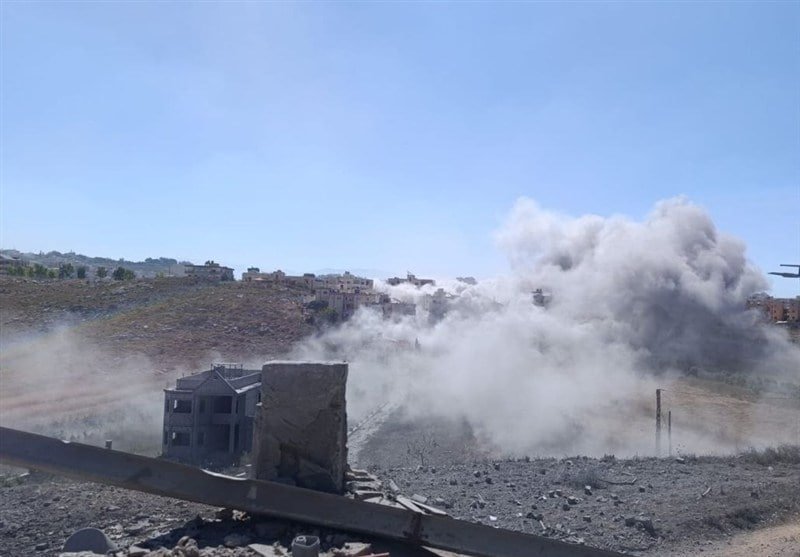
Two messages crossed the wire on 18 June 2026 within roughly an hour of each other, and they point in opposite directions. At 17:13 UTC, the Tasnim English feed carried a Hezbollah statement announcing the start of a series of military operations under the banner "Ashura operations" directed at "the aggression of the Zionist regime." At 18:09 UTC, the same outlet's English service reported that US President Donald Trump had called for a comprehensive ceasefire in Lebanon, demanding "an immediate end to all conflict" across all fronts, including Lebanon and what the Iranian state agency calls "the Zionist regime."
The contradiction is the story. A single news day produced both a US-led de-escalation signal and an Iran-aligned movement's formal announcement of expanded operations. Reading them as two separate items misses the point; reading them together is the point. The shape of 2026's Middle East is being negotiated, on this evidence, in the gap between those two wires.
What Hezbollah actually announced
According to the 17:13 and 17:15 UTC Tasnim dispatches, Hezbollah issued a formal statement declaring the start of a series of military operations named "Ashura operations" — a reference to the Shia commemoration of the seventh-century battle of Karbala, and a deliberate framing of the current fighting in historic-religious terms. The statement, as carried by the Iranian state-affiliated agency, frames the operations as a response to "the aggression of the Zionist regime," the standard Iranian-press formulation for Israeli military action in Lebanon.
The Tasnim thread is short on operational detail. The agency does not specify the targets, the timing of individual strikes, the geographic scope inside Israel, or the weaponry involved. The reporting is a relay of the movement's own communique, not independent verification of what is actually being launched. That matters: "operations announced" and "operations executed" are different categories, and the wire today records only the former.
The Ashura branding is itself the news. Hezbollah has reached for religious-historical vocabulary at moments when it wanted to signal that the current phase of confrontation is existential, not tactical. The choice to label a new series of operations with a Karbala frame is a claim that the fighting is civilisational, and a signal to its base that the movement intends to stay in the field.
What Trump actually said
At 18:06 and 18:09 UTC, Tasnim English carried a second set of items reporting that Trump had called for "a comprehensive ceasefire in Lebanon," demanding an "immediate end to all conflicts on all fronts, including in Lebanon and the Zionist regime." The same wire item reproduces the standard Iranian-state framing of the US president — Tasnim's lead characterises Washington as "the head of the American terrorist state," a hostile framing rather than a neutral one.
Two things are worth holding onto. First, the substantive claim: Trump, on this evidence, is on the record asking for a comprehensive ceasefire in Lebanon and a broader de-escalation across the region's active fronts. That is consistent with months of US messaging about wanting to wind down the Lebanon-Israel exchange, and it places Washington publicly at odds with the operational tempo Hezbollah is claiming to inaugurate. Second, the channel: this is Tasnim's reading of Trump's remarks, transmitted alongside the agency's editorial hostility. The underlying statement may have been made; the framing around it is Tehran's, not Washington's. Independent confirmation from a Western wire was not in this thread.
Why both signals can be true
The temptation is to treat the two items as cancelling each other out — a US call for peace on one side, an Iran-aligned movement's war announcement on the other. The more useful reading is that they describe a negotiation that is being conducted in public statements rather than in back-channel communiques. Hezbollah's timing, hours after a US ceasefire call, is itself a political act: it tells Washington the price of any pause is something the movement is not yet willing to name publicly, and it tells its own constituency that no external de-escalation will be accepted on terms it has not endorsed.
A US demand for a "comprehensive ceasefire in Lebanon" is not, on this evidence, a demand for a comprehensive ceasefire on terms Hezbollah has accepted. The 18 June wire shows movement on rhetoric, not on the ground. That distinction is the one Western desks tend to flatten, and it is the distinction the Iranian wire — predictably, for its own reasons — also flattens in the opposite direction. Both are serving their audiences.
What remains uncertain
The honest ledger is short. The sources in front of this article are two Telegram channels operated by Tasnim, the Iranian state news agency, and they are the only inputs available. There is no independent confirmation, in this thread, of either the operational content of Hezbollah's announcement or the precise wording of Trump's ceasefire remarks. The casualty figures, the target lists, the diplomatic follow-through, and the Israeli response are not in the record. What the 18 June wire shows is two messages, sent through a single editorial channel, that point in opposite directions — and a region being shaped, for now, by the distance between them.
— Monexus desk note: this piece reads the day's Iranian-state wire as a single contradictory document rather than as two unrelated items, because the contradiction is itself the news the wire produced.
Wire provenance
This editorial synthesis draws on the following public wire/social posts:
- https://t.me/tasnimnews_en
- https://t.me/JahanTasnim
- https://t.me/tasnimnews_en
- https://t.me/JahanTasnim
Follow the event.
These dated source records provide context. They do not retrospectively verify this archive article.
Separate what the nuclear watchdog reported from what it could not determine after the June 2025 strikes.