Trump's 'oil is flowing' victory lap meets a market that isn't quite celebrating
A Truth Social post declaring that 'oil is flowing' and that 'Iran can never have a nuclear weapon' lands on 18 June 2026 against a backdrop of unresolved sanctions architecture, opaque diplomacy and an energy market that has heard this kind of claim before.
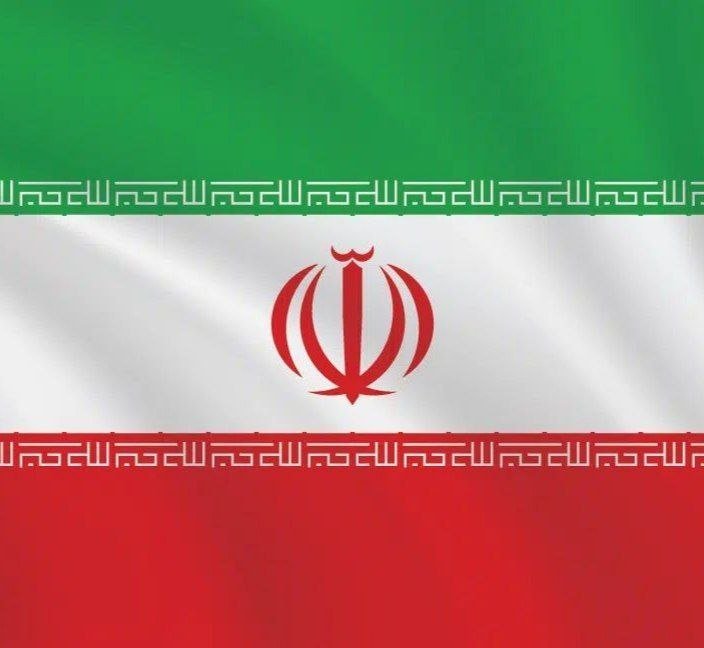
On the afternoon of 18 June 2026, US President Donald Trump used his Truth Social account to declare a tidy bundle of victories in a single sentence: "OIL IS FLOWING, IRAN CAN NEVER HAVE A NUCLEAR WEAPON (THE WORLD WILL BE SAFE!), THE STOCK MARKETS ARE ROARING, JOBS ARE AT RECORDS, AND PRICES ARE DROPPING (AFFORDABILITY!)." The post, timestamped on Telegram channels that monitor presidential social media at 14:04 and 14:19 UTC, treats five separate economic and geopolitical claims as a single, settled fact. The structure of that sentence — the way oil, nuclear, equities, employment and consumer prices are collapsed into one breath — is itself the news. It is the messaging of a presidency that has decided the story of US economic stewardship and Middle East policy is the same story.
The headline claim is that oil is flowing. That is a substantive claim about physical supply — barrels moving through the Strait of Hormuz, exports clearing Iranian-linked terminals, refinery throughput holding — and the post does not specify which oil, which chokepoint or which contractual relationship has been unlocked. The corollary is that "Iran can never have a nuclear weapon," a maximalist position that the sources, which reproduce only the post itself, do not connect to a specific agreement, inspection regime or enforcement mechanism. The third through fifth clauses are macroeconomic boasts — roaring markets, record employment, falling prices — that travel alongside the foreign-policy claim rather than being earned by it.
What the post actually says, and what it leaves out
Read line by line, the Truth Social statement is more interesting for its omissions than for its assertions. The phrase "oil is flowing" does not name a counterparty. It does not name a waiver, a sanctions licence, a tanker programme, or a specific transaction. It does not say whether Iranian crude is reaching buyers, whether a sanctions exemption has been issued, or whether a third country is brokering re-exports. In US–Iran energy diplomacy, those distinctions are the policy. "Flowing" can mean many things, and senior administration officials have, on earlier occasions, used similar verbs to describe very different operational realities — waivers, snapback sanctions, third-party escrows, and renewed enforcement are all consistent with the word.
The nuclear clause is the most aggressive formulation in the sentence. It is not "Iran will not develop a nuclear weapon," which is the language of the Non-Proliferation Treaty and of repeated UN Security Council resolutions. It is "Iran can never have a nuclear weapon," a stronger and more permanent claim. The post does not identify the mechanism that makes that guarantee stick: there is no reference to the International Atomic Energy Agency, no reference to the Joint Comprehensive Plan of Action, and no reference to the 2025-era round of US–Iranian negotiations that several outlets reported earlier in the year. The phrasing is closer to a political slogan than a diplomatic settlement.
The market and employment clauses — roaring stocks, record jobs, dropping prices — are also unverifiable from the post itself. US equity benchmarks do not, in June 2026, hit a daily record in the same hour as a Truth Social post; labour-market data is released on a calendar set by the Bureau of Labor Statistics, and consumer-price readings follow their own schedule. The president is free to assert that all four conditions hold simultaneously, but the post is the assertion, not the evidence.
The diplomatic backdrop, as far as the sources allow
The four thread items, drawn from the Telegram channels osintlive, Open Source Intel, Clash Report and Euronews, do not add diplomatic context. They reproduce the post and, in the case of Euronews, supply a slightly different machine-translation variant ("STOCK MARKETS ROOM", "PRICES ARE DOWN (AFFORDABLE!)") that confirms the text is being passed around as a single circulating artefact. The wire provenance is therefore narrow: a Truth Social post, replicated across monitoring channels, with no accompanying statement from the US State Department, the Treasury's Office of Foreign Assets Control, the IAEA, or any Iranian authority.
That narrowness is itself a problem for anyone trying to read the post as a policy event. In the recent history of US sanctions enforcement against Iran, decisive shifts have been telegraphed through OFAC general licences, through shipping advisories from the Treasury, and through the publication of waivers in the Federal Register. They have not been announced on social media with no follow-up. The reader has no way, from these sources, to tell whether the post is the headline of a structured deal, a negotiating feint aimed at Tehran or at oil buyers, or simply the political positioning of a president whose domestic message now bundles economic management and Middle East crisis-avoidance into a single slogan.
The Iran file: what a maximalist nuclear claim is actually doing
The phrase "Iran can never have a nuclear weapon" sits at the end of a long US policy debate about how to handle a near-threshold state. For two decades the operative US position has been that Iran will not be permitted to acquire a nuclear weapon, with the modal verb — "will not" — leaving room for verification, for negotiated caps on enrichment, and for a diplomatic off-ramp if Tehran accepts constraints. The shift to "can never" is a different posture. It implies that no negotiated limit, no enrichment cap, no monitored civilian programme is acceptable, because the standard is permanent and absolute.
That posture has structural consequences. It forecloses a JCPOA-style architecture in which a defined Iranian enrichment capacity is tolerated in exchange for monitoring and a verifiable ceiling. It raises the bar for any future diplomacy, because any deal that leaves Iran with even a symbolic enrichment footprint would be characterised, from this baseline, as a failure. It also creates an enforcement burden: if the standard is permanent, the instruments — sanctions, snapback, military planning — have to be permanent too. The post does not address how the US intends to sustain that posture, and the sources do not record any allied reaction, Israeli or Gulf, to a phrasing this absolute.
The corollary is the oil claim. In US–Iran diplomacy, the two files have historically been linked. Sanctions on Iranian crude exports are the primary economic lever used to constrain Iranian behaviour on the nuclear file. If the White House is signalling, through the verb "flowing," that exports are moving, the implied message is that some constraint has been relaxed or some new arrangement is in place. But the sources do not specify which one. An Iran-watcher reading the post in isolation has to choose between two reads: that a deal has been struck and is being marketed in presidential language, or that a deal has not been struck and the post is the kind of unilateral declaration that Iranian negotiators have, in the past, used as evidence that Washington is not acting in good faith.
Stakes and what the evidence does not yet show
If the post is read at face value, the winner is the US administration, which gets a single sentence that ties energy supply, non-proliferation, market performance and consumer prices into a coherent story of competence. The losers are the people who need to know whether the claim is true: oil traders pricing Middle East barrels, foreign-policy analysts in allied capitals, and Iranian citizens whose economic conditions depend on the actual operational state of sanctions. The post is also a test for the wire services and for independent verification outfits, which have to decide whether to amplify a presidential assertion of a multi-domain outcome or to wait for the documents that would substantiate it.
A counterpoint worth taking seriously is that the post is best understood as the messaging arm of a policy that has not yet been documented. In that reading, "oil is flowing" is a posture aimed at oil markets and at domestic voters ahead of a news cycle, and "Iran can never have a nuclear weapon" is the irreducible line in the sand. The dominant framing — that the post is the announcement of a substantive change — holds only if the underlying documents materialise. Until they do, what is on the record is a Truth Social post, four Telegram re-shares, and a Euronews translation. The sources do not specify a deal, a waiver, a date, a counterparty, or a verification regime. They specify a sentence.
This piece was written from a narrow source set: a single Truth Social post, replicated across three Telegram monitoring channels and one Euronews pass-through, all dated 18 June 2026. The article reports what the post says, what it leaves out, and what would have to be true for it to be a policy event rather than a slogan. The pipe stays open.
Wire provenance
This editorial synthesis draws on the following public wire/social posts:
- https://t.me/osintlive
- https://t.me/OpenSourceIntel
- https://t.me/ClashReport
- https://t.me/euronews
- https://t.me/osintlive
Follow the event.
These dated source records provide context. They do not retrospectively verify this archive article.
Separate what the nuclear watchdog reported from what it could not determine after the June 2025 strikes.