Tucker Carlson's Iran routine and the new American isolationism
A US president's emissary is talking to Tehran and a US media figure is cheering it on. That is a posture shift, not a passing show.
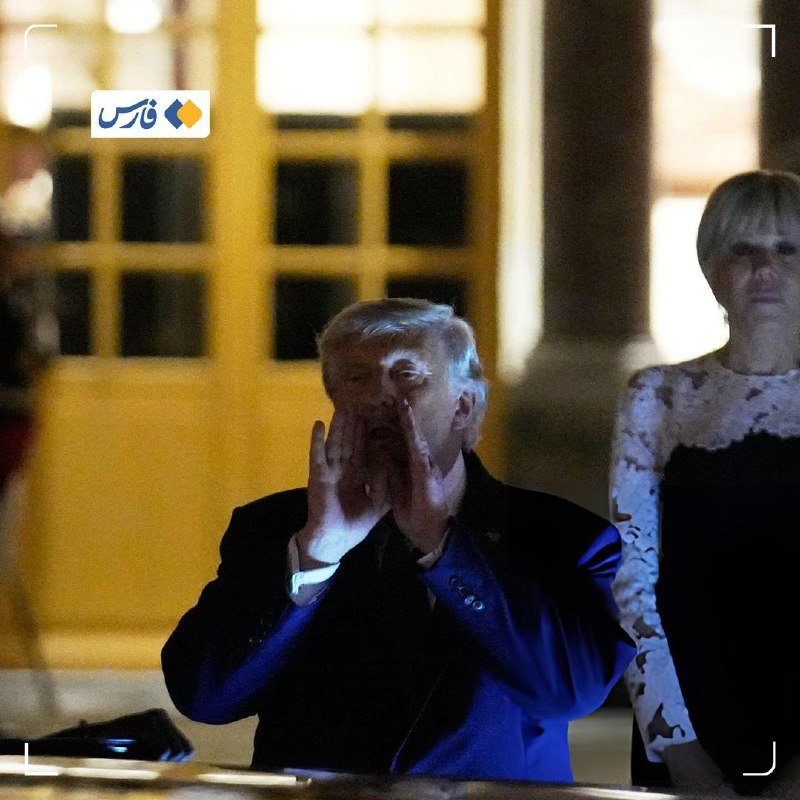
On 18 June 2026, the Telegram channels Open Source Intel and ClashReport both posted the same short clip of Tucker Carlson making an argument that would have been unsayable on American cable news a decade ago. The US government, he said, has produced a document that acknowledges Iran is not a "rogue terror state" but "a sovereign nation. In fact, a great power, because it's negotiating with the world's gr". The fragment cuts off there, but the political signal is intact. A sitting US administration, in Carlson's telling, has stopped treating the Islamic Republic as a pariah and started treating it as a peer.
That shift matters more than the clip. American isolationism has rarely travelled under the banner of sovereign-equality rhetoric; it has usually spoken the language of walls, tariffs, and "America First." Carlson is offering a different idiom. The argument is not that Washington should retreat from the Middle East. It is that Washington should stop humiliating the governments it talks to. That is a posture change with consequences for Israel, for the Gulf monarchies, and for the bipartisan foreign-policy consensus that has held since 1991.
The Carlson framing, restated honestly
Carlson's case has two halves. The first, about Iran, is that a US administration willing to sign a deal with Tehran is implicitly conceding Iranian statehood, sovereignty, and great-power standing. The second, about Israel, is sharper. In a separate excerpt circulated the same morning, Carlson argued that "Israel lost the only president it had full control over" and that Donald Trump "went from being a slave to Israel to comparing Benjamin Netanyahu disfavourably to al-Qaeda." The phrasing is crude. The underlying claim is that the US executive has begun treating the Israeli government as one interest group among several rather than as a default recipient of diplomatic deference.
Read together, the two clips describe a single thesis: the post-1991 architecture, in which US Middle East policy was effectively subcontracted to a tight Israel-Lobby-and-neocon consensus, is cracking. Iran is being dealt with as a peer. Israel is being talked to as a difficult ally. Both moves, in Carlson's telling, are signs of American adulthood rather than American retreat.
The counter-narrative
That reading is not the only one available, and it would be dishonest not to name the alternative. From Tel Aviv and from much of the Washington foreign-policy establishment, the same facts look different. Treating Iran as a "great power" rewards a regime that funds Hezbollah, Hamas, the Houthis, and a network of Iraqi militias. Negotiating from a posture of sovereign equality, in this telling, is not realism; it is appeasement with better optics. And the reported cooling between the White House and Benjamin Netanyahu can be read not as the maturation of American statecraft but as the betrayal of a long-standing ally under domestic political pressure from a media figure with no institutional role.
Both readings are internally coherent. The disagreement is about which costs are bearable and which are not. Carlson's frame assumes the costs of estrangement from Riyadh-and-Tel Aviv-on-autopilot are higher than the costs of normalising relations with Tehran. The establishment frame assumes the opposite.
What the structural picture actually looks like
Strip away the personalities and a harder pattern emerges. The United States is no longer the unipolar hegemon it was in 2003. It is one pole among several, and the Middle East is the region where that fact becomes most visible. China's brokering of the Saudi-Iranian rapprochement in March 2023 demonstrated that regional security could be reconfigured without Washington in the room. Russia's intervention in Syria from 2015 onward showed that the US could be outmanoeuvred on its own perimeter. The dollar's continued dominance gives Washington leverage, but it is leverage that works best when not exercised; threats to weaponise the financial system have costs the US itself now thinks twice about imposing.
In that environment, the question is not whether the US talks to Iran. It is whether the US talks to Iran from a position of dominance or from a position of managed parity. Carlson's read is that the latter is happening and that this is healthy. The establishment read is that the latter is happening and that this is dangerous. Both are describing the same underlying shift.
The stakes, named plainly
If the trajectory Carlson describes continues, three things follow. First, Israel loses its guaranteed seat at the centre of US Middle East policy and must compete for attention the way other allies do, through sustained lobbying rather than automatic deference. Second, the Gulf monarchies are forced to recalibrate: the security umbrella they paid for in dollars and basing rights looks thinner, which pushes them faster toward diversification — toward China, toward domestic industrial policy, toward the cautious opening of relations with Tehran that the Saudi-Iranian deal already signalled. Third, Iran gains the recognition it has wanted since 1979, which strengthens the faction inside the regime that argues for engagement and weakens the faction that argues for forward defence.
None of those outcomes is predetermined. A second Trump term, or a successor administration, could reverse any of them. But the public argument has shifted. A major American media figure is now describing Iran as a great power on the record, and the clips are circulating widely on both Open Source Intel and ClashReport — channels with overlapping but not identical audiences. That is the story. Not the words, exactly. The fact that the words travel.
The desk note: where the wire frames this as a "Trump-Iran deal" story and treats Carlson as a passing commentator, this publication reads it as the visible crack in a thirty-year consensus. The clip is the artefact; the posture change is the news.
Wire provenance
This editorial synthesis draws on the following public wire/social posts:
- https://t.me/osintlive
- https://t.me/osintlive
- https://t.me/ClashReport
- https://t.me/ClashReport
Follow the event.
These dated source records provide context. They do not retrospectively verify this archive article.
Separate what the nuclear watchdog reported from what it could not determine after the June 2025 strikes.