Ukrainian drones hit Moscow oil refinery overnight, residents report 'oil rain' over the capital
Residents across several Moscow districts described dark oily deposits after overnight strikes on the Moscow Oil Refinery — the latest in a Ukrainian campaign now reaching the Russian capital's fuel supply.
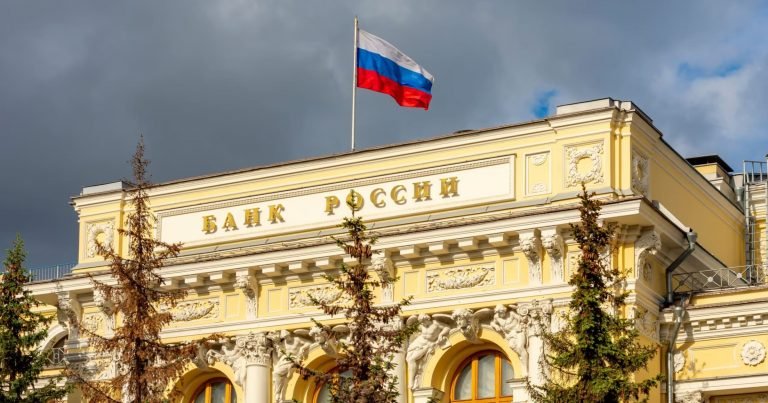
Residents across several districts of Moscow woke on 18 June 2026 to an unfamiliar phenomenon described in social-media posts as an "oil rain" — dark deposits falling from the sky in the hours after Ukrainian long-range drones reached the Moscow Oil Refinery, one of the largest fuel-processing sites inside the Russian capital. Footage geolocated by Ukrainian and Western outlets and circulated through the Kyiv Post channel showed dark oily streaks on cars, balconies and pavements across the city, with at least one plume visible over the refinery's industrial zone in the southeast of the capital.
This publication finds that the strike is the clearest escalation yet in Ukraine's deepening campaign against Russian downstream energy infrastructure. The pattern is now familiar: refinery hits, fires, temporary shutdowns, and visible plumes of smoke that have become a near-weekly feature of Russian regional Telegram channels. What changed in the early hours of 18 June was the geography. Moscow itself is not new to drone activity, but hitting the Moscow Oil Refinery directly — and producing fallout that residents across the city can see, smell and wipe from their hands — pushes the war into the daily life of the capital in a way that previous strikes on the Moscow region have not.
What the footage shows
The most widely circulated video, posted by the insiderpaper channel on Telegram, depicts what appears to be a Ukrainian drone being engaged by Russian air-defence missiles in the vicinity of the refinery, with at least one interceptor failing to neutralise the target cleanly: the aircraft continues on a trajectory that ends in a nearby building, where it explodes on impact. A second wave of footage, gathered by the noel_reports channel and posted within hours, shows the refinery's aftermath — damaged structures, fires, and crews working at the site. Neither outlet has been independently verified by Monexus; both are consistent in their basic claims, and both post material that the Kyiv Post channel and other Ukrainian sources have amplified in real time.
The "oil rain" framing — used in residents' own posts and picked up by Kyiv Post — is a useful one for understanding the political weight of the strike. It implies a release of hydrocarbon aerosol that is both visible and has the texture of contamination. If confirmed by air-quality monitors and Moscow city authorities, it would be the first sustained atmospheric release linked to a Ukrainian strike on a Russian capital oil-processing site.
Why the Moscow Oil Refinery
The Moscow Oil Refinery, located in the Kapotnya district on the southeastern edge of the city, is one of the largest fuel-processing facilities in Russia, with a nameplate capacity in the order of 12-13 million tonnes of crude per year — enough to supply a meaningful share of the central Russian market for gasoline, diesel and jet fuel. It is also one of the most symbolic: a Ukrainian strike on a Moscow-located refinery is, by any reading, a strike on a piece of the capital's own infrastructure rather than a remote oblast facility.
Ukraine's broader campaign against Russian refining has been running for more than a year. The logic is straightforward: refining margins inside Russia have been squeezed by sanctions and by repeated Ukrainian drone attacks on export-oriented facilities in regions like Krasnodar, Ryazan, Tuapse, Volgograd and Nizhny Novgorod. The cumulative effect has been to push domestic fuel prices up, force temporary export bans, and put the Kremlin in the position of defending infrastructure hundreds or thousands of kilometres from the front line. Moscow itself is the political centre of gravity; hitting its refinery is hitting the symbolic as well as the functional core of the Russian oil machine.
The Russian response — and what is contested
Moscow's air-defence network around the capital is the densest in the country. That a swarm of Ukrainian drones reached the refinery, that air-defence engagement produced falling debris that hit a building, and that residents across multiple districts woke to oily fallout are the three most consequential facts. Russian state media has not, as of the time of writing, provided a comprehensive read-out. Telegram channels sympathetic to the Russian defence ministry have suggested that air-defence units performed as designed, that any damage to the refinery is being assessed, and that falling debris — not direct hits — caused the worst of the impact. Ukrainian sources, by contrast, claim direct hits and substantial damage to refining units.
There is one reading in which this is an air-defence success: Russian interceptors were engaged, the volume of falling debris suggests an active engagement envelope, and the city is functioning. There is another reading in which the refinery was hit, an atmospheric release occurred across the capital, and the public face of that release — cars covered in oily residue — is itself the strategic effect. Both readings are present in the source material. Monexus is not in a position, on the basis of the available footage, to settle the question of how many drones got through, what was hit, or what the long-term damage to refining capacity is.
Structural frame — a long war, hitting closer to home
What the strike illustrates, more than any single piece of operational footage, is the slow geographical escalation of Ukraine's long-range drone campaign. The first wave of strikes in 2024 and early 2025 went after refineries deep in European Russia; the campaign then moved to export terminals, to storage depots, and to military-industrial sites further from population centres. The progression toward Moscow itself — first with sporadic, low-yield drone arrivals in 2025 and now with a strike that produces visible fallout in residential districts — is the natural curve of a campaign that has been steady rather than dramatic, designed to impose a cumulative cost on the Russian refining system rather than to win a single decisive engagement.
The campaign sits inside a wider contest in which the Russian state has been working, since the start of the full-scale invasion, to insulate its fuel supply from sanctions and from Ukrainian action. Refineries have been hardened; air-defence coverage has been thickened; insurance and pricing regimes have been adjusted. None of that has, so far, been enough to make the capital itself impervious. The political signal — that the war has reached the air over Moscow — is harder to harden against than the infrastructure itself.
Stakes and what to watch
The most concrete stakes are domestic Russian: fuel availability, price stability, and the political optics of strikes that produce visible contamination across the capital. There are also export stakes, given that a substantial share of Russia's refined-product exports flow through central-Russian facilities, and a refinery outage at the Moscow site would, in the short term, tighten supply for the domestic market and divert flows to keep export commitments.
The second-order stake is strategic. If Ukrainian drones can reach the Moscow Oil Refinery, they can reach other sites in the Moscow region. The campaign's planners now have a proof-of-concept for striking a category of target — capital-city refining — that, until 18 June, appeared to be off the table. The next weeks will show whether this is a single incident or the opening of a new phase.
What remains genuinely uncertain: the extent of damage to the refinery's processing units, the duration of any outage, the atmospheric chemistry of the "oil rain" — whether it is unburned hydrocarbon, combustion residue, or both — and the Russian state's chosen framing of the strike in the days ahead. The available source material is enough to confirm the strike and the fallout. It is not yet enough to confirm the operational outcome.
Desk note: Monexus has relied on Telegram-channel footage geolocated by Ukrainian outlets, with Russian-aligned channels used only as counter-claim material. Western-wire confirmation of damage assessments is not yet available.
Wire provenance
This editorial synthesis draws on the following public wire/social posts:
- https://t.me/noel_reports
- https://t.me/insiderpaper
- https://t.me/Kyivpost_official
Follow the event.
These dated source records provide context. They do not retrospectively verify this archive article.
A dated voting record is evidence of one decision. Use the original UN record before turning it into an alignment label.
Visual explainer · historical vote of 2022-03-02 →